
24/7 Customer Support

Free returns

Same-day & Next-day Delivery

Quality Guaranteed

Unlock Your Welcome Offers: FREE Delivery | Up to 80% OFF | Free 30-day JoyPlus trial
Download the APP
Watching a child’s face light up as they take the wheel of their very own children's electric car is a truly memorable moment. These ride-on toys are more than just playthings; they are gateways to adventure. However, the path to finding the right one is often filled with confusing specifications and over-hyped features. Many parents find their exciting purchase quickly becomes a garage ornament due to a few common, but easily avoidable, pitfalls.
As a Joybuy Product Recommendation Officer, my role is to help you navigate the market. Before you commit, let’s look at the frequent traps that can lead to disappointment and how to sidestep them.
The "Five-Minute Wonder" Battery: The most common complaint is a children's battery car that runs out of power almost as soon as the fun begins. Marketing photos often show cars on perfect, flat surfaces, but a typical British garden with grass and slight inclines demands much more from a battery. A low-capacity battery will drain rapidly, leading to frustration for both child and parent.
The "One-Size-Fits-None" Sizing: Many listings use broad age ranges, but a toddler ride-on car is fundamentally different from one designed for a six-year-old. A car that's too small is uncomfortable and quickly outgrown, while one that's too large and powerful can be intimidating and unsafe for a younger child.
The Unreliable Remote Control: An electric ride-on car with remote control offers fantastic peace of mind. However, not all remotes are created equal. Some suffer from poor range, a noticeable delay between command and action, or, most critically, lack an emergency stop function. This feature is vital for preventing a mishap before it happens.
To ensure your purchase is a lasting success, focus on these core technical details. They are far more important than flashy colours or the number of pre-loaded songs.
The voltage of the battery is the single most important indicator of a car's performance.
Always check that a product complies with UK toy safety standards, such as EN71 and EN62115. Beyond these certifications, look for three key features:
Consider who will be using the car. If siblings or friends are likely to share, a 2-seater ride-on car is an excellent choice. Always check the maximum load capacity (in kg) and the physical dimensions of the seat to ensure it can comfortably accommodate the intended passengers, not just for today but for at least a year of growth.
Based on these practical criteria, here are a few options matched to specific needs.
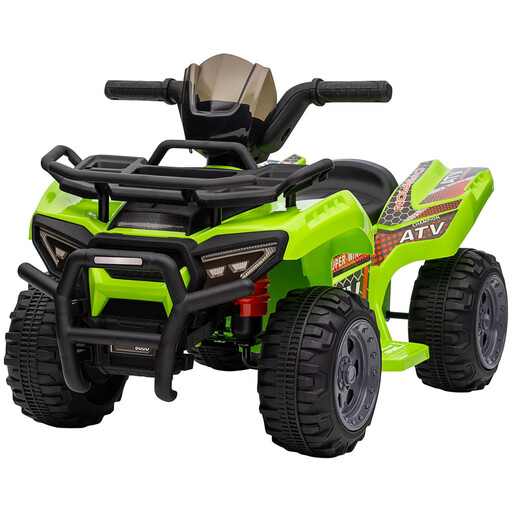
Why This Fits Their Persona: This quad bike is designed specifically for toddlers (18-36 months). Its simple forward-button operation and low maximum speed of 2 km/h make it an unintimidating first ride-on, perfect for building confidence on the patio or indoors.
It directly counters the "one-size-fits-none" trap by being purpose-built for a very specific, young age group, ensuring the size, speed and controls are perfectly matched.
The 6V battery provides up to 45 minutes of gentle riding, and its four wide tyres offer good stability for new riders. The simple controls reduce confusion for toddlers.
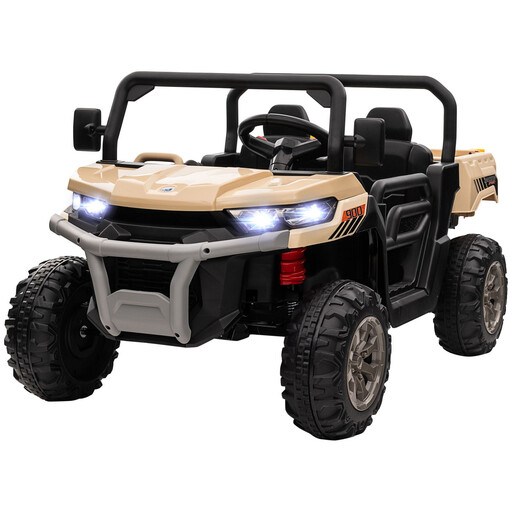
Why This Fits Their Persona: This UTV-style vehicle is built for two. With a wide seat and a high maximum load of 50kg, it's ideal for siblings or friends to share adventures. The 12V battery and spring suspension are ready for garden terrain.
Its powerful 12V 7Ah battery provides the necessary performance for carrying two children, avoiding the "five-minute wonder" issue that underpowered two-seaters often suffer from.
Features a parental remote for safety and a rear storage bucket for toys. The combination of two seats and a robust build makes it a great social toy.
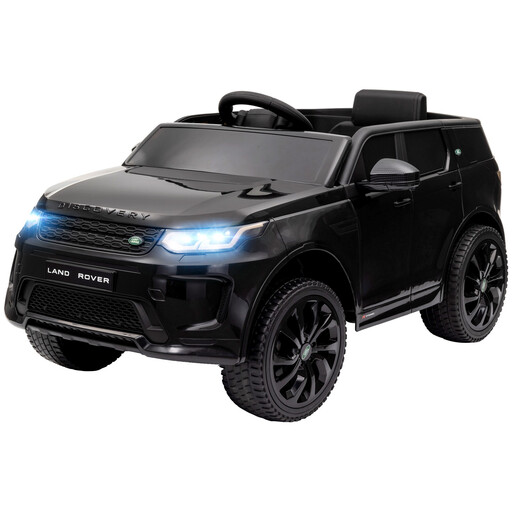
Why This Fits Their Persona: For the child who appreciates style, this officially licensed Land Rover delivers a realistic driving experience. It's packed with features like working lights, a horn and music, all wrapped in an iconic design.
It includes a parental remote and a slow-start function, addressing the safety concerns of the "unreliable remote" trap while still offering an exciting ride for the child.
The 12V battery provides up to 60 minutes of run time, which is substantial for this category. The power indicator is a practical feature for parents to know when it's time to recharge.
We have compiled a complete, real-time list of products that fully satisfy these strict selection criteria and UK safety regulations.
The run time for a children's electric car typically ranges from 45 to 90 minutes. This is influenced by the battery's voltage (V) and capacity (Ah), the child's weight and the terrain. Driving continuously on thick grass or up hills will drain the battery faster than on a flat pavement. Most models require an 8-12 hour charge after the initial charge.
Yes, they can be very safe, provided you select the right model. For a 3-year-old, choose a 12v ride-on car with a lower top speed (around 3-5 km/h). Crucially, ensure it has a parental remote control with an emergency stop function, a seatbelt and a slow-start feature. Adult supervision is always required during use.
Generally, yes. A 12v ride-on car has sufficient power to operate on firm, relatively flat lawns. Models with plastic tyres may have less traction than those with rubber or EVA tyres, and performance will be reduced on very long, wet or bumpy grass. For consistent outdoor use, 12V is the recommended minimum.