
24/7 Customer Support

Free returns

Same-day & Next-day Delivery

Quality Guaranteed

Unlock Your Welcome Offers: FREE Delivery | Up to 80% OFF | Free 30-day JoyPlus trial
Download the APP
Choosing a children’s electric toothbrush can seem straightforward until you compare age ranges, brush-head sizes, battery types and colourful features. A product that looks appealing online may still be unsuitable for a baby, awkward for a toddler or expensive to maintain over time.
Parents and carers in the UK commonly encounter three purchasing traps:
The right choice depends on the child’s age, ability to follow instructions, comfort with vibration and whether the toothbrush will mainly be used at home or while travelling.
Age guidance is one of the most important specifications. A baby toothbrush 0-3 years should have a small head, soft bristles and a lightweight handle. Babies and toddlers also require close adult supervision, particularly if they are still learning not to bite or chew the brush head.
For children aged 3 and over, a children’s toothbrush age 3+ should still have a compact head and a handle that small hands can control. Children aged 6+ may be ready for a larger handle, additional modes or a rechargeable kids toothbrush, but supervision remains useful until brushing technique is consistent.
Check whether replacement heads are matched to different stages. For example, the Brush-Baby BabySonic includes separate replacement head options for 0-18 months and 18-36 months.
Look for soft or extra-soft bristles designed for young teeth and gums. Bristles should not appear splayed, sharp or damaged. Replace the brush head according to the manufacturer’s instructions, commonly around every three months or sooner if it becomes worn.
A sonic toothbrush for kids can use high-frequency vibration, but more movement does not automatically mean a better purchase. A child who finds the sensation uncomfortable may brush for less time. A single gentle speed can be more practical for younger users, while multiple sensitivity modes may suit older children who are still adjusting to an electric brush.
Do not allow a child to press hard, chew the head or use a damaged product. Stop use if irritation or discomfort occurs and seek dental advice where appropriate.
A kids toothbrush with timer can help establish a two-minute routine. Zone reminders every 30 seconds are useful because they encourage children to move around the mouth rather than repeatedly brushing the same teeth.
Battery choice is another practical consideration:
For UK households, check the plug specification before ordering. Some electric toothbrushes include a UK 2-pin bathroom-style plug, which may require a suitable adapter for a standard three-pin socket.
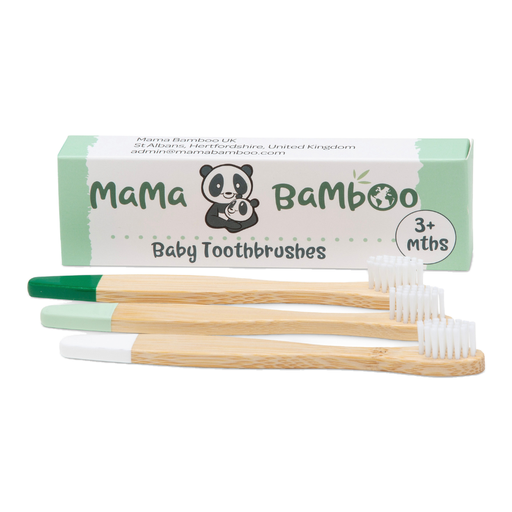
Why This Fits Their Persona: A practical starting point for families introducing brushing to a baby from 3 months, with three toothbrushes for replacements or different locations around the home.
It does not add unnecessary electronic features for a child who may need an adult to guide every brushing session. The ultra-soft nylon bristles and easy-grip handle address the need for gentle, controlled use.
Three brushes are included, with sustainably certified Moso bamboo handles and recyclable cardboard packaging.
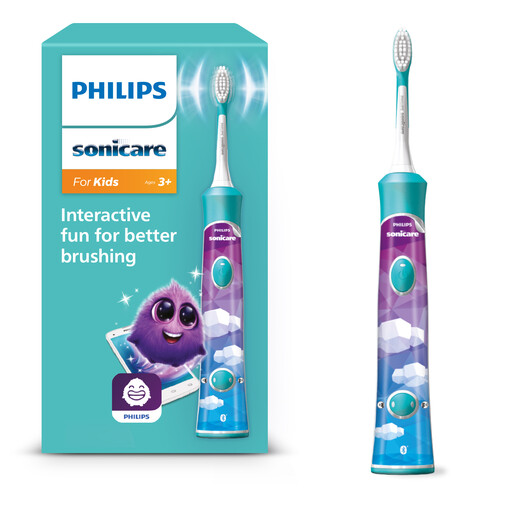
Why This Fits Their Persona: Suitable for families wanting a rechargeable kids electric toothbrush with interactive guidance and options that can continue to suit a growing child.
The set includes standard and compact brush heads, helping address the problem of buying a handle without a suitable size option. Its timer functions support structured brushing rather than relying on guesswork.
It offers two intensities, a rechargeable lithium-ion battery, Bluetooth app compatibility, KidTimer and Quadpacer functions.
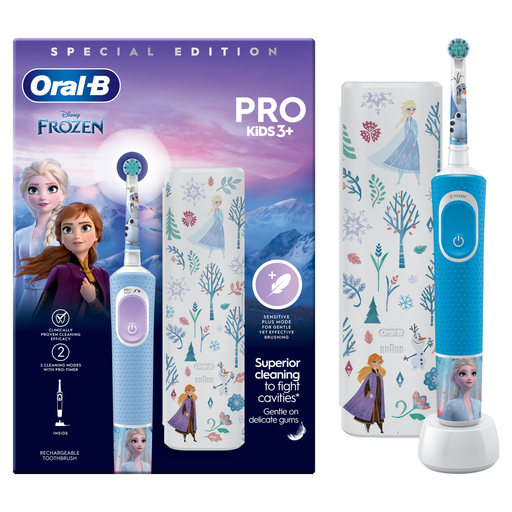
Why This Fits Their Persona: A useful option for children aged 3+ who regularly stay with relatives, travel during school holidays or need a clearly structured brushing routine.
The travel case helps protect the brush between uses, while the two-minute timer and 30-second zone reminders reduce reliance on a parent estimating brushing time.
It has a rechargeable battery, a compact round head, extra-soft bristles, two modes and a travel case.
We have compiled a complete, real-time list of products that fully satisfy these strict selection criteria and UK safety regulations.
Some products are specifically designed for babies and toddlers, but not every baby electric toothbrush is suitable for every child. Check the stated age range, head size and warnings. Adult supervision is essential, and a manual toddler toothbrush may be more appropriate if the child cannot follow instructions or tends to bite the head.
The handle may last considerably longer than the brush head, but lifespan depends on battery condition, charging habits and physical wear. Inspect the head before each use and replace it when bristles fray, become misshapen or reach the manufacturer’s recommended interval. For battery-powered models, factor in the ongoing cost and availability of compatible batteries.
A rechargeable model avoids regular disposable battery purchases, while a battery-powered kids toothbrush can be easier for travel and occasional use. Compare the purchase price, replacement-head cost, charging requirements and how often the child will use it. A simple model that fits the child’s routine can offer more practical value than one with features that remain unused.