
24/7 Customer Support

Free returns

Same-day & Next-day Delivery

Quality Guaranteed

Unlock Your Welcome Offers: FREE Delivery | Up to 80% OFF | Free 30-day JoyPlus trial
Download the APP
A children's electronic keyboard can be an enjoyable birthday or Christmas gift, but not every colourful keyboard is suitable for every child. Parents and gift buyers often focus on character designs, flashing lights or the number of sounds, while overlooking practical details such as age suitability, volume control and battery requirements.
Before buying a kids keyboard piano, watch out for these common pitfalls:
Start with the recommended age range and product warnings. A product designed for children aged three and above should not be given to a younger child simply because they can reach the keys. Look for clear information about:
For children aged one to three, a simpler electronic piano toy for children with large controls and no microphone may be easier to manage. Packaging should be fully removed before play, and batteries should be installed according to the instructions.
A keyboard toy with volume control is more practical for UK homes. Adjustable volume allows a child to explore sound without making every session uncomfortably loud for other family members. A mute or silent mode can also be useful during travel, quiet time or shared living.
Sound variety can extend play value. Piano, guitar, violin, saxophone, animal sounds and drum effects offer different ways to explore rhythm and tone. However, sound effects should complement rather than replace playable keys. Check whether the product includes demo melodies, a drum button or melody-changing controls.
Check the product dimensions before ordering. A small keyboard is easier for toddlers to carry and store, while a 61-key digital piano requires more space and is intended for a different stage of musical learning.
Also confirm:
These details affect the total cost and how quickly the child can begin playing.
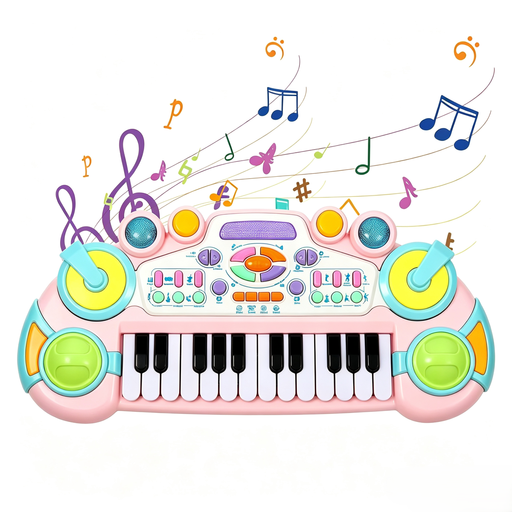
Why This Fits Their Persona: Its stated 1–5 years age range, 24 keys, soft light and sound modes suit families introducing a toddler to musical play at home.
The listing specifies volume control and no microphone, reducing accessory clutter and making supervision simpler for younger children.
ABS construction, rounded edges, 24 keys, adjustable volume and multiple sound effects are listed features.
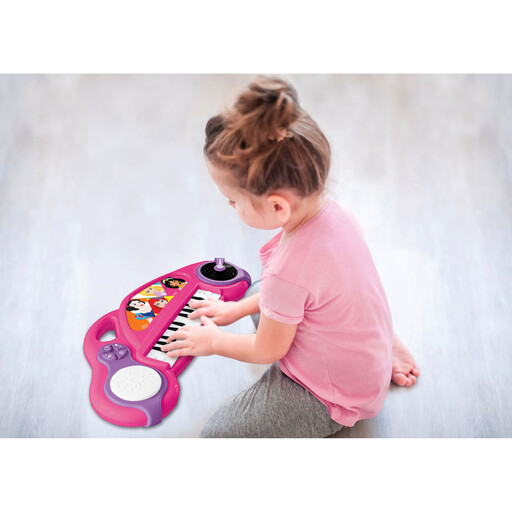
Why This Fits Their Persona: This Bluey electronic keyboard is suited to children aged three and above who enjoy character-led gifts and imaginative performance play.
It combines lights and character appeal with practical adjustable volume rather than relying on appearance alone.
The listing includes a microphone, four sound effects, 22 demo melodies, a drum button, turntable and three AA/LR6 batteries.
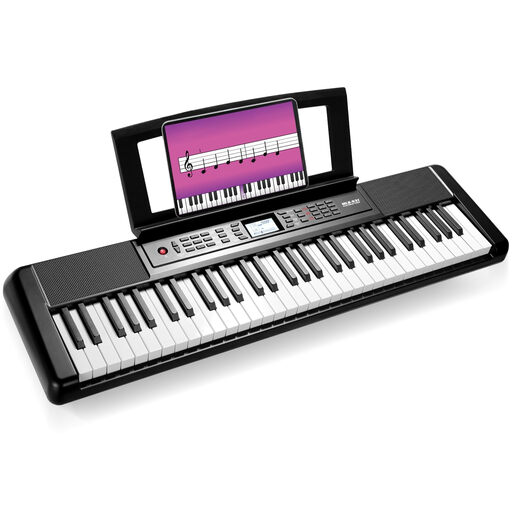
Why This Fits Their Persona: This option is more suitable for an older beginner or a household wanting a fuller keyboard set-up beyond a pre-school electronic toy.
Its stated 61-key format, weighted keyboard, headphone jack and music stand provide more instrument-focused functionality than a basic toy keyboard.
The listed specification includes 300 sounds, 300 rhythms, LCD, USB-MIDI, speakers and a headphone connection.
We have compiled a complete, real-time list of products that fully satisfy these strict selection criteria and UK safety regulations.
A character keyboard can make a gift feel more personal. Choose the Bluey Fun Electronic Keyboard with Lights for a child who enjoys Bluey-themed imaginative play. The Princess Fun Electronic Keyboard with Lights is a comparable Disney Princess electronic keyboard option for children attracted to royal or fairy-tale themes.
Both listings specify a microphone, four sound effects, 22 demo melodies, lighting, a drum button, turntable and adjustable volume. They are listed for children aged three and above, with three AA/LR6 batteries included. Always check the product warning before purchase and supervise children during use.
Only if the product specifically states an appropriate age range. A toddler musical keyboard with large keys, simple controls and no small detachable accessories may be suitable for early exploration, but adult supervision remains important. Do not use a keyboard marked as unsuitable for children under three.
Most small children's keyboards operate on disposable AA batteries, so running cost depends on play frequency and battery capacity. Turn the keyboard off after use and check whether batteries are included. Larger digital pianos may use mains power and can offer a headphone jack, which may be practical for regular practice.
Lifespan depends on construction, storage, battery leakage prevention and how the keyboard is handled. Keep liquids away from electronic components, remove batteries during long periods of storage and avoid placing heavy objects on the keys. For children who progress to structured lessons, a larger keyboard with more keys and a headphone connection may remain useful for longer.