
24/7 Customer Support

Free returns

Same-day & Next-day Delivery

Quality Guaranteed

Unlock Your Welcome Offers: FREE Delivery | Up to 80% OFF | Free 30-day JoyPlus trial
Download the APP
A children’s electronic keyboard toy can provide singing, rhythm practice and imaginative play, but not every colourful children’s piano toy is equally practical for a UK home. Some products look feature-rich yet become frustrating when the sound cannot be adjusted, batteries are difficult to replace or the toy is unsuitable for the child’s age.
Before buying, focus on the features that affect everyday use rather than relying on bright packaging or lengthy feature lists.
Lights, sound effects and demo songs can attract children, but excessive noise may quickly become unwelcome in a flat, terraced house or shared family space. A toddler piano with volume control is generally easier to manage than one with a fixed loudness setting.
Check whether the volume control is clearly listed and easy for an adult to use. A mute or silent mode can also be useful during quiet play, although buyers should confirm that this function is included rather than assuming it from the product photographs.
A keyboard with a microphone, turntable or detachable accessories may be more suitable for older toddlers than babies. Always read the manufacturer’s recommended age and warnings. Products marked not suitable for children under three should not be given to younger children, even if they appear simple to operate.
The UK toy market uses safety information such as age warnings, small-parts notices and applicable conformity markings. These are not substitutes for supervision, but they help you match the toy to the child’s developmental stage.
A full-sized electronic keyboard may need a dedicated table or floor area. A piano and drum playmat needs clear floor space, while a compact keyboard is easier to store on a shelf. Also check whether batteries are included, which battery type is required and whether the battery compartment can be secured properly.
Battery-powered musical toys may be used frequently, so choosing one with simple controls and accessible replacement batteries can make a noticeable difference over time.
For children aged one to five, look for rounded edges, secure battery compartments and clear instructions. The products in this guide include options for different age groups:
An educational musical toy can support creative play, rhythm exploration and hand coordination, but it should be viewed as a play aid rather than a formal musical instrument.
A useful electronic piano with microphone may include several instrument voices, demo melodies and rhythm controls. These features give children different ways to play without requiring formal lessons.
The listed themed keyboards include:
A smaller toddler keyboard offers 24 standard keys, sound-effect buttons, animal sounds and drum rhythms. It does not include a microphone, so it may suit families prioritising straightforward independent play.
Compare the package dimensions with the space available at home. The themed keyboards measure approximately 49.5–49.8 cm wide in their package dimensions, while the playmat is designed to fold for storage. The compact pink keyboard measures approximately 13.8 × 5.9 × 2.4 inches according to its listing.
Material descriptions can also help with selection. The keyboards are described as being made from plastic and electronic components, while the playmat uses soft non-woven fabric. Regardless of material, inspect the product when it arrives and remove all packaging before giving it to a child.
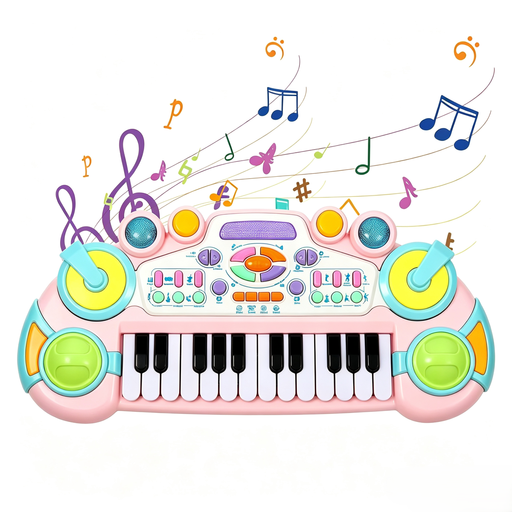
Why This Fits Their Persona: A compact option for families seeking a simple first musical keyboard for toddlers aged one to five, with features suited to everyday indoor play.
The listing specifies adjustable volume and a mute mode, helping parents manage sound during quieter periods.
24 keys, light effects, animal sounds and drum rhythms; the listing describes ABS construction and rounded edges.
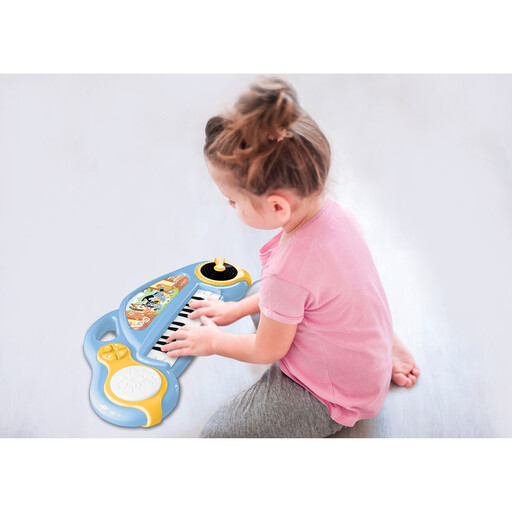
Why This Fits Their Persona: Suitable for a child aged three or above who enjoys themed imaginative play, singing and changing between different musical sounds.
It combines light effects with adjustable volume, so the visual appeal does not depend on an uncontrolled sound level.
Includes a microphone, four sound effects, 22 demo melodies, a drum button and turntable; 3 AA batteries are included.
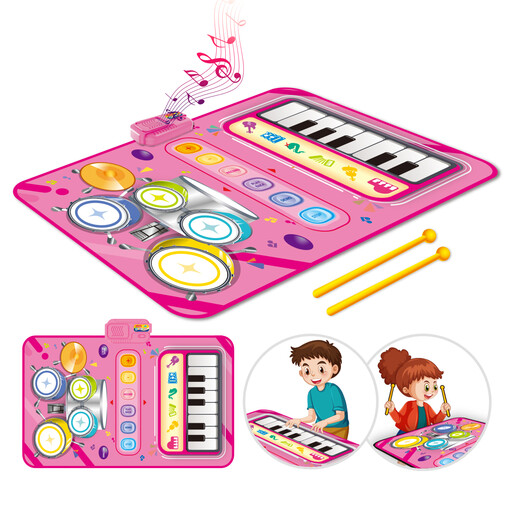
Why This Fits Their Persona: A practical match for active children who prefer floor-based movement, shared play and larger interactive controls.
Its foldable format avoids committing a table or shelf to a bulky keyboard, while volume control addresses the common noise concern.
Offers 13 piano keys and six drum functions, supports one or two players and folds for storage.
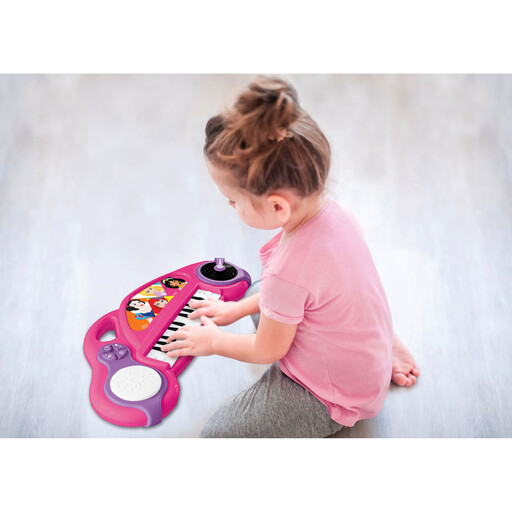
Why This Fits Their Persona: A themed choice for children aged three or above who are drawn to character-led role play, music-making and pretend performances.
The product listing specifies both adjustable volume and no assembly, reducing two common sources of inconvenience after purchase.
Includes four instrument sounds, 22 demo melodies, light effects, a microphone and 3 AA batteries.
We have compiled a complete, real-time list of products that fully satisfy these strict selection criteria and UK safety regulations.
Choose a compact keyboard if the child mainly plays at a table, enjoys pressing individual keys or needs a toy that can be stored quickly. An electronic piano with microphone is more suitable for singing games and family performances, provided the child is old enough for the accessory.
A playmat may be more suitable for larger playrooms, nurseries or homes where children enjoy stepping, tapping and moving. It can also encourage parent-child interaction or sibling play, but it needs a clear, safe floor area.
For a Bluey keyboard or Disney Princess keyboard, confirm the exact character theme, age guidance and included accessories on the product page. Names and designs can vary between similar listings, while the practical specifications—such as volume adjustment, battery requirements and microphone inclusion—should guide the final choice.
Only if the specific listing states that it is suitable for that age. Some products are designed for ages one to five, while others carry a warning that they are not suitable for children under three because of small parts. Always follow the stated age guidance and supervise play.
The products featured here are battery-powered. The themed keyboards require three AA/LR6 batteries and list them as included. The playmat requires batteries that are not included. Check the battery compartment and product instructions before gifting, particularly if the toy is intended for immediate birthday or Christmas play.