
24/7 Customer Support

Free returns

Same-day & Next-day Delivery

Quality Guaranteed

Unlock Your Welcome Offers: FREE Delivery | Up to 80% OFF | Free 30-day JoyPlus trial
Download the APP
Choosing children's games can look simple until you compare age labels, play time, component quality and the type of interaction each game actually offers. A brightly packaged box may promise learning, family fun or endless replay, but those claims do not always match how a game works at home.
For parents, grandparents and gift-givers in the UK, the most useful approach is to match the game with the child’s age, attention span and preferred style of play. This guide covers common buying pitfalls, key specifications and our top recommendations for 2026.
Age guidance is not only about whether a child can understand the rules. It can also relate to small parts, difficulty, reading ability and the level of adult supervision required.
A game marked from age 3 may introduce matching or letters, while one marked from age 6 could require verbal speed, strategy or more complex turn-taking. Always check the manufacturer’s stated age range rather than buying based solely on a child’s apparent ability.
Many children's board games use words such as “educational” or “developmental”. The more important question is what the child does during play. Look for clear activities such as:
A game does not need to resemble a lesson to support useful practice. Short, repeatable activities can be more suitable for younger children than a long game with complicated rules.
Some games require batteries, several players or a large table. These details can make a difference during rainy afternoons, family visits and travel.
For example, an electronic timer may add excitement but will need replacement batteries. A board game with no batteries may be easier to store and use spontaneously. Digital options such as a Nintendo Switch party game can support local multiplayer, but you should also check controller requirements, online access and the game’s age rating.
Check the recommended age, choking hazard information and supervision guidance. Products containing small pieces should be kept away from younger children, even if an older sibling is the main player.
For children aged 3 to 8, consider whether the game uses large, easy-to-handle pieces and whether the instructions can be simplified. A game that supports independent play for one child may also be useful, but many children’s learning games are more engaging when an adult introduces the first few rounds.
Check whether the product is designed for solo play, two players, teams or a larger group. Family games and party games for children generally work more successfully when waiting times are short and eliminated players do not have to sit out for long.
For regular family use, look for a clear player count and a format that suits your household. Word games may work well with teams, while matching and counting games are often easier for one adult and one child.
Assess whether the box includes everything needed to start playing. Important details include:
A compact game can be more practical for holidays or visits to grandparents. For electronic products, keep batteries away from children and follow the product’s disposal and safety instructions.
The following selections are matched to different household needs rather than ranked against one another.
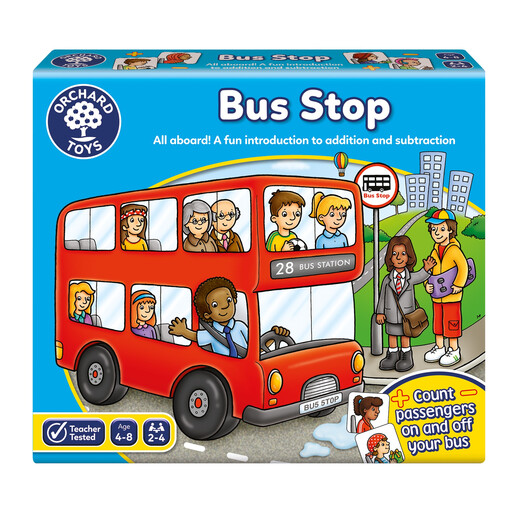
Why This Fits Their Persona: A straightforward choice for families introducing tabletop play to children from age 4, with a format suitable for home, playdates or visits to relatives.
The rules focus on visible matching, counting and turn-taking rather than relying on a vague educational label. It also requires no batteries.
Bus-themed board and cards; suitable from age 4; supports counting and turn-taking practice.
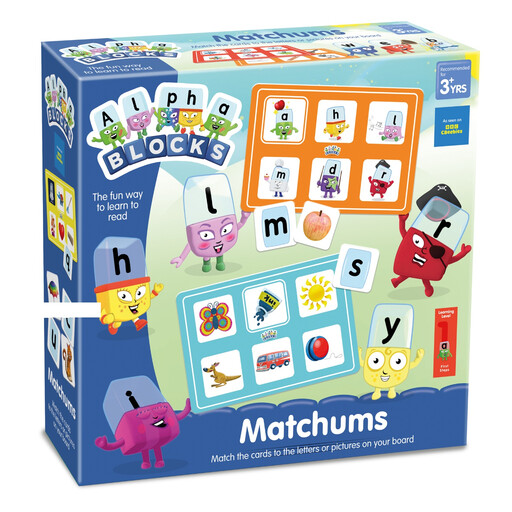
Why This Fits Their Persona: Suitable for adults seeking a structured early-literacy activity that can develop as a child becomes more confident with letters and sounds.
Four game modes provide a clearer progression than a single repetitive matching task, from picture matching to letter-to-letter associations.
Includes five double-sided boards and 60 cards; designed for children from age 3; no batteries required.
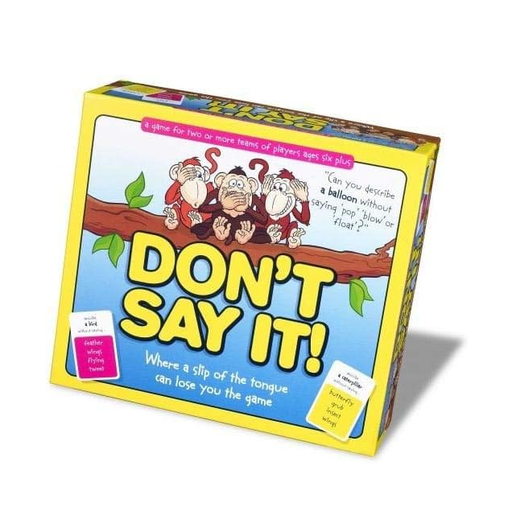
Why This Fits Their Persona: A practical fit for family gatherings, parties and households wanting a lively verbal game for children from age 6.
The format clearly explains its challenge: describe words without using listed clues before the electronic timer sounds. Difficulty can be adjusted.
Includes 200 words across four difficulty levels; supports two or more teams; requires three AAA batteries, not included.
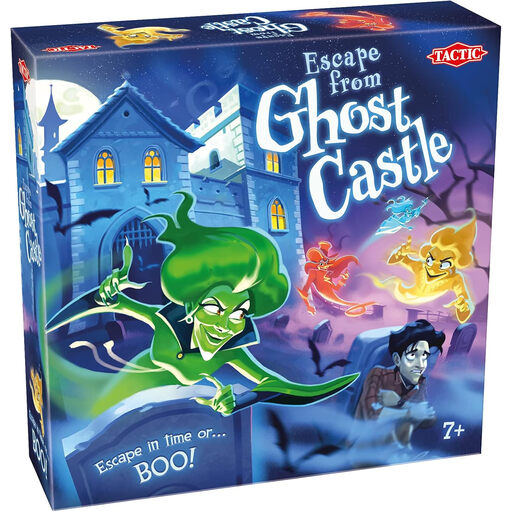
Why This Fits Their Persona: Designed for family groups from age 6 who enjoy suspense, role-based play and making decisions against other players.
Its two-role structure is clearly defined: one player hides while the others search, with scoring continuing through the round rather than depending on one quick outcome.
No batteries required; combines role play with strategic choices; suitable for family groups from age 6.
For early literacy, Alphablocks Jigword combines jigsaw assembly with letter recognition and word-building activities for children from age 3. Roald Dahl’s The BFG Whizpopping Letters Games includes 100 letter cards, a spinner and three spelling game formats for children from age 6.
For older children who prefer dexterity and problem-solving, Colour Stack Game is designed from age 8 and uses coloured stacking pieces. Its play focuses on building configurations, colour recognition and hand-eye coordination.
A digital alternative is Gang Beasts (Switch), a local and online multiplayer party game with handheld, tabletop and TV modes. The supplied details state local play for up to four players and online play for two to eight through Nintendo Switch Online. Check the current UK age-rating information and controller requirements before purchasing.
Choose by ability as well as age. Alphabet games, picture matching, simple counting games and short turn-taking activities are often suitable starting points. Always follow the product’s stated age range and small-part warnings. Games such as Alphablocks Matchums, Alphablocks Jigword and Bus Stop Game cover different early-learning formats.
Screen-free games can provide a simple way to practise communication, matching, counting, spelling and turn-taking without charging or controller setup. Their value depends on whether the rules suit the child and whether the activity encourages participation rather than long periods of waiting.
Some do and some do not. Don’t Say It Game for Kids requires three AAA batteries, which are not included. The listed board, card and puzzle games in this guide do not require batteries. Check the product details before ordering, particularly if the game is intended as an immediate gift.