
24/7 Customer Support

Free returns

Same-day & Next-day Delivery

Quality Guaranteed

Unlock Your Welcome Offers: FREE Delivery | Up to 80% OFF | Free 30-day JoyPlus trial
Download the APP
Finding the right children's play kitchen can feel like a significant decision. With so many options available, you want to choose a toy that not only sparks joy but also supports your child's development. This guide is designed to help you navigate the choices, offering practical advice and highlighting a few standout options to make your search simpler. We'll look at key features, materials and sizes to help you find a pretend kitchen set that fits your home and your child's imagination.
Choosing the perfect role play kitchen involves more than just picking a design. Here are a few key factors to keep in mind to ensure you find a set that will be loved for years to come.
The material of a play kitchen influences its look, feel and durability.
The level of interactivity can make a big difference in holding a child's attention. Many modern sets are more than just a simple structure; they are a complete interactive experience.
Before you buy, measure the space you have available. Play kitchens come in all shapes and sizes, from large, corner-style units to the more compact mini play kitchen. For younger children, a smaller toddler kitchen with a lower countertop height is ideal, ensuring they can reach and interact with all the features safely and comfortably.
Here are a few recommendations that cater to different needs, from compact spaces to fully-featured play areas.

Why It Stands Out: This mini kitchen is an excellent solution for smaller play areas or bedrooms. Its Miele-branded design gives it a realistic touch that little ones appreciate, allowing them to mimic grown-up activities in a compact and manageable format.
Pros:
Who is it for? This is a great choice for parents looking for a starter toddler kitchen or those with limited playroom space. It provides the core kitchen experience without overwhelming a room.

Why It Stands Out: For the child who loves interactive features, the Smoby Bon Appétit kitchen delivers. With electronic cooking sounds and a pretend espresso machine, it brings the kitchen to life. The generous accessory pack means the fun can start straight out of the box.
Pros:
Who is it for? This pretend kitchen set is ideal for children who thrive on sensory play and for parents who want an all-in-one solution with plenty of accessories.
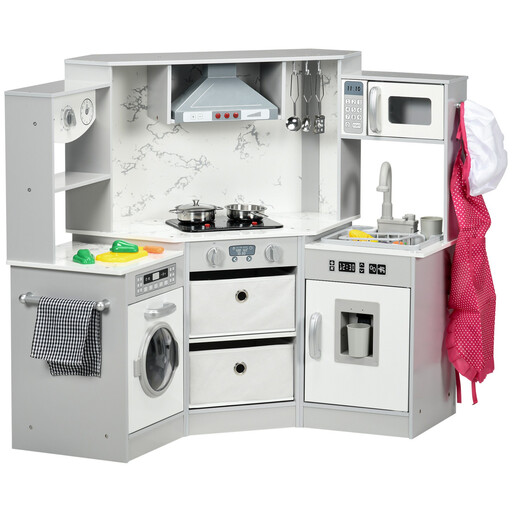
Why It Stands Out: This corner kitchen is a complete role-play hub. Its standout feature is the sink with a water circulation system, allowing kids to "wash" dishes with real, running water. Combined with lights, sounds and a full chef's outfit, it offers a deeply immersive play experience.
Pros:
Who is it for? This is for families looking to create a dedicated and highly engaging play zone. It's perfect for children aged 3-6 who love detailed, realistic role-playing games.
While these models offer a fantastic range of features, we understand that every child has their own preferences. If you're searching for a different aesthetic or perhaps a specific colour, you might find the perfect fit in our broader collection.
? Explore our full range of pink kids kitchen playsets and other styles here.
1. What age is a play kitchen suitable for? Most play kitchens are designed for children aged 3 to 6 years. For this age group, they offer significant developmental benefits. For younger toddlers (under 3), it's crucial to choose a sturdy toddler kitchen with no small, detachable parts that could pose a choking hazard. Always check the manufacturer's recommended age and supervise play.
2. Are wooden or plastic play kitchens a better choice? Neither is definitively "better"; it depends on your priorities. A wooden play kitchen is often praised for its durability and classic appearance. Plastic kitchens are lightweight, easy to wipe clean and often include more built-in electronic features like lights and sounds at a lower price point.
3. What are the benefits of a role play kitchen? A role play kitchen is a powerful tool for development. It helps children develop social and communication skills by playing with others, enhances fine motor skills through handling accessories, and sparks creativity and imagination as they invent recipes and scenarios. It also helps them understand real-world routines in a fun, safe environment.