
24/7 Customer Support

Free returns

Same-day & Next-day Delivery

Quality Guaranteed

Unlock Your Welcome Offers: FREE Delivery | Up to 80% OFF | Free 30-day JoyPlus trial
Download the APP
Finding an activity that entertains, educates and keeps children away from screens can feel like a puzzle in itself. With so many options available, it’s difficult to know which toys will genuinely capture a child's interest and which will be forgotten after a single use. As the Joybuy Product Recommendation Officer, my role is to help you cut through the clutter with practical, objective advice.
This guide is designed to help you navigate the world of children's puzzle games. We will explore what to look for when choosing a puzzle and highlight a few standout options that offer engaging, screen-free fun for various ages and interests.
Before diving into specific products, consider these key factors. A little thought upfront can make all the difference between a cherished gift and a box that gathers dust.
A puzzle that is too simple can lead to boredom, while one that is too complex can cause frustration. Always check the manufacturer's age guidance, but also consider the individual child's patience and experience. For younger children, large-piece jigsaw puzzles are excellent for developing fine motor skills. For older kids or those who enjoy a mental workout, logic games for kids and brain teaser puzzles offer a more stimulating challenge.
Think about where and when the puzzle will be used. A 100-piece jigsaw is a fantastic rainy-day activity for the living room floor, but it isn't practical for a long car journey. For on-the-go entertainment, look for self-contained, portable travel games for children. Compact electronic puzzles or magnetic sets are ideal for keeping kids occupied on planes, trains and during road trips.
In the UK, all toys must meet strict safety standards. Look for products that are CE or UKCA marked, which indicates compliance with health, safety and environmental protection standards. For puzzles, this often relates to the materials used and the size of the components. For instance, many quality puzzles are made from durable, non-toxic materials and comply with standards like EN 71, ensuring they are safe for domestic use.
Here are a few recommendations that cater to different ages and play styles, from classic jigsaws to modern electronic challenges.
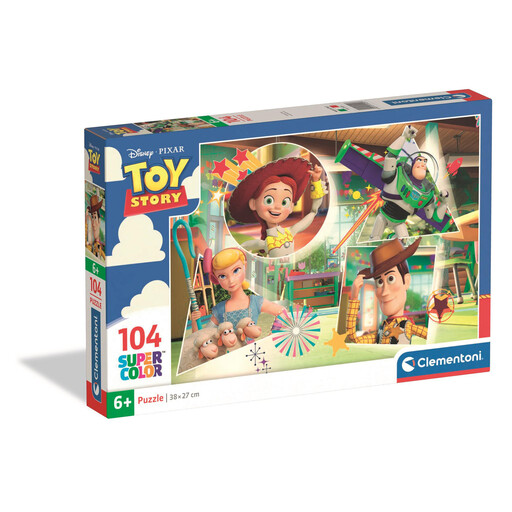
Disney Toy Story 104 Piece Jigsaw Puzzle
Why It Stands Out: This puzzle brings the timeless appeal of Disney's Toy Story to a classic format. The vibrant, action-packed scene featuring Woody, Buzz and the gang is instantly recognisable and engaging for young fans. Completing the 104-piece puzzle provides a tangible sense of accomplishment.
Pros:
Who is it for? This is an excellent choice for children aged 6 and up who are fans of the Toy Story films. It’s a perfect family activity or a rewarding solo project, making it a versatile option for a birthday gift for kids.

GiiKER Super Slide Puzzle Games, Original Thinking Game with Over 500 Challenges
Why It Stands Out: This is a modern take on the classic sliding block puzzle. The goal is to move the blocks to slide the main red block into the exit zone. With over 500 built-in challenges of increasing difficulty, this handheld console offers immense replay value without needing a screen.
Pros:
Who is it for? Ideal for children aged 6 and above who enjoy brain teaser puzzles and strategic thinking. Its portability makes it a fantastic companion for road trips, flights or simply quiet time at home.

GiiKER Smart Sudoku Puzzle Games, Original Sudoku with 2500 Challenges
Why It Stands Out: This electronic puzzle transforms the classic paper-and-pen Sudoku into an interactive experience. It offers an incredible 2500 challenges across 4x4 and 6x6 grids, catering to a wide range of skill levels from beginner to master. The console provides hints, tracks solving time and even has a 1v1 battle mode for competitive fun.
Pros:
Who is it for? Suitable for children from age 4 upwards, this is a great introduction to number-based logic games for kids. The progressive difficulty and competitive mode also make it engaging for older children and even adults.
If these specific recommendations aren't quite what you're looking for, don't worry. The world of educational toys and puzzles is vast, with something to suit every child's personality and interests.
For a wider selection of themes, difficulty levels and puzzle types, we invite you to explore our complete collection.
? Explore the Full Range of Kids Puzzles at Joybuy
1. What are the benefits of puzzle games for children? Puzzles are more than just a fun pastime. They are powerful educational toys that help develop crucial cognitive skills like problem-solving, spatial reasoning and logical thinking. They also improve concentration, patience and fine motor skills, all while providing a rewarding sense of achievement.
2. How do I choose a puzzle that isn't too hard or too easy? Start with the manufacturer's age recommendation as a baseline. If a child is new to puzzles, it may be wise to choose something at the lower end of their recommended age range to build confidence. For experienced puzzlers, you can select more complex challenges. The key is to find a "productive struggle"—a challenge that is engaging but not so difficult that it leads to giving up.
3. Are electronic puzzles a good screen-free alternative? Yes, they can be an excellent middle ground. Handheld electronic puzzles like the GiiKER Sudoku and Super Slide offer the interactivity of a video game but in a focused, single-purpose device. They eliminate the distractions of the internet and other apps, providing a dedicated, screen-free experience that still feels modern and engaging for children accustomed to technology.