
24/7 Customer Support

Free returns

Same-day & Next-day Delivery

Quality Guaranteed

Unlock Your Welcome Offers: FREE Delivery | Up to 80% OFF | Free 30-day JoyPlus trial
Download the APP
Choosing children’s puzzles and games can look simple until you compare piece counts, age labels, materials and learning claims. A colourful box may attract attention, but it does not always indicate that the puzzle will suit a child’s ability, storage space or play habits.
This guide explains the practical checks that matter when buying children’s jigsaw puzzles, educational puzzles for kids, family games and twisty puzzle cubes. It also highlights suitable options for different households, from toddlers beginning tactile play to older children ready for challenging construction or logic activities.
A higher number of pieces does not automatically mean better value. A 500-piece puzzle may be appropriate for a child aged 10 or above, while a toddler may need chunky pieces with raised textures. Consider the child’s age, patience, visual recognition and previous puzzle experience before comparing piece counts.
For younger children, large floor puzzles for children can be easier to handle because the pieces are bigger and assembled on the floor. For older children, smaller interlocking pieces can provide a longer challenge but may be unsuitable around toddlers.
A puzzle featuring animals, maps or clocks may support discussion, but the learning value depends on how the child uses it. Some products include guides, posters, movable components or matching cards that create more ways to play. Others are primarily picture-building activities.
Check the contents list carefully if you are specifically looking for children’s learning games or educational puzzles for kids, rather than relying on the packaging theme.
Loose pieces are easy to lose in a busy UK household, especially when a game is used in a shared living room or taken on holiday. Look for a carry box, compact packaging or a clear storage method.
Small parts also require attention. Products in this category commonly carry choking warnings and are not suitable for children under three. Follow the manufacturer’s age guidance, remove all packaging and provide direct adult supervision where stated.
Age recommendations should be treated as a starting point, not a guarantee that every child will find the product easy. A 7-year-old who enjoys puzzles may be ready for a 180-piece design, while another child may prefer a 104-piece version with a poster guide.
For babies and toddlers, lift-and-learn boards with chunky pieces are easier to grasp. Between ages 3 and 5, look at large-piece floor puzzles, simple matching games and short turn-taking activities. From ages 6 to 10, consider traditional jigsaws, geography puzzles, time-learning sets and beginner twisty puzzle cubes.
Always check both package and assembled dimensions. A completed floor puzzle measuring 49 x 68.5cm needs clear floor space, while a compact cube can be used during travel or waiting times.
For a jigsaw, inspect whether the pieces are described as sturdy, wipe-clean or easy to handle. For screen-free toys, durability matters because repeated sorting, assembly and packing can place stress on edges and joins.
Look for clearly stated materials, such as card or ABS plastic, and read the supplied warnings. Some listed products state compliance with REACH regulations or EN 71 toy safety standards; these statements should be checked on the individual product page before purchase.
Do not assume that “non-toxic” removes the need for supervision. Stickered cubes, puzzle pieces and game components can still present small-part risks. Keep products away from children below the stated age and stop using any cracked or damaged item.
The following selections are matched to practical user profiles rather than ranked by a universal score.
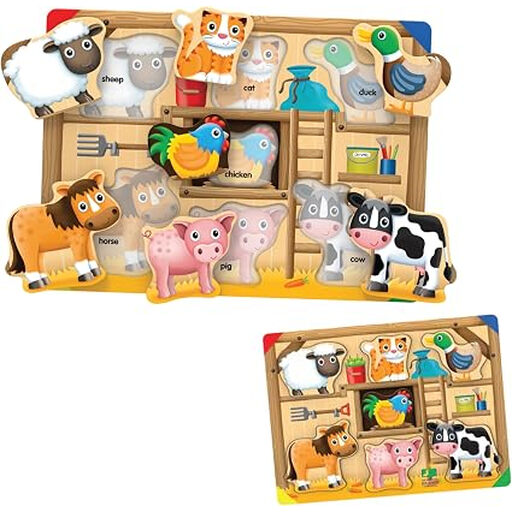
Why This Fits Their Persona: A straightforward first puzzle for children from 18 months, with seven chunky pieces and raised textures for small hands.
The low piece count and chunky construction avoid an unnecessarily difficult first purchase.
Seven textured pieces; designed for ages 18 months and above; no batteries required.
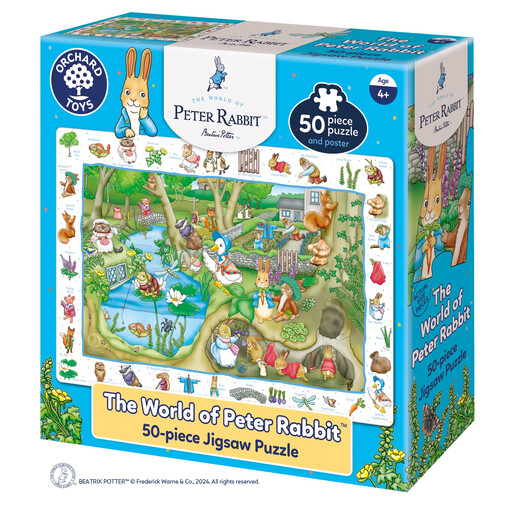
Why This Fits Their Persona: Suitable from age four, this option adds a poster, learning guide and search-and-find border to standard jigsaw play.
The included guide and additional discovery activity provide practical use beyond assembling the image.
50 pieces; 61.5 x 42cm assembled size; wipe-clean pieces and a learning guide.
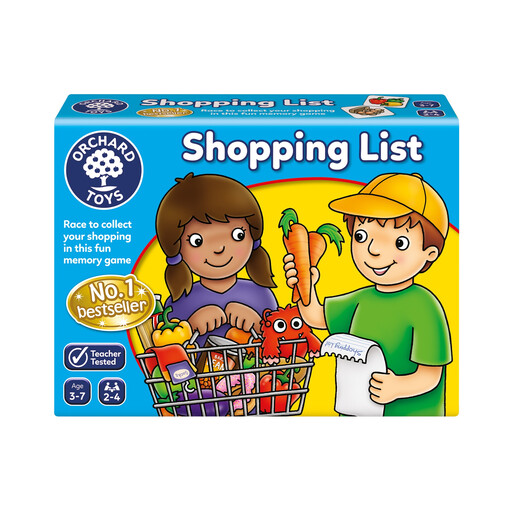
Why This Fits Their Persona: Families wanting a short, social activity can use this matching game with children aged three and above.
The rules are described as simple, so younger players can join without a lengthy setup.
Supports matching, memory, counting and turn-taking; compact 19 x 14cm package.
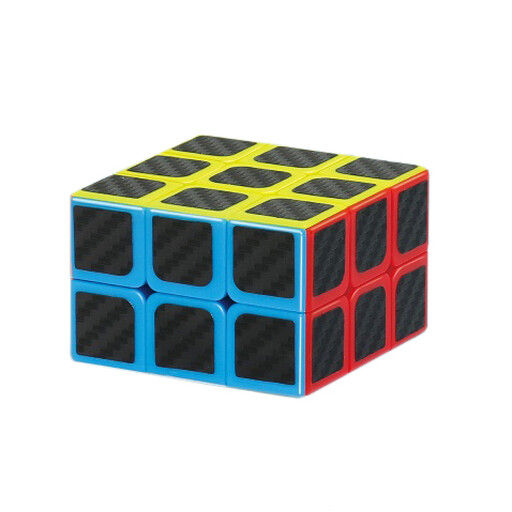
Why This Fits Their Persona: Designed for advanced solvers and listed for ages 14+, this non-standard shape suits older teens and puzzle enthusiasts.
The stated 14+ recommendation makes its advanced positioning clearer than choosing a standard beginner cube for a seasoned solver.
Shape-shifting 2x3x3 format; ABS construction; no batteries required.
We have compiled a complete, real-time list of products that fully satisfy these strict selection criteria and UK safety regulations.
It depends on the format. Some lift-and-learn puzzles are listed from 18 months, while floor puzzles and simple games commonly start at age three. Traditional jigsaws and twisty cubes may be suitable from ages five, six, seven or above. Always follow the individual product warning and age label.
Yes, jigsaws, matching games, family board games and manual puzzle cubes do not require a screen or batteries. They still need an appropriate playing surface, supervision for younger children and a storage solution for loose components.
Use the supplied box or carry case, count pieces before packing away and store each game separately. For cubes, keep them dry and wipe them with a soft cloth. Stickered models should not be immersed in water or cleaned with harsh chemicals.