Parents managing playback themselves
If you normally pick songs on a phone or tablet, look for straightforward pairing and controls you can reach when you need to pause or lower the volume.


For songs selected by an adult on a nearby phone or tablet, a portable Bluetooth speaker with accessible volume controls is a practical starting point. Consider a Wi-Fi speaker if the loft will be a regular listening room and you want app control or compatible multi-room playback; consider a child-profile smart speaker if parent-managed controls are the priority. Check the loft’s Wi-Fi coverage, charging or socket position, and the controls available on the exact model before choosing.
If you normally pick songs on a phone or tablet, look for straightforward pairing and controls you can reach when you need to pause or lower the volume.
If a child will operate the speaker, check the exact device’s child-profile, content and volume settings, including what happens outside child mode.
If the loft is an established listening room, Wi-Fi playback and a compatible multi-room system may be worth considering alongside socket position and network coverage.
Choose when: An adult starts songs from a nearby phone or tablet and wants to move the speaker.
Allow for: The source-device connection and a charging routine; rated battery life is not everyday runtime.
Choose when: The loft is used regularly and app-based playback or compatible multi-room expansion matters.
Allow for: A suitable socket, dependable Wi-Fi and any required app or accessories.
Choose when: Parent-managed content or device-volume settings are a primary need.
Allow for: Account setup and mode-dependent controls. Amazon says its Parent Dashboard volume limit applies only while Amazon Kids is on.
| Concern | What to check | Who this matters to |
|---|---|---|
| Simple playback | Check Bluetooth compatibility with the usual phone or tablet and whether pause and volume controls are easy to reach. | If I choose the songs myself, I want to start and stop them without navigating an app each time. Roughly 40% of consumers put simple supervised playback first. |
| Volume and content controls | Confirm the exact model’s child mode and how its settings behave when that mode is off. | When a child can use the speaker, I want to manage what plays and keep volume within household rules. For roughly 30% of consumers, those controls are the primary concern. |
| Movable placement | Check charging arrangements, supplied accessories and where the speaker can sit securely. | I may move the speaker between the loft and another room, so a permanent position would be inconvenient. Portability comes first for roughly 20% of consumers. |
| Regular room listening | Check loft Wi-Fi coverage, socket position and compatibility with any multi-room system you plan to use. | If the loft becomes a regular listening space, I want to manage playback there and possibly connect other rooms. Roughly 10% of consumers prioritise that fixed-room setup. |
Amazon says a Parent Dashboard volume limit on supported Echo devices applies only when Amazon Kids is turned on. Playback in another mode can use different settings.
Confirm the exact device supports the child profile you need, then test its volume setting in the mode the child will actually use.
Playtime figures are stated for particular use conditions; volume and usage can affect runtime.
Compare rated playtime with the charging port, supplied accessories and the charger available at home.
Bose says the SoundLink Flex Portable Speaker (2nd Gen) includes a USB-C cable but not a power adaptor.
Electrical Safety First warns that overloaded extensions can overheat and advises against connecting one extension lead to another.
If an extension is necessary, use an undamaged one within its marked rating and fully unwind a cable reel.
A recall can affect a particular model rather than every speaker from a brand.
Check current Office for Product Safety and Standards recall information using the exact brand and model before purchase or continued use.
JBL’s Flip 7 is a portable Bluetooth option for moving playback around the home.
The SoundLink Flex Portable Speaker (2nd Gen) is a compact Bluetooth option.
Sonos offers both a portable route with Roam 2 and a more settled room setup with Era 100.
These portable and tabletop speakers suit adult-started song playback, with different connectivity and placement options. If parent-managed child-profile controls are essential, confirm them on the exact model before choosing.
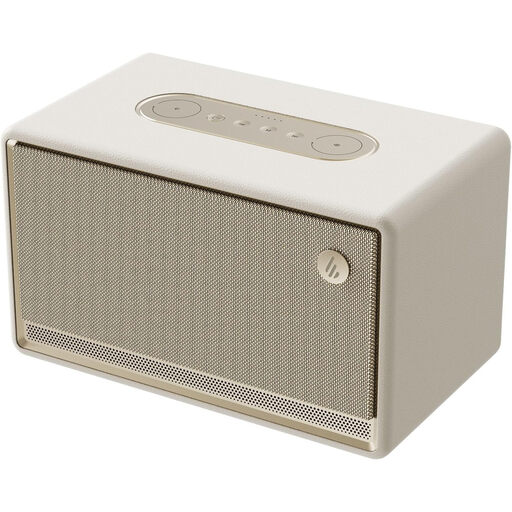 No image available
Consider this tabletop option for songs started from a nearby device. Its product name specifies Bluetooth 5.3 and 12-hour playtime; treat the playtime figure as a rating rather than a promise for every listening level.
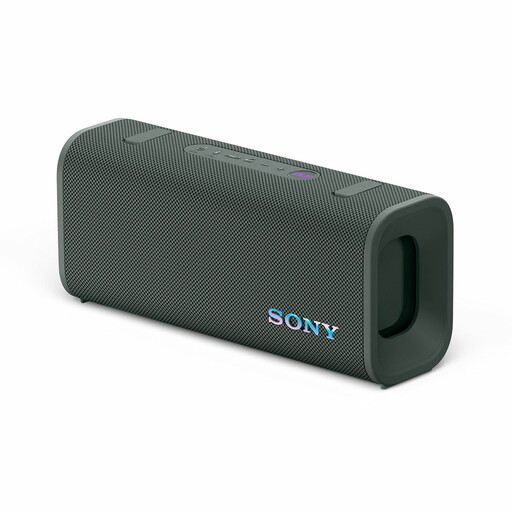 No image available
Consider a portable format if the speaker will move between the loft and other rooms. Check that its controls, charging routine and placement work for the way your household will use it.
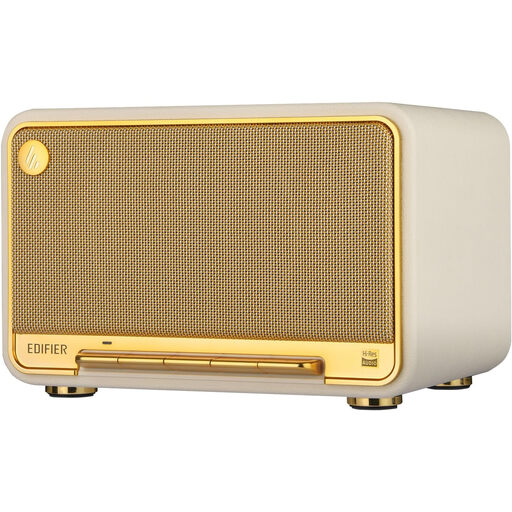 No image available
Consider this for a regular loft listening spot if its connection options fit your devices. The product name specifies Bluetooth 5.3, AirPlay 2, USB-C and AUX inputs, 60W (RMS) and 11-hour playtime; check Wi-Fi coverage for the network features you intend to use.
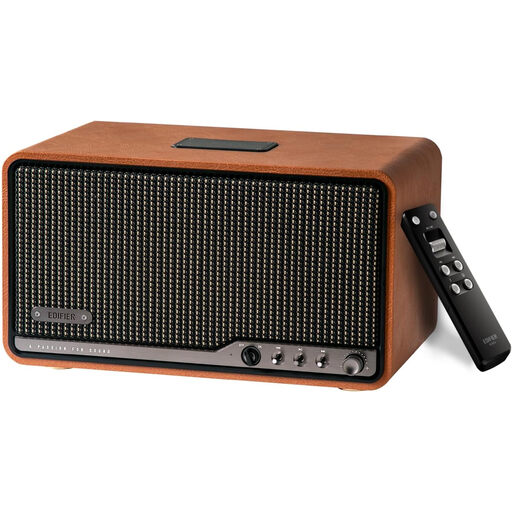 No image available
Consider this tabletop model if you want to assess multi-room playback as well as songs in the loft. Confirm the power and charging arrangement before choosing where it will sit.
Choose Bluetooth when songs usually come from a nearby paired phone or tablet and you want movable placement. Consider Wi-Fi for app-based playback or compatible multi-room use if the loft has dependable coverage; check the exact speaker’s setup and power needs.
Some supported Echo devices let a parent set a maximum through Amazon’s Parent Dashboard while Amazon Kids is active. Amazon says that limit applies only in Amazon Kids mode, so confirm the model and test the setting the child will actually use.
Keep playback at a comfortable, modest level and avoid prolonged loud listening. The World Health Organization explains that both sound level and listening duration affect risk; a speaker’s volume percentage alone does not establish the sound level at the listener’s position.
Use an extension only when needed and within its marked rating. Electrical Safety First advises against overloading or daisy-chaining extensions and says cable reels should be fully unwound for their stated current rating.