
24/7 Customer Support

Free returns

Same-day & Next-day Delivery

Quality Guaranteed

Unlock Your Welcome Offers: FREE Delivery | Up to 80% OFF | Free 30-day JoyPlus trial
Download the APP
Choosing children's vitamins and supplements can feel confusing when every label promises growth, immunity, digestion or brain support. The right choice depends less on colourful packaging and more on age suitability, nutrient levels, ingredients and how reliably your child can take the product.
This guide explains the main buying traps, the specifications worth checking and a selection of options for different family needs.
A product containing many vitamins is not automatically appropriate for every child. Some nutrients may already come from fortified foods, formula milk or another supplement. Combining products can unintentionally increase total intake, particularly for fat-soluble vitamins such as vitamins A and D.
Check the serving size, nutrient amounts and the recommended age range rather than judging by the number of ingredients.
Children’s multivitamin gummies and chewable vitamins for children are convenient, but their flavour and appearance can encourage children to ask for more. Some contain sugar, while sugar-free versions may use sweeteners such as xylitol, sorbitol or maltitol, which can cause digestive discomfort when consumed excessively.
Store all supplements out of sight and reach. Always supervise younger children while chewing, and never exceed the stated daily dose.
A liquid may be easier for a baby, while a softie or gummy may suit a child who cannot swallow tablets. However, formats can contain ingredients that do not suit every household. Check for fish, milk, soya, coconut, gelatine, nuts and sweeteners, as well as whether the formula is vegetarian or vegan.
Marketing terms such as “brain support” or “immune support” should not replace checking the actual DHA, vitamin D or vitamin C content and the permitted nutrition wording on the label.
Age guidance is a non-negotiable starting point. A product for children aged 3+ should not be given to an infant, and a product for children aged 4+ may not be suitable for a younger child because of choking risk or dosage differences.
Review:
For vitamin D for babies, speak with your midwife, health visitor, pharmacist or GP if you are uncertain about the appropriate product or dose. Do not combine baby vitamin D with another supplement containing vitamin D without checking first.
For kids multivitamins, compare the individual nutrients rather than relying on phrases such as “complete” or “high strength”. Useful label details include the amount of vitamins A, C, D and B vitamins, plus minerals such as zinc or iodine.
For kids omega-3 supplements and DHA supplements for children, check the actual DHA and EPA amounts, not merely the total quantity of fish oil or algal oil. A vegetarian DHA product generally uses microalgae, while fish-oil products may contain fish gelatine or other animal-derived ingredients.
Read the full ingredient list every time, since formulations and packaging may change. Parents choosing vegan vitamins for kids should look for a clearly stated vegan formulation and check the capsule or gummy material, as some soft products use bovine gelatine.
For children’s probiotics, note the number and type of strains, the stated CFU count, storage requirements and age range. Probiotics are not interchangeable: a product designed for everyday digestive support may have a different formulation from one selected after medical advice.
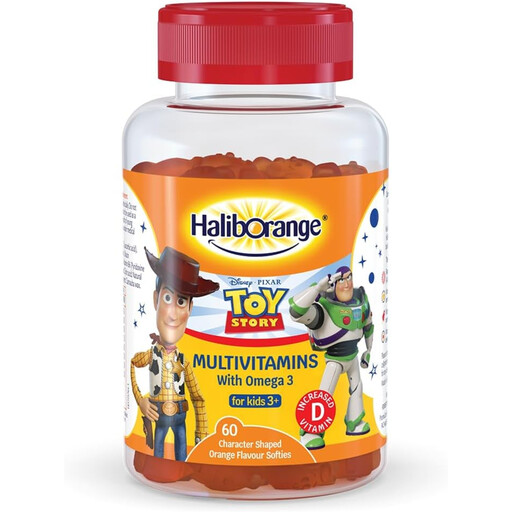
Why This Fits Their Persona: A straightforward option for families seeking one daily chewable format for children aged 3 and above, without buying separate multivitamin and ALA products.
The label states a clear two-softie daily serving and provides nutrient quantities, including 200 mg of ALA omega-3 per serving.
Orange flavour, character shapes, vitamins A, C, D, E and B vitamins; suitable from age 3.
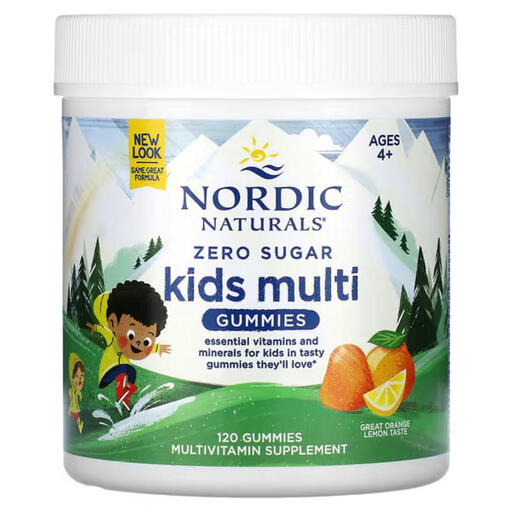
Why This Fits Their Persona: Suitable for families prioritising a vegetarian, zero-sugar gummy format for children aged 4 and above.
It clearly states zero sugar, vegetarian ingredients and a four-gummy serving, helping parents assess the real daily routine.
Provides 18 listed nutrients and uses xylitol and stevia instead of sugar.
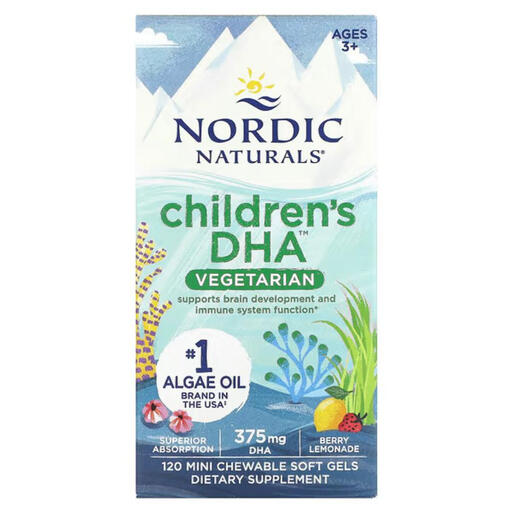
Why This Fits Their Persona: A practical match for vegetarian children or those who rarely eat fish and whose parents specifically want algae-derived DHA.
The label identifies 375 mg of DHA per four chewables and specifies algal oil, rather than leaving the omega-3 source unclear.
Vegetarian chewables, berry lemonade flavour and no fish-oil ingredient listed.
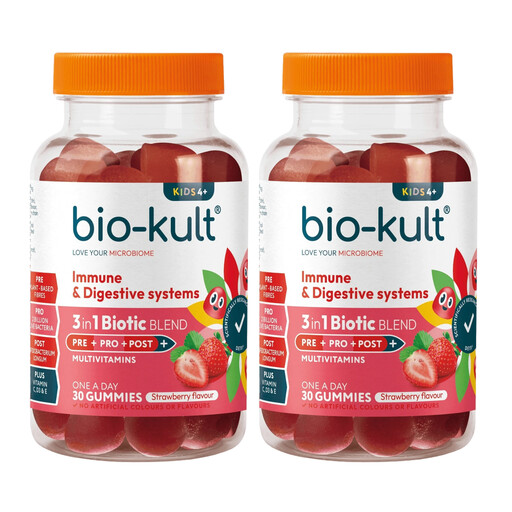
Why This Fits Their Persona: Designed for families looking to establish a simple daily children's digestive health supplements routine for children aged 4 and above.
The product states one gummy daily, gives a 2 billion CFU live bacteria amount and identifies milk and soya allergens.
Strawberry flavour, pre-, pro- and post-biotic ingredients, plus vitamins C and D3.
We have compiled a complete, real-time list of products that fully satisfy these strict selection criteria and UK safety regulations.
Not every child needs a multivitamin. A varied diet is the foundation, while supplements may be considered when dietary intake is limited or a healthcare professional recommends them. Check the label before adding a product to an existing routine.
Age guidance varies. Many chewable products are for children aged 3 or 4 and above because of choking risk. Do not give an older-child gummy to a toddler unless the label specifically allows it and a healthcare professional has advised you.
Keep the container tightly closed in a cool, dry place, away from direct sunlight and heat. Store supplements out of sight and reach of children, and check the best-before date and instructions after opening.