
24/7 全天候客户支持

免费退货

当日/次日达

品质保障

开启新人专享福利: 全场免邮 | 低至 2 折 | 免费试用 30 天 JoyPlus 会员
下载 Joybuy
Choosing children’s vitamins can look straightforward until you compare age ranges, dosage, ingredients, flavours and formats. Gummies may be easier for an older child, while a liquid or dropper can be more suitable for babies and toddlers. Some families also need vegan, vegetarian, gelatine-free, sugar-free or allergen-conscious options.
The right choice is not necessarily the product with the longest ingredient list. It is the one that matches your child’s age, diet, daily routine and any advice given by a GP, health visitor, pharmacist or paediatrician.
A soft gummy or chewable tablet may look appealing, but products designed for older children can present a choking risk for babies and younger toddlers. Check the stated age range and instructions rather than relying on the appearance of the product.
For infants, baby multivitamin drops and measured liquids are generally easier to administer accurately. Some liquids can be given by spoon or mixed with food or milk, but always follow the label instructions.
A formula listing 18 or 24 nutrients is not automatically more appropriate than one containing fewer ingredients. The relevant questions are:
Taking more than the recommended amount can lead to excessive intake, particularly when combining children’s vitamin supplements. Avoid doubling up on multivitamins unless a healthcare professional has advised it.
Children’s multivitamin gummies often use sugar, glucose syrup or sugar alcohols to improve flavour and texture. “No added sugar” does not always mean sugar-free, so check the nutrition panel and ingredients list.
Also look for gelatine, coconut, barley, soya, fish, nuts and other ingredients relevant to your household. A vegan label may address animal-derived ingredients, but it does not replace checking the complete allergen statement.
Age guidance is the first filter. For example:
Check whether the serving changes by age. A liquid may require half a 5 ml spoon for a young infant but a full spoon for an older child. Use the supplied syringe, spoon or measuring cap where provided.
Look for clearly listed amounts of vitamins A, C and D, as well as B vitamins, iron, zinc or iodine where relevant. Under UK nutrition labelling conventions, NRV means Nutrient Reference Value. It helps you compare the amount in a serving, but it is not a personalised recommendation for your child.
Vitamin D is particularly relevant to UK families because sunlight exposure varies by season, clothing and skin type. The NHS provides separate guidance for babies and children, so check current official advice before selecting a product.
A supplement may state that a nutrient contributes to normal immune function, energy-yielding metabolism, bones or psychological function. These are authorised nutrition claims about the nutrient; they should not be interpreted as a promise to prevent illness or replace medical treatment.
Choose a format your child can take safely and consistently:
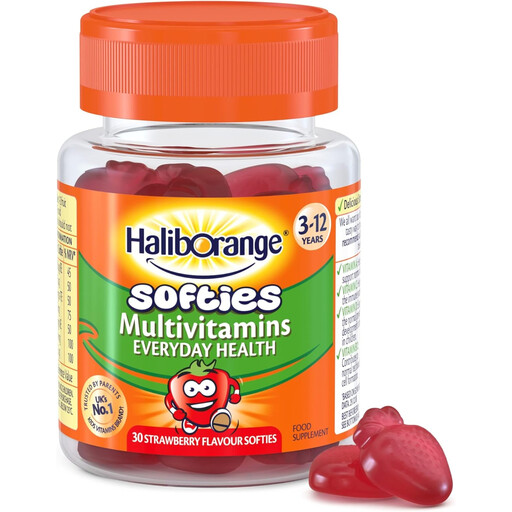
Why This Fits Their Persona: A straightforward daily option for families seeking a familiar soft chew for children aged 3–12, without adding omega-3 or specialist ingredients.
The age range and one-softie daily direction are clearly stated. Parents can check its bovine gelatine, coconut and rapeseed ingredients before ordering.
Strawberry flavour, soft chewable format and vitamins A, C, D, E, B6 and B12 per softie.
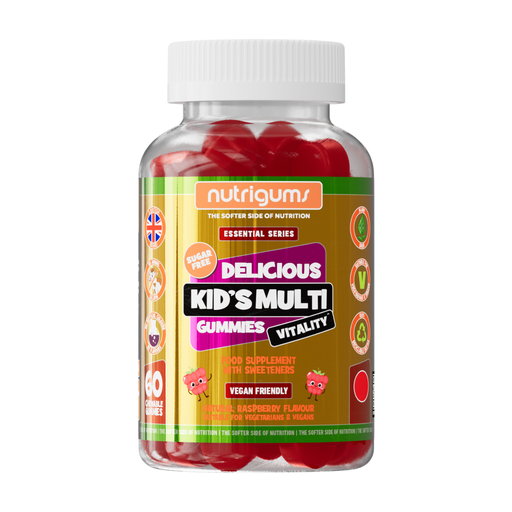
Why This Fits Their Persona: Designed for children aged 4–12 and families looking for a vegan, gelatine-free daily gummy with a mixed berry flavour.
It uses fruit-derived pectin instead of gelatine and lists gluten, dairy, soya and nuts as excluded ingredients. Check the latest label for formulation changes.
One gummy daily provides 12 listed vitamins and minerals, including vitamin D3, zinc and iodine.
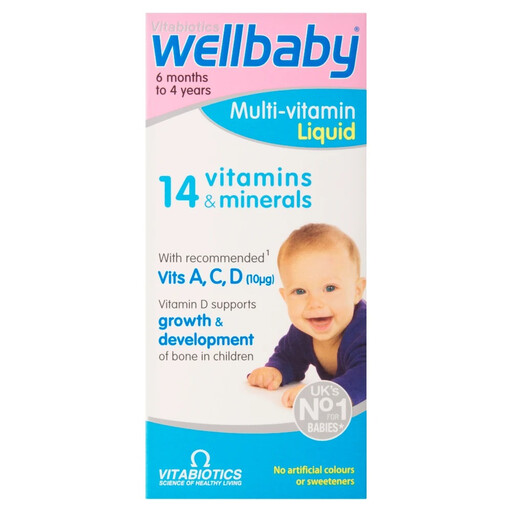
Why This Fits Their Persona: A measured liquid for infants and young children aged 6 months to 4 years, useful when gummies or tablets are unsuitable.
The product gives separate directions for 6–12 months and 1–4 years, with a measuring syringe supplied. It contains barley, so it needs careful allergen checking.
The 5 ml serving lists 14 nutrients, including vitamin D3, iron, zinc and B vitamins.
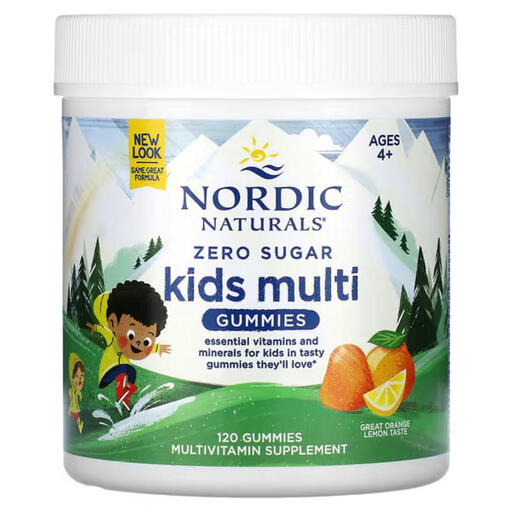
Why This Fits Their Persona: A vegetarian gummy option for children aged 4 and over where parents specifically want a zero-sugar formula.
The nutrition panel states 0 g total sugar, while the ingredient list identifies xylitol and stevia. Four gummies make up the stated daily serving, not one.
Provides 18 listed nutrients and uses pectin and tapioca fibre in a vegetarian gummy format.
We have compiled a complete, real-time list of products that fully satisfy these strict selection criteria and UK safety regulations.
There is no single age for every product. Some liquids are labelled from one month, while gummies and chewables may be restricted to age 3 or 4 and above. Follow the product label and current NHS guidance, and ask a health visitor, pharmacist or GP if your child is under one year, has a medical condition or takes prescribed medicine.
Do not assume that a gummy is suitable for a toddler. The child must be able to chew it thoroughly, and the stated age range must include them. Many gummies are not intended for children under 3 or 4 because of choking concerns. A measured liquid or drops product may be more appropriate.