
24/7 全天候客户支持

免费退货

当日/次日达

品质保障

开启新人专享福利: 全场免邮 | 低至 2 折 | 免费试用 30 天 JoyPlus 会员
下载 Joybuy
Choosing children's vitamins and supplements can feel unnecessarily complicated. Parents are often comparing colourful gummies, liquid drops, chewable vitamins for kids and products promising “complete” daily support, while the most important details are hidden in the small print.
The right choice depends on your child’s age, diet, allergies, preferred format and the nutrients already provided by other products. Use this guide to avoid common purchasing mistakes and compare suitable options available through Joybuy.
A product containing 14 or 15 nutrients is not automatically appropriate for every child. Age-specific dosage matters, particularly for infants and toddlers. A formula intended for children aged 4 to 12 should not be used for a baby simply because it contains similar vitamins.
Check the minimum age, serving size and daily maximum before considering the ingredient list.
It is easy to combine kids multivitamins with separate vitamin D for children, omega-3 vitamins or immune support supplements without checking for overlapping ingredients. This can lead to unnecessary intake.
Compare the nutrition panels of every supplement your child takes. If your child receives prescribed nutrition, has a medical condition, takes medication or has a restricted diet, ask a GP, pharmacist, health visitor or paediatric dietitian for suitable advice.
Children's multivitamin gummies and softies may be convenient for children who can chew thoroughly, but they are not suitable for younger children because of choking risks. Baby multivitamin drops and infant vitamin liquid are generally easier to measure for babies, provided the product’s label specifically includes the relevant age range.
Flavour and texture also affect regular use. A liquid may work well for a baby, while an older child may prefer chewable vitamins for kids.
Start with the product’s stated age category:
The UK Department of Health and Social Care provides guidance on vitamins for children. Government advice may vary by age and circumstances, so check current NHS guidance and the product label rather than relying on packaging claims alone.
Look at the actual amount per daily serving. Common nutrients include vitamins A, C and D, B vitamins, iron, zinc, iodine and vitamin E. Vitamin D contributes to normal bone and muscle function and normal immune system function, while iron contributes to normal cognitive development. These are authorised nutrition claims when used in accordance with UK rules; they are not promises to prevent illness or improve a child’s performance.
Families specifically comparing B vitamins for kids should check the individual amounts of B6, B12, niacin, riboflavin and pantothenic acid rather than choosing solely by the phrase “B complex”. You can browse the dedicated B vitamins for kids range for additional options.
Read the complete ingredient and allergen panel. Important checks include:
Always check the packaging supplied with your order, as formulations and instructions can change.
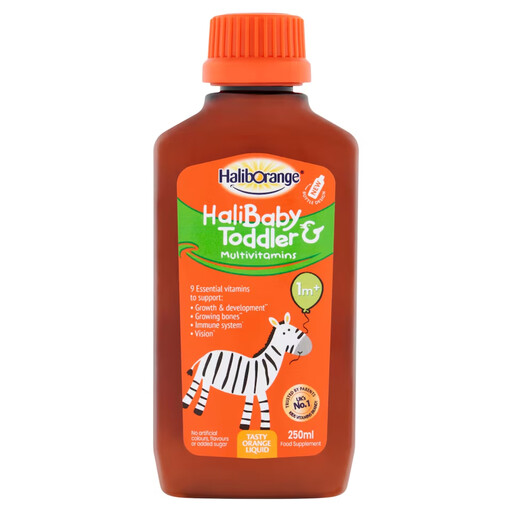
Why This Fits Their Persona: The 250ml bottle and liquid format suit families looking for a straightforward infant multivitamin liquid with a measured daily serving.
The label provides separate instructions for infants aged 1 to 4 months, 4 months to 4 years and children aged 4 years and over, helping avoid guesswork.
Contains vitamins A, C, D, E and B vitamins; the orange-flavoured liquid can be mixed with milk or water for babies up to 6 months, according to the product information.
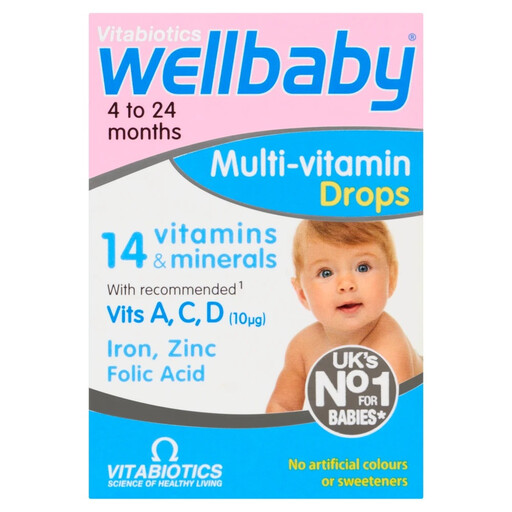
Why This Fits Their Persona: Parents wanting a compact baby multivitamin drops format with an oral syringe may find the measured administration practical for everyday routines.
The stated serving is 0.5ml twice daily and an oral syringe is included, reducing reliance on ordinary kitchen spoons.
Provides 14 listed nutrients, including vitamins A, C and D, iron and zinc; it is suitable for vegetarians but contains barley.
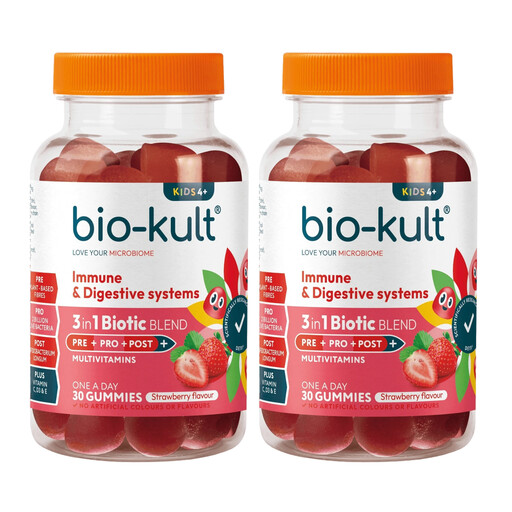
Why This Fits Their Persona: Families specifically seeking children's probiotic gummies for children aged 4 and above may prefer a one-gummy daily format.
The product states its age restriction, serving quantity and chew-before-swallowing instruction, rather than presenting a gummy as suitable for younger children.
Each gummy provides 2 billion live bacteria and vitamins C, D3 and E; it contains milk and soya, so check allergens carefully.
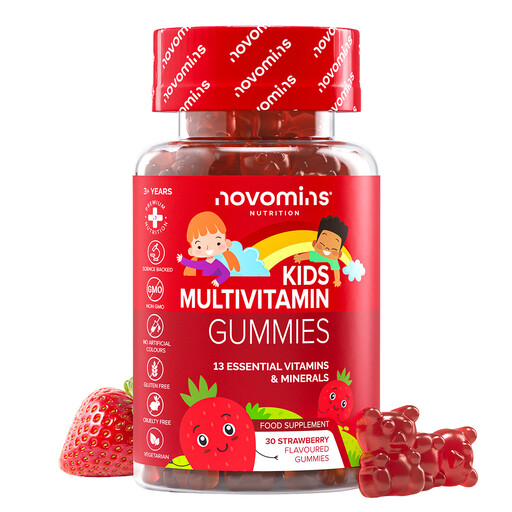
Why This Fits Their Persona: A pectin-based gummy can suit families looking for vegetarian children's supplements in a soft, fruit-flavoured format.
The ingredient information identifies pectin rather than gelatine and states suitability for vegans and vegetarians; the product remains subject to label checks.
One gummy provides 13 listed vitamins and minerals; the stated formula is free from the 14 major allergens, although individual ingredients should still be checked.
We have compiled a complete, real-time list of products that fully satisfy these strict selection criteria and UK safety regulations.
There is no single age for every product. Some infant vitamin liquid products begin at 1 month, while others are labelled for 4 or 6 months onwards. Follow the specific label and check NHS guidance. Ask a health visitor, GP or pharmacist before giving supplements to a very young baby.
Usually, gummies and softies are intended for older children who can chew thoroughly. Many products are labelled for age 3 or 4 and above because of choking concerns. Never give an older child’s gummy to a toddler without appropriate professional advice.
The lifespan varies. Some liquid products require refrigeration after opening and must be used within a stated period, while gummies are generally stored in a cool, dry place. Record the opening date, follow the label’s storage instructions and keep every supplement out of sight and reach of children.