
24/7 Customer Support

Free returns

Same-day & Next-day Delivery

Quality Guaranteed

Unlock Your Welcome Offers: FREE Delivery | Up to 80% OFF | Free 30-day JoyPlus trial
Download the APP
A jar of chilli pickle can add sharpness, heat and texture to an otherwise ordinary meal. However, not every product sold as a spicy pickle serves the same purpose. Some are crisp vegetables in vinegar, some are oil-based condiments, while others are sweet chilli jams or ready-to-eat snacks.
The main buying challenge is matching the product to your intended use. A chilli pickle for rice and congee may not work as a cheese-board spread, and a ready-to-eat snack may contain considerably more salt than a table condiment.
Labels often highlight words such as “fiery”, “bold” or “hot”, but heat does not explain the full flavour profile. Look for ingredients such as vinegar, garlic, ginger, fermented vegetables, Sichuan peppercorns or fruit to understand whether the product will taste sour, savoury, aromatic or sweet.
For example, pickled chillies tend to offer acidity and crunch, while chilli jam usually combines pepper heat with a high sugar content.
A 280g jar, a 100g snack pouch and a 128g chilli jam may all appear in searches for spicy condiments, but their uses are different. Check whether the product is:
Buying a large jar for occasional use may create unnecessary waste, particularly when the label requires refrigeration after opening.
Marketing language does not replace an ingredient list. Before buying Asian pickles or Chinese chilli pickle, check the actual contents, declared allergens, net quantity, storage advice and nutrition panel. These details provide a more useful comparison than vague claims about tradition or intensity.
The chilli variety and preparation method influence the eating experience. Bird’s eye chilli can provide a direct, bright heat, while smoked Scotch bonnet or red habanero may bring a more pronounced smoky character. Vinegar, lactic acid and other acidity regulators create the sour note associated with many pickled vegetables.
Texture matters too. Radish and bamboo shoots can remain crisp, whereas chilli chutney and chilli jam are generally softer and spreadable. Consider whether you want a topping, cooking ingredient or snack.
Nutrition panels help reveal how a product fits into everyday meals. For example, Jiaxingju Pickled Radish with Chili lists 1,100mg sodium and 2.8g salt per 100g, while Lao Gan Ma Spicy Pickled Vegetables lists 10.2g salt per 100g. These products can be strongly flavoured, so a small serving may be sufficient.
Sweet products require the same attention. Welshhomestead Smokery Scotch Bonnet & Mango Smoked Chilli Jam lists 63g sugars per 100g, and the Red Habanero & Strawberry version lists 64g sugars per 100g. These are more suitable for small portions alongside cheese or meat than for using as a large-volume cooking sauce.
Always read the current packaging before eating, particularly if you have an allergy or intolerance. Relevant examples across this range include:
Storage also varies. Some products are ambient before opening but require refrigeration afterwards. Others should be consumed promptly once opened. Follow the package instructions rather than relying on assumptions about pickled food.
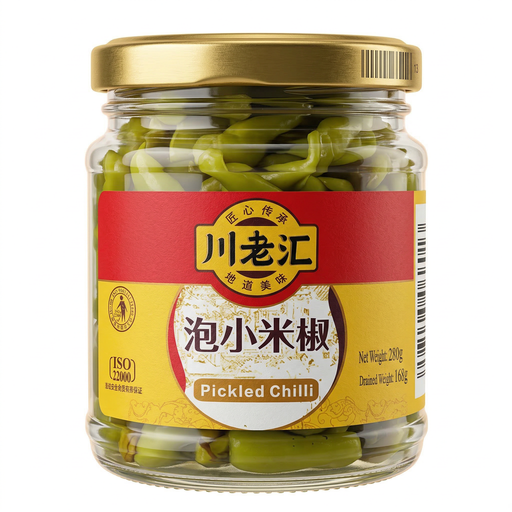
Why This Fits Their Persona: A straightforward option for shoppers trying Chinese-style pickled chillies with rice, noodles, salads or cold dishes without buying a very large pack.
Its ingredients clearly identify bird’s eye chilli, vinegar, sugar and spices, making the tangy profile easier to anticipate than relying on heat-focused wording alone.
Ready to eat, 280g net weight and suitable for use as a side dish, salad ingredient or cooking seasoning.

Why This Fits Their Persona: A suitable choice for UK shoppers who want a sweet, smoky spicy condiment for cheese, cooked meats or sharing platters.
The ingredient list shows mango at 16.5% and smoked Scotch bonnet chillies at 2.9%, clarifying that this is a sweet jam with chilli rather than a traditional sour pickle.
Contains mango and smoked chilli; 128g format is practical for occasional serving and storage.

Why This Fits Their Persona: Designed for frequent cooks who want a crunchy, oil-based topping for rice, congee, noodles, wraps and stir-fries.
The description identifies crisp mustard stems and chilli oil, so shoppers can distinguish its texture and format from a vinegar-based pickle.
Ready to eat and made with pickled mustard stems, rapeseed oil, chilli and spices for a savoury topping format.

Why This Fits Their Persona: The larger pack suits households that enjoy crunchy Asian pickles as snacks, side dishes or additions to cold dishes and stir-fries.
The pack specifies at least 70% bamboo shoots and at least 3% pickled chilli, giving a clearer picture of the vegetable-to-seasoning balance.
600g quantity, ready-to-eat format and 19 kcal per 100g as listed in the product information.
We have compiled a complete, real-time list of products that fully satisfy these strict selection criteria and UK safety regulations.
Many products are ready to eat, including pickled chillies, bamboo shoots and several spicy vegetables. Check the label before serving, as frozen products containing pickled chilli, such as dumplings, must be cooked according to their instructions.
There is no single lifespan for every jar or pouch. Some products advise refrigeration and use within a few weeks, while smaller snack packs may need to be consumed within 24 hours. Follow the storage and use-by or best-before information on the packaging.
It depends on the recipe. Vinegar-based pickles can be salty, oil-based Sichuan condiments may have a high salt content, and chilli jam or chilli chutney can contain substantial sugar. Compare the nutrition panel and use a small serving when pairing with already seasoned food.