
24/7 Customer Support

Free returns

Same-day & Next-day Delivery

Quality Guaranteed

Unlock Your Welcome Offers: FREE Delivery | Up to 80% OFF | Free 30-day JoyPlus trial
Download the APP
A chimney cooker hood can improve visibility, reduce cooking smells and help manage steam, but choosing the wrong model may leave you with excessive noise, weak airflow or expensive filter replacements. The product photographs often look similar, while the practical differences are found in extraction rates, ducting requirements, filters and installation measurements.
Before buying a chimney extractor hood, watch for three common traps:
A wall-mounted cooker hood should be selected around your hob size, cooking habits and kitchen layout rather than appearance alone.
The hood should generally be at least as wide as the hob beneath it. A 60cm cooker hood suits many standard four-zone hobs, while a 70cm cooker hood can provide additional coverage where wall space allows. For range cookers or wider cooking areas, consider a 90cm cooker hood or 100cm cooker hood.
A wider canopy may capture steam and smoke more effectively, but confirm the available wall space and the adjustable chimney height before ordering. Product dimensions can vary significantly in depth and height, particularly between curved glass, angled and T-shaped designs.
Airflow is normally shown in cubic metres per hour, written as m³/h. For occasional simmering, a lower setting may be adequate. Frequent frying, grilling or cooking with several pans benefits from a stronger motor and a dedicated boost function.
Do not compare extraction rates without checking how they are measured. For example, the Belling CHIM 603ANG BLK lists extraction up to 640m³/h, with a timed boost up to 710m³/h, whereas the Haier 90cm T-Shape Chimney lists 611m³/h standard extraction and 806m³/h on boost. These figures indicate the available airflow, not a guarantee of identical results in every kitchen.
Noise is measured in decibels, or dB(A). A lower number is generally more comfortable in an open-plan kitchen. The Belling 90cm model lists 46dB on speed one and 65dB on speed three, while the Candy CGM60NN lists 52–56dB(A) across its stated range. Duct length, bends and installation quality can also influence perceived noise.
A ducted cooker hood sends air outside through a duct, usually offering a direct way to remove steam and odours. The duct route should be as short and straight as practical, with the correct diameter. Check whether the hood supports 120mm or 150mm ducting, and whether an extraction kit is included.
A recirculating cooker hood passes air through grease and carbon filters before returning it to the room. This can suit flats, rented properties or kitchens without an external vent, but carbon filters need periodic replacement. Look carefully at whether the model includes them. The Haier HATS9CBS4B includes a carbon filter, while several Candy and CDA models specify carbon filters as optional.
Also check the installation guide for the required clearance above the hob. Some listed models specify a minimum of 650mm, but the correct distance depends on the appliance instructions and whether the hob is gas or electric.
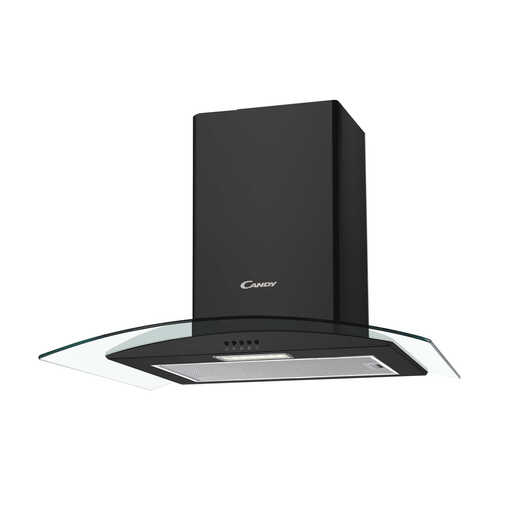
Why This Fits Their Persona: A straightforward 60cm option for a standard hob, with push-button controls and flexible installation for everyday cooking.
Its specifications state both ducted and recirculation use, while the washable aluminium grease filter helps avoid a disposable-filter-only design.
456m³/h maximum extraction, LED lighting and a dishwasher-safe grease filter.
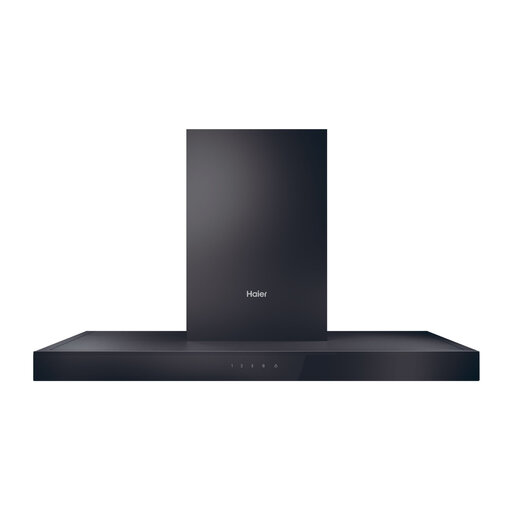
Why This Fits Their Persona: Designed for larger kitchens and shoppers wanting touch controls, a timer and a wider canopy for a substantial cooking area.
The listing separates standard and boost extraction figures and states that a carbon filter is included for recirculation.
90cm width, four speed settings including boost, 57dB(A) minimum noise and A+ energy rating.
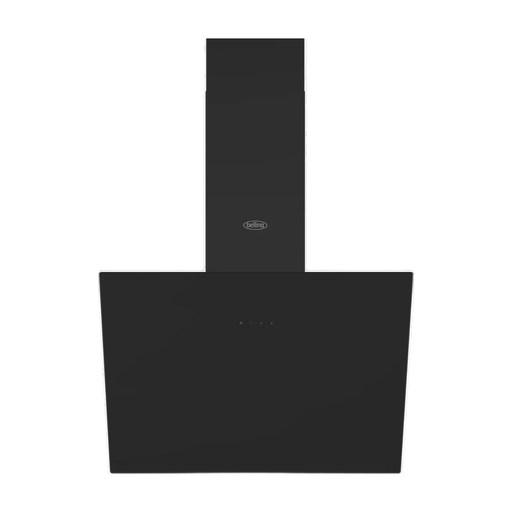
Why This Fits Their Persona: Suits frequent frying, stir-frying and high-heat cooking where a temporary increase in airflow is useful.
It gives separate standard and boost airflow figures, includes dishwasher-safe filters and supports ducted or recirculating installation.
Up to 640m³/h extraction, timed boost up to 710m³/h, touch controls and LED lighting.
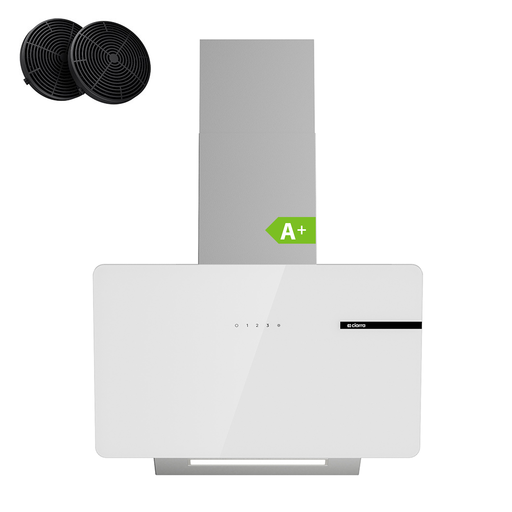
Why This Fits Their Persona: The angled profile can improve headroom, while dual installation options are useful where external ducting is difficult.
The product information identifies both ducting accessories and carbon filters, rather than leaving the installation method unclear.
Approximately 580m³/h airflow, five-layer washable aluminium filtration and A+ energy rating.
We have compiled a complete, real-time list of products that fully satisfy these strict selection criteria and UK safety regulations.
It can be, provided the landlord and installation conditions allow it. A recirculating cooker hood avoids the need for an external wall duct, but it requires compatible carbon filters and regular replacement. Check the tenancy agreement before making structural changes.
Choose a hood at least as wide as the hob. A 60cm model generally suits a standard hob, while 70cm, 90cm and 100cm models provide broader coverage for larger cooking areas. Always measure the available wall width and check the chimney dimensions.
Running cost depends on the motor, energy rating, speed selected and frequency of use. LED lighting and lower-speed operation can reduce electricity consumption, while boost settings use more power. Compare the stated annual energy consumption rather than relying only on the energy label.