
24/7 Customer Support

Free returns

Same-day & Next-day Delivery

Quality Guaranteed

Unlock Your Welcome Offers: FREE Delivery | Up to 80% OFF | Free 30-day JoyPlus trial
Download the APP
A chimney cooker hood can become a practical ventilation system or an expensive decorative feature that struggles with steam, grease and odours. The difference usually comes down to installation, sizing and whether the advertised extraction figure reflects the way you will actually use the appliance.
For UK kitchens, the most common buying mistakes are easy to overlook:
A wall-mounted cooker hood should generally provide coverage across the cooking area. A 60cm cooker hood suits many standard four-zone hobs, while 90cm cooker hoods are more suitable for wider hobs or busy family kitchens. For range cooker installations, consider 100cm cooker hoods or 110cm cooker hoods, depending on the width of the appliance and available wall space.
Measure the actual hob, not just the gap between cabinets. Also check the hood’s depth, chimney height and mounting position. For example, the Belling COOKCENTRE CHIM 110PYR STA measures approximately 109.8cm wide, while the Belling 100cm model is designed for broader cooking areas.
Always follow the supplied installation instructions for clearance above a gas or electric hob. Several listed models specify a minimum clearance of 650mm, but the correct distance depends on the product, hob type and manufacturer guidance.
Airflow is usually shown in cubic metres per hour, written as m³/h. A higher figure can be useful for intensive cooking, but duct length, bends, outlet diameter and installation quality all affect the result.
For comparison:
Treat these figures as manufacturer-stated specifications rather than a guarantee of performance in every kitchen. If you frequently fry, stir-fry or use several pans, prioritise suitable width, a short and reasonably straight duct route and a useful boost setting.
Ducted cooker hoods expel air outside through ducting. This can help remove moisture as well as cooking odours, but installation requires a suitable external route and may involve building or electrical work.
Recirculating cooker hoods are more flexible for flats, rented properties or kitchens without an external wall. They require carbon filters, which need periodic replacement. Confirm whether these filters are included or sold separately.
Grease filters also need regular attention. Washable aluminium filters are reusable, but cleaning frequency depends on cooking habits. A dishwasher-safe filter can reduce maintenance effort. Energy ratings, LED lighting and low-wattage motors may also help limit ongoing electricity use, although total costs depend on usage and tariff.
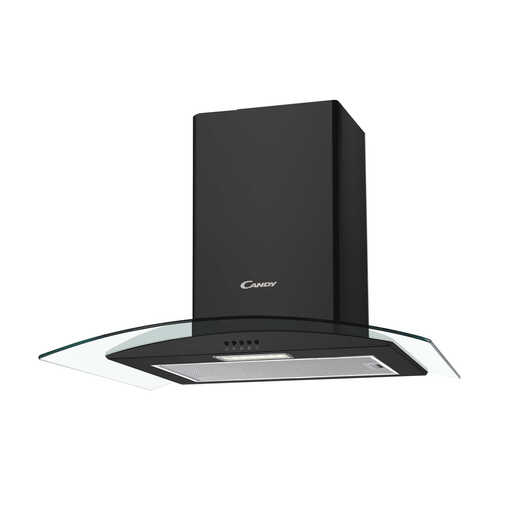
Why This Fits Their Persona: Its 60cm width suits many standard UK kitchen layouts, while three speeds and LED lighting cover everyday simmering, boiling and frying.
The listed specifications show both ducted and recirculation options, plus a washable dishwasher-safe aluminium filter. Carbon filtration is optional for recirculation.
456m³/h maximum ducted extraction, 52–56dB noise rating and two integrated LED lamps.
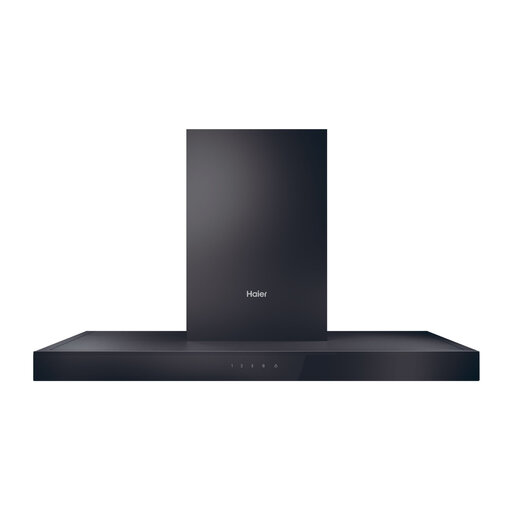
Why This Fits Their Persona: A 90cm black cooker hood with touch controls, timer and Boost suits renovated kitchens where appearance, control and performance are all priorities.
The specification lists standard and Boost airflow separately, making it easier to compare everyday use with short intensive extraction. A carbon filter is included for recirculation.
806m³/h Boost, A+ energy class, four speeds, timer and 57dB minimum listed noise level.
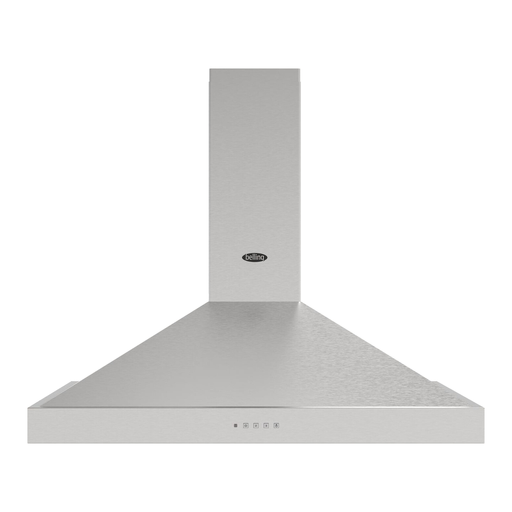
Why This Fits Their Persona: Its 110cm canopy is designed for larger hobs and range cookers, providing broader coverage than a standard 60cm hood.
The wider design avoids relying on a narrow canopy over multiple burners. It supports ducted or recirculating installation, with carbon filters required for the latter.
600m³/h extraction, two LED spotlights and dishwasher-safe aluminium grease filters.
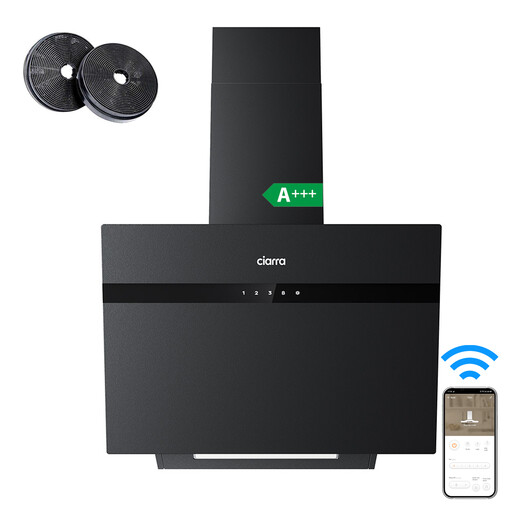
Why This Fits Their Persona: The sloped profile can improve headroom above a 60cm cooking zone, while app and Wi-Fi controls add convenience for contemporary kitchens.
The product information states both ducting and recirculation support, washable filtration and a maximum noise level, rather than relying only on design-led descriptions.
650m³/h listed airflow, two-level LED lighting and adjustable wall-mounted height.
Before ordering chimney extractor hoods, confirm:
Switch the hood on shortly before cooking and keep it running briefly afterwards to help capture lingering vapour. Never use an open flame beneath the hood and do not operate it without the grease filters correctly fitted.
We have compiled a complete, real-time list of products that fully satisfy these strict selection criteria and UK safety regulations.
Yes, if the model supports recirculation. You will need the correct carbon filters and these may be optional rather than included. Recirculation returns filtered air to the room, so it does not remove cooking moisture as external ducting does.
Washable aluminium or metal grease filters should be cleaned regularly, often every two to four weeks for frequent cooking. Heavy frying may require more frequent cleaning. Carbon filters used in recirculating cooker extractor hoods are consumable items and should be replaced according to the product manual.
Not necessarily. Running cost depends on motor power, energy rating, speed selected and frequency of use. A 90cm, 100cm or 110cm hood may use more power at maximum output, but a suitable wider hood can avoid needing to run a smaller appliance constantly at its highest setting. Check the annual energy consumption figure where supplied.