
24/7 Customer Support

Free returns

Same-day & Next-day Delivery

Quality Guaranteed

Unlock Your Welcome Offers: FREE Delivery | Up to 80% OFF | Free 30-day JoyPlus trial
Download the APP
A wall-mounted chimney hood can improve visibility, reduce cooking odours and help manage steam, but choosing the wrong model may create installation problems or disappointing day-to-day performance. Product pages often focus on maximum airflow or appearance while leaving out practical details such as duct size, filter costs and the space needed above the hob.
This guide explains the specifications that matter when comparing chimney cooker hoods for UK kitchens, followed by recommendations matched to different cooking habits and room layouts.
A cooker hood should provide suitable coverage across the cooking surface. A 60cm cooker hood generally suits a standard 60cm hob, while a 90cm cooker hood, 100cm cooker hood or 110cm cooker hood is more appropriate for wide hobs and range cookers.
A canopy that is narrower than the hob may leave the outer cooking zones less effectively covered. Measure the hob or range cooker itself rather than relying only on the available wall space.
A high extraction figure can be useful during frying or boiling, but it does not tell you everything. Check whether the figure refers to a boost setting, the highest fan speed or a normal operating level. Noise can also increase at higher speeds.
For example, the Belling COOKCENTRE CHIM 100T STA lists extraction of up to 580m³/h and noise levels of 46–65dB, depending on the setting. These figures provide more useful context than a general “powerful extraction” description.
A ducted cooker hood sends air outside through a duct, while a recirculating cooker hood passes air through grease and carbon filters before returning it to the room. Recirculation can be useful where an external vent is impractical, but carbon filters are usually an additional consumable and need periodic replacement.
Confirm whether carbon filters are included, compatible or sold separately before ordering. Also check the duct route, outlet diameter and wall or ceiling access if you intend to use external extraction.
Match the hood width to the cooking appliance:
Installation height is equally important. Several Belling models specify a minimum clearance of 650mm above the hob, but the correct distance depends on the hood, hob type and manufacturer’s instructions. Always follow the supplied installation guide, particularly for gas appliances.
If your kitchen already has a suitable external route, ducted extraction can remove moisture and odours from the room. Check the required duct diameter: some models support 120mm or 150mm ducting, while others specify a particular connection.
For a property without practical external ventilation, recirculation offers a more flexible installation. It does not remove moisture from the kitchen, however, so regular ventilation may still be needed when boiling or steaming.
You can browse additional external-vent options in the ducted kitchen extractor fan range.
Washable grease filters reduce ongoing maintenance costs compared with disposable alternatives. Aluminium filters should be removed and cleaned at intervals suited to your cooking frequency; some are dishwasher-safe, but check the product instructions.
Controls are a matter of preference:
An extractor hood with LED lights can provide useful hob illumination while avoiding the need for separate task lighting. Check the number and position of lamps, especially on 90cm and wider models.
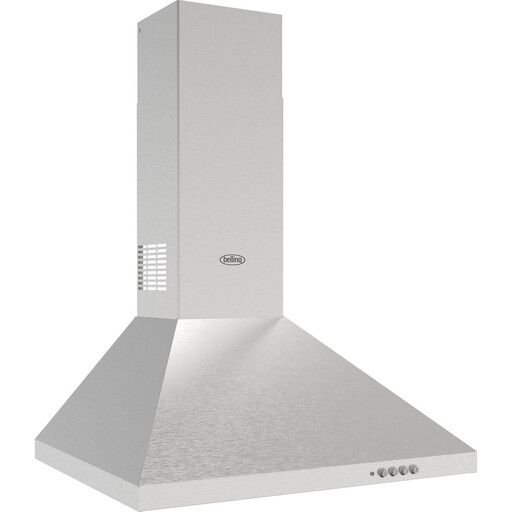
Why This Fits Their Persona: Its 60cm width suits many standard UK hobs, making it a practical choice for a first kitchen installation or compact renovation.
The specification states 600m³/h maximum extraction, three speeds and ducted or recirculation installation rather than relying only on general performance wording.
Stainless steel finish, LED spotlights, dishwasher-safe aluminium grease filters and adjustable chimney height.
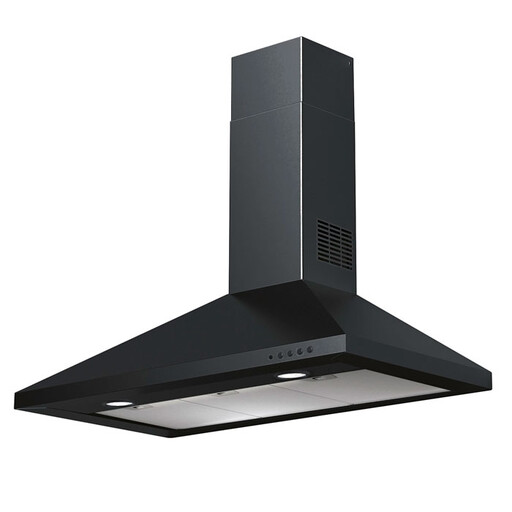
Why This Fits Their Persona: The black glass finish and electronic touch controls suit contemporary kitchens where the hood is part of the visual design.
The listed specification separates four speeds and boost from the maximum 850m³/h airflow, helping buyers understand how the controls relate to usage.
90cm coverage, ducted or recirculation operation, two LED lamps and washable metal grease filters.
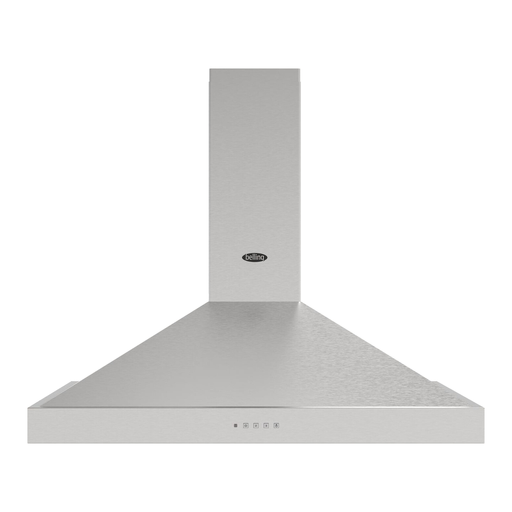
Why This Fits Their Persona: The 110cm canopy is intended for broad hobs and range cookers used frequently for frying, boiling and multi-pan cooking.
Its stated 600m³/h extraction rate is paired with three speeds, filter details and an adjustable chimney rather than width alone being used as a performance indicator.
Ducted and recirculation modes, dishwasher-safe aluminium filters, two LED spotlights and an extendable chimney from 80cm to 114cm.
We have compiled a complete, real-time list of products that fully satisfy these strict selection criteria and UK safety regulations.
Ducted extraction is generally more appropriate where an external route can be installed correctly, as it sends cooking air outside. Recirculation is more flexible for flats, internal walls or layouts without a vent, but it requires carbon filters and does not expel moisture. Confirm the installation method and accessories before purchasing.
The required clearance varies by model and hob type. Several products in this selection specify 650mm minimum clearance, but the manufacturer’s installation instructions take priority. A qualified installer should confirm the final position, particularly when fitting above gas equipment.
Grease filters should be cleaned regularly, with the interval depending on how often and how intensely you cook. Frequent frying may require cleaning every few weeks. If using recirculation, monitor the carbon filters and replace them according to the manufacturer’s instructions. Regular maintenance supports airflow and reduces grease build-up inside the hood.