
24/7 Customer Support

Free returns

Same-day & Next-day Delivery

Quality Guaranteed

Unlock Your Welcome Offers: FREE Delivery | Up to 80% OFF | Free 30-day JoyPlus trial
Download the APP
As a Joybuy Product Recommendation Officer, my role is to help you navigate the crowded aisles of Asian groceries and make informed choices. When it comes to Chinese bean curd, the variety can be overwhelming, and a simple mistake can lead to a disappointing meal. Many home cooks in the UK find themselves with tofu that either disintegrates in the pot or fails to absorb any flavour.
Before you add another block of the wrong tofu to your basket, let's look at the common traps that catch out even seasoned foodies:
To choose the right product every time, you need to understand a few key characteristics. This isn't about complex science; it's about matching the product's form to your recipe's function.
The single most important factor is the form of the bean curd, which dictates its texture and best use. Asian tofu products are not one-size-fits-all.
Fresh & Ambient Tofu: This is the most common category, sold in water-filled packs.
Frozen Tofu: Freezing tofu changes its structure entirely. As water freezes into ice crystals, it creates small holes within the tofu. When thawed, the result is a spongy, porous block that acts as a flavour magnet. This makes frozen tofu an outstanding choice for any dish with a flavourful broth, especially tofu for hot pot.
Dried Bean Curd: This category includes products like yuba (the skin that forms on top of heated soy milk). It is sold as dried bean curd sticks, sheets or pre-tied tofu knots. These products are prized for their concentrated soy flavour and uniquely chewy, meaty texture after rehydration. They require soaking in water before use but reward the effort with a satisfying bite that fresh tofu cannot replicate.
Think about your final dish before you shop.
Based on these practical considerations, here are a few recommendations from our catalogue, matched to different cooking needs and preferences.
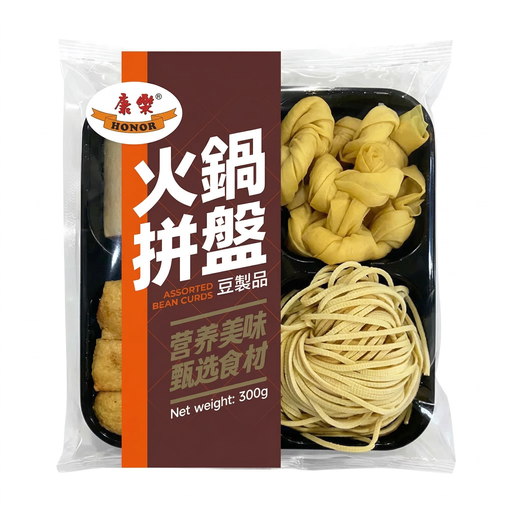
Why This Fits Their Persona: This user wants to create an authentic and varied hot pot experience at home without buying five different products. This platter provides a curated selection of textures in one convenient package.
Directly solves the "overlooking speciality forms" pitfall by introducing tofu knots, fried tofu balls and slices in one go. It removes the guesswork from selecting hot pot ingredients.
Offers a variety of textures (chewy, spongy, soft) that absorb broth differently, enhancing the eating experience. Convenient frozen format.
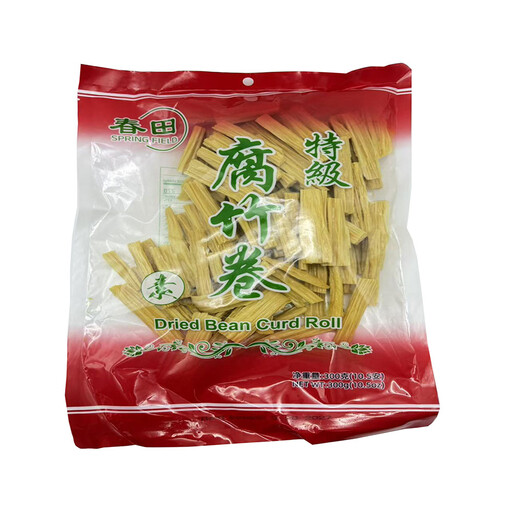
Why This Fits Their Persona: This home cook is looking for fuzhu or yuba for traditional braised dishes, soups or salads. They need a product that delivers an authentic, chewy texture and rich soy flavour that fresh tofu lacks.
This is the solution for the "dried vs. fresh" confusion. It is a pantry staple with a long shelf life, perfect for those who cook authentic Chinese dishes regularly and understand the need for rehydration.
Extremely high in protein (29g per 100g). Provides a satisfying, layered, and chewy texture that is central to many classic recipes. Stores for a long time in the pantry.

Why This Fits Their Persona: This person needs a reliable, plant-based protein source that works for everything from weekday stir-fries to weekend curries. Convenience and versatility are paramount.
This firm tofu is the antidote to the "texture mismatch" trap. Its robust structure holds up to vigorous cooking, ensuring it won't disintegrate. The ambient packaging means it can be stored in the cupboard, ready for any meal.
Pantry-stable (ambient) and made with just three ingredients. Its firm texture is exceptionally versatile for grilling, baking and frying, holding its shape perfectly.
We have compiled a complete, real-time list of products that fully satisfy these strict selection criteria and UK safety regulations.
Preparation is simple but essential. Submerge the dried bean curd sticks in a large bowl of warm (not boiling) water for 30-60 minutes, or until they are fully pliable and softened. Some thicker sticks may take longer. Once rehydrated, drain them, rinse with fresh water and cut them into your desired lengths for use in stir-fries, braises or soups.
Yes, you can. This is a great way to replicate the texture of commercially frozen tofu. Simply drain a block of firm or extra-firm tofu, press out as much water as possible, cut it into cubes or slices and freeze it in a single layer on a tray. Once solid, transfer it to a freezer bag. It will develop the same porous, sponge-like texture that is perfect for absorbing broths.
While both are made from soybeans, the primary difference often lies in the coagulant used and the resulting texture. Many traditional Japanese tofu products, particularly silken varieties, use nigari (magnesium chloride), which can result in an exceptionally smooth, slightly sweeter-tasting tofu. Chinese tofu often uses calcium sulphate, which yields a slightly different texture. However, these are generalisations and you will find a wide variety of textures and styles from both cuisines.