
24/7 Customer Support

Free returns

Same-day & Next-day Delivery

Quality Guaranteed

Unlock Your Welcome Offers: FREE Delivery | Up to 80% OFF | Free 30-day JoyPlus trial
Download the APP
A versatile Chinese chef knife can transform your kitchen prep, handling everything from delicate herbs to hearty vegetables with remarkable efficiency. However, the UK market is filled with options that look the part but fail to deliver. Many home cooks find themselves with a knife that dulls quickly, feels unbalanced or worse, becomes a safety hazard.
As a Joybuy Product Recommendation Officer, my role is to help you navigate past the marketing clutter. Before you make a purchase, be aware of these common pitfalls:
To ensure you get a tool that's a joy to use for years, focus on these core parameters.
The most critical distinction is the blade's thickness and purpose. A true Chinese chef knife is typically a versatile slicer, not a bone chopper.
The metal used for the blade dictates its character. The two main types you'll encounter are high-carbon steel and stainless steel.
For safety, balance and durability, a full tang is non-negotiable. This means the steel of the blade runs the full length and width of the handle, sandwiched between two handle "scales". A full tang provides superior strength and creates a balanced feel in the hand, reducing fatigue during prolonged use. You can often see the strip of metal running along the spine of the handle.
Instead of providing a generic list, we've matched our recommendations to specific user needs.
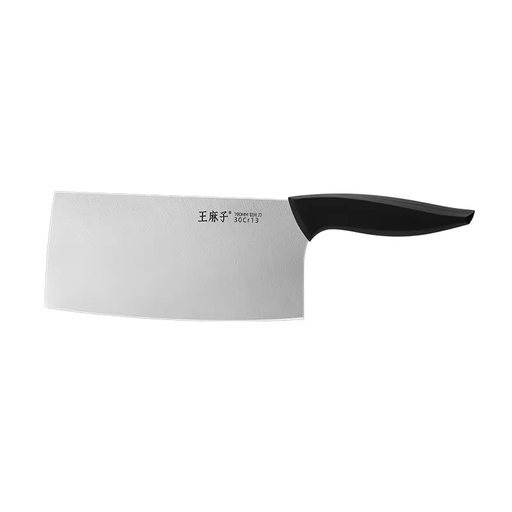
Why This Fits Their Persona: This is for the home chef who needs a reliable workhorse for daily meal prep. It's versatile enough for slicing vegetables, dicing meat and general kitchen tasks without needing to switch tools.
It is clearly defined as a multi-purpose cleaver for meat and vegetables, avoiding the "one-size-fits-all" trap. Its forged construction ensures a more robust build than cheap, stamped alternatives.
Forged from high-quality stainless steel for good durability and corrosion resistance. The 190mm blade offers a great balance between agility and capability.
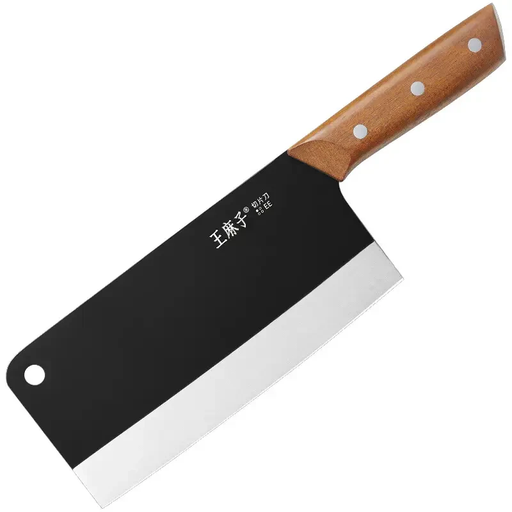
Why This Fits Their Persona: For the cook who appreciates traditional craftsmanship and requires a dedicated tool for precise slicing. The hand-forged nature and natural wood handle appeal to those who see their tools as an extension of their craft.
This is explicitly a hand forged knife for slicing, not a heavy chopper. The focus on quality materials like Acacia wood for the handle indicates a build quality that avoids the weak points of cheaper knives.
The hand-forged, blackened blade offers superior stain resistance and a razor-sharp edge for effortless slicing. The natural wood handle provides a secure, comfortable grip.
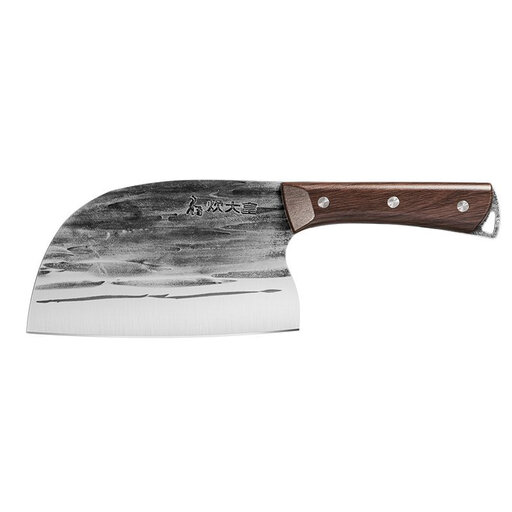
Why This Fits Their Persona: Perfect for someone curious about this style of knife who wants a functional, reliable entry point without a significant financial commitment. It offers a tangible step up from basic supermarket knives.
Its hand-forged construction provides better durability and balance than cheap, stamped knives with partial tangs. It is clearly marketed as a slicing knife, setting correct expectations for its use.
Features a hand-forged stainless steel blade that offers good edge retention and corrosion resistance for its price point. The full-tang construction ensures better balance and longevity.
We have compiled a complete, real-time list of products that fully satisfy these strict selection criteria and UK safety regulations.
Although they look similar, their functions are very different. A Chinese chef knife (or cai dao) is a general-purpose kitchen knife with a relatively thin blade, designed for slicing, dicing and mincing vegetables and boneless meats. A meat cleaver is a much heavier, thicker tool built specifically for chopping through bones and tough connective tissue. Using a chef knife for a cleaver's job will likely ruin the blade.
A hand forged knife, especially one made from high-carbon steel, requires a little extra care to prevent rust. The key is to always hand wash it with mild soap and warm water immediately after use. Never leave it to soak in the sink or put it in the dishwasher. Dry it thoroughly with a cloth before storing it. For long-term storage, you can apply a thin coat of food-safe mineral oil to the blade.
It is one of the most versatile tools in the kitchen, but it is not a "do-everything" knife. It excels at chopping, slicing and dicing. The broad, flat blade is also excellent for scooping up ingredients from the cutting board. However, it is not designed for tasks like peeling, intricate carving or de-boning, where a smaller paring or boning knife would be more suitable. And as mentioned, it should not be used for heavy-duty bone chopping.