
24/7 Customer Support

Free returns

Same-day & Next-day Delivery

Quality Guaranteed

Unlock Your Welcome Offers: FREE Delivery | Up to 80% OFF | Free 30-day JoyPlus trial
Download the APP
The Chinese chef knife, often called a Chinese cleaver, is one of the most versatile tools you can have in your kitchen. Its broad, rectangular blade can handle everything from finely mincing garlic to slicing meat and transferring ingredients from the board to the pan. However, its growing popularity has led to a market flooded with options, making it easy to choose a knife that isn't right for your needs.
Many buyers in the UK find themselves with a tool that either chips on its first encounter with a chicken bone or feels too heavy and clumsy for daily vegetable prep. Before you invest, it's crucial to understand the key differences that separate a reliable kitchen workhorse from a disappointing purchase.
Navigating the marketing claims can be tricky. Here are the most common mistakes we see buyers make, leading to wasted money and frustration.
The most significant error is confusing a delicate slicing cleaver with a heavy-duty bone chopper. A traditional Chinese chef knife (known as a càidāo, 菜刀) is designed for slicing, dicing and mincing vegetables and boneless meats. Its blade is thin and sharp. Using it to hack through bones or frozen food will almost certainly cause the edge to chip or crack. A true bone chopper is a much thicker, heavier and more robust tool designed specifically for butchery.
"Stainless steel" is a broad term. Many affordable knives use a softer grade of stainless steel that, while rust-resistant, loses its edge very quickly and requires constant sharpening. Conversely, a hand forged kitchen knife made from high-carbon steel can hold a razor-sharp edge for much longer but requires more care—it must be washed and dried immediately after use to prevent rust. Choosing the wrong steel for your habits means you'll either be constantly sharpening or constantly fighting rust.
A knife's performance isn't just about the blade. A poorly balanced knife, where the blade is too heavy for the handle, will feel unwieldy and fatiguing to use. The handle's material and shape are equally important. A handle that is too blocky, slippery when wet or doesn't fit your hand properly can make even simple tasks uncomfortable and unsafe.
To avoid these pitfalls, focus on these three non-negotiable parameters.
This is the first thing you must identify. Look at the blade's thickness.
Your choice here depends on how much maintenance you are willing to do.
The tang is the part of the blade that extends into the handle. A full tang, where the steel runs the entire length and width of thehandle, provides superior strength, durability and balance. It is a hallmark of a well-made knife. Also, consider the handle material—wood offers a classic look and comfortable grip, while composite materials can provide greater durability and water resistance.
Based on these practical criteria, we've matched a few standout options to different types of cooks.
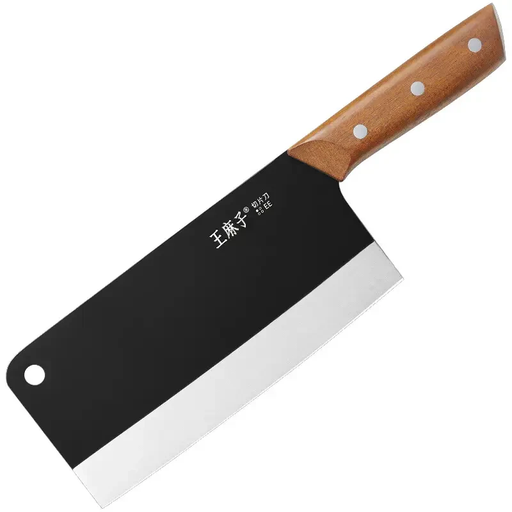
Why This Fits Their Persona: This is an ideal all-rounder for daily meal prep in a typical UK household. It's designed as a versatile slicing and vegetable knife, perfect for everything from stir-fries to Sunday roasts (for boneless meat). The Acacia wood handle provides a comfortable, secure grip for everyday tasks.
It is clearly defined as a slicing and vegetable knife, preventing the user from mistakenly using it as a heavy-duty chopper. The blackened finish offers enhanced stain resistance, mitigating some of the maintenance concerns of traditional forged knives.
The hand-forged construction provides good sharpness and durability, while the ergonomic Acacia wood handle ensures comfort and control during use.
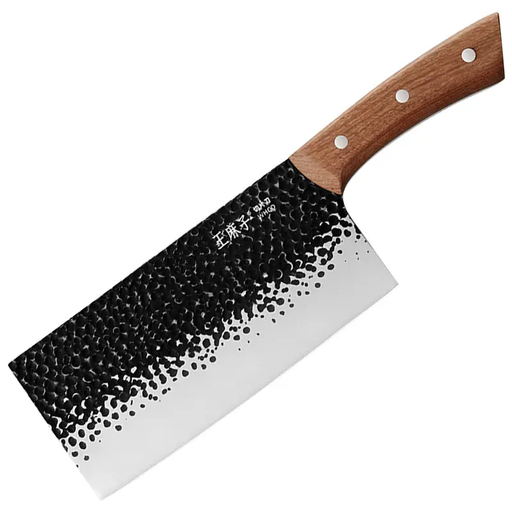
Why This Fits Their Persona: For the serious cook who values precision and craftsmanship, this Shenmu Series cleaver is an excellent choice. It is explicitly a slicing knife, designed for flawless performance and control. It's an investment in quality for someone who spends a lot of time on food preparation and appreciates a high-performance tool.
This knife is positioned as a premium slicing tool, not a brute-force chopper. Its focus on "flawless performance" and "clean, professional slices" clearly communicates its intended purpose, steering users away from misuse.
It offers a combination of exceptional sharpness for precise tasks and an ergonomic handle designed for comfort during extended use, reflecting a balance of traditional craftsmanship and modern functionality.
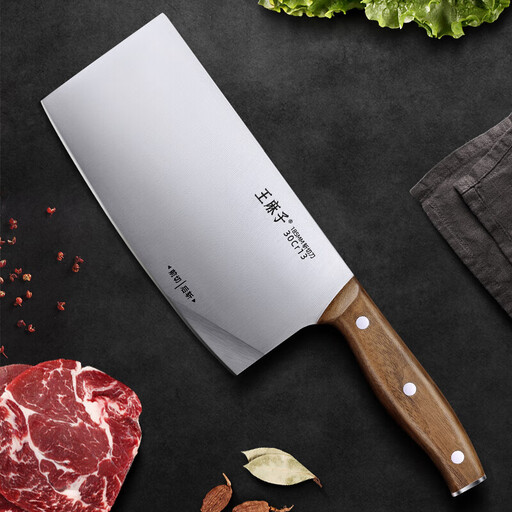
Why This Fits Their Persona: This is the right tool for the job. For anyone who breaks down whole chickens, chops through ribs or needs to handle heavy butchery tasks, a dedicated bone cleaver is essential. This knife is built for power and durability, not delicate slicing.
Its name and description leave no room for confusion. It is a bone chopper, engineered for "heavy-duty chopping" and "splitting through bones." This prevents the primary pitfall of buying the wrong type of cleaver for demanding tasks.
The robust, thick blade is forged from durable stainless steel for strength and rust resistance. The solid walnut handle provides a secure, ergonomic grip needed for forceful chopping tasks.
We have compiled a complete, real-time list of products that fully satisfy these strict selection criteria and UK safety regulations.
As a general rule, you should not put any good quality kitchen knife in the dishwasher, and this is especially true for a Chinese chef knife. The harsh detergents, high heat and potential for banging against other items can dull the blade, damage wooden handles and cause corrosion on high-carbon steel. The proper method is to hand wash with soap and water and, most importantly, dry it immediately and thoroughly.
The most effective way to sharpen a Chinese cleaver is with a whetstone. Because of the wide, flat blade profile, some users find it easier to maintain a consistent angle compared to a curved Western-style knife. Lay the blade flat on the stone and then raise the spine slightly to find the correct angle (usually 15-20 degrees for a slicing cleaver). Use smooth, even strokes, ensuring you sharpen both sides equally.
Yes, they are very different. A Western meat cleaver is almost always a heavy, thick bone chopper designed for hacking through bone. A Chinese chef knife, unless it is specifically designated as a bone chopper, is a much thinner, lighter, all-purpose kitchen knife used for slicing and chopping vegetables and boneless meats. Confusing the two is a common mistake that leads to damaged knives.