
24/7 Customer Support

Free returns

Same-day & Next-day Delivery

Quality Guaranteed

Unlock Your Welcome Offers: FREE Delivery | Up to 80% OFF | Free 30-day JoyPlus trial
Download the APP
A versatile Chinese chef knife can transform your daily meal preparation, making chopping, slicing and dicing feel effortless. However, the UK market is filled with options that look similar but perform very differently. Many home cooks invest in a new knife only to find it's unwieldy, dulls quickly or simply isn't suited for their needs.
As a Joybuy Product Recommendation Officer, my role is to help you see past the marketing clutter. Before you make a purchase, let's look at the common pitfalls that lead to buyer's remorse and how you can choose a tool that will serve you well for years.
all purpose kitchen knife capable of everything from delicate slicing to chopping bone. In reality, a blade thin enough for precise vegetable work will be damaged by bone, while a thick, heavy cleaver is too clumsy for fine dicing. This mismatch is a primary source of frustration.stainless steel cleaver may resist rust but will lose its edge rapidly, while a poorly made forged steel knife might be brittle or rust at the first sign of moisture.To make a smart choice, you need to understand the core features that define a good Chinese chef knife. Here are the non-negotiable parameters to check.
The steel determines how sharp the knife can get, how long it stays sharp (edge retention) and its resistance to rust.
sharp kitchen knife that is also resilient.The most critical distinction in Chinese cleavers is their intended function, reflected in the blade's thickness and weight.
vegetable cleaver or meat slicing knife most people think of. It has a thinner, lighter blade designed for precision. It excels at slicing, dicing and mincing vegetables, herbs and boneless meats. Its wide, flat surface is also perfect for scooping and transferring ingredients from the cutting board to the pan.kitchen cleaver. It is significantly thicker, heavier and more robust. Its purpose is to handle tough tasks like cutting through poultry bones, cartilage and hard-skinned squash. Using a slicing cleaver for these jobs is a sure way to chip or damage the blade.The tang is the part of the blade that extends into the handle. A full tang means the steel runs all the way through the handle in one solid piece. This provides superior strength, durability and, most importantly, balance. Knives with a partial or "rat-tail" tang are weaker at the joint between blade and handle and often feel unbalanced and less secure in the hand.
Based on these practical criteria, we've matched a few standout options to different types of home cooks.
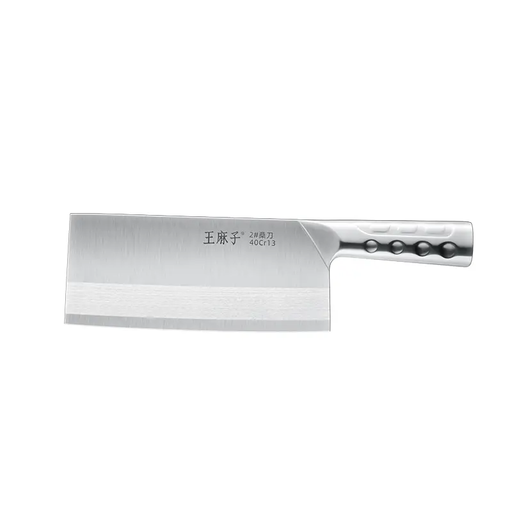
Why This Fits Their Persona: This is an ideal first step into the world of Chinese cleavers for the UK home cook. It's a classic "Sangdao" (slicing cleaver) that handles the vast majority of daily kitchen tasks—from chopping onions for a cottage pie to finely slicing chicken for a stir-fry—with ease and efficiency.
It is clearly defined as a vegetable and meat slicing knife, not a heavy chopper. This avoids the "one-size-fits-all" trap by focusing on doing one job exceptionally well.
Made from forged stainless steel for a good balance of sharpness and low-maintenance durability. Its balanced design makes it comfortable for extended prep sessions.
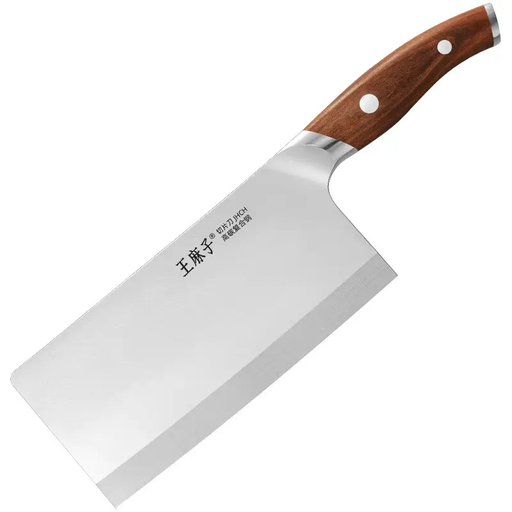
Why This Fits Their Persona: For the cook who appreciates superior materials and refined performance. This knife is an upgrade in every sense, perfect for someone who spends a lot of time cooking and wants a tool that feels like an extension of their hand.
It cuts through vague material claims by specifying its use of premium 9Cr18MoV steel. The full tang construction and ergonomic rosewood handle directly counter the trap of poor balance and design.
Exceptional edge retention means less frequent sharpening. The elegant rosewood handle provides a secure, comfortable grip and a premium aesthetic.
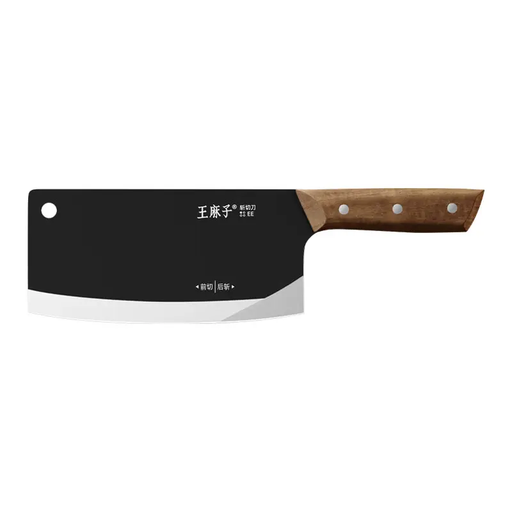
Why This Fits Their Persona: This is for the cook who understands that different jobs require different tools. If you regularly break down whole chickens or prepare large cuts of meat, this set provides the specialised equipment you need to work safely and efficiently.
This set is the definitive answer to the "one-size-fits-all" myth. It provides two distinct knives: a heavy chopping cleaver for bones and a nimble slicing knife for everything else.
Provides a complete, versatile system. You get the right tool for every task, ensuring better results, longer tool life and enhanced safety in the kitchen.
We have compiled a complete, real-time list of products that fully satisfy these strict selection criteria and UK safety regulations.
For many home cooks, a good vegetable cleaver or slicing knife can handle around 80% of daily kitchen tasks, from chopping vegetables to slicing boneless meat. However, it won't replace a heavy-duty kitchen cleaver for chopping through bone, nor will it substitute a small paring knife for delicate, in-hand work. It is best seen as a replacement for a standard Western chef's knife, offering more versatility for scooping and transferring food.
The process is similar to sharpening other knives. Using a whetstone is a reliable method; the wide blade can make it easier to hold a consistent 15-20 degree angle. For day-to-day maintenance, a few passes on a honing steel before each use will keep the edge aligned and feeling sharp.
This comes down to personal preference and your willingness to perform maintenance. A stainless steel cleaver is a practical choice for most households as it is highly resistant to rust and easy to care for. A traditional forged steel knife made from high-carbon steel can often achieve a sharper edge and hold it for longer, but it requires immediate washing and drying after use to prevent rust and discolouration.