
24/7 Customer Support

Free returns

Same-day & Next-day Delivery

Quality Guaranteed

Unlock Your Welcome Offers: FREE Delivery | Up to 80% OFF | Free 30-day JoyPlus trial
Download the APP
A genuine Chinese chef's knife is a marvel of versatility. With its broad, rectangular blade, it can slice, dice, chop and even transfer ingredients from the cutting board to the wok. However, for many UK home cooks, the journey to finding the right one is filled with confusion and costly mistakes. The market is saturated with options that look the part but fail to deliver.
As the Joybuy Product Recommendation Officer, my role is to help you navigate this landscape. We will look past the marketing hype and focus on the practical details that separate a reliable kitchen workhorse from a tool that disappoints. Here are the common pitfalls to avoid.
vegetable cleaver designed for precision slicing will chip or warp if used on bones. Conversely, a heavy bone chopper knife is too cumbersome for fine dicing. Buying the wrong type for your needs leads to a damaged knife and poor cooking results.forged steel knife will offer far superior performance.To make a smart purchase, focus on these three non-negotiable specifications.
The most critical factor is the blade's intended function, which is determined by its thickness and weight.
household cleaver. They have a thin, sharp blade (typically 2-4mm thick at the spine) and are relatively lightweight. They are designed for slicing meat and chopping vegetables with precision. They are not suitable for bones.meat cleaver or bone chopper knife has a thick, robust blade (5-8mm or more) and significant heft. This weight is essential for generating the force needed to cut through joints and small bones.The way the blade is made has a huge impact on its durability and edge retention.
forged steel knife is crafted from a single piece of steel that is heated and hammered into shape. This process compresses the steel molecules, making the blade denser, stronger and better at holding a sharp edge. Look for terms like "hand-forged" or "fully forged".stainless steel kitchen knives can be very good, they typically do not match the long-term durability and edge retention of a well-made forged blade.The tang is the part of the blade that extends into the handle. For a tool like a Chinese chef's knife, this is a crucial feature for safety and balance.
Based on these practical criteria, we have matched a few standout products to different types of home cooks.
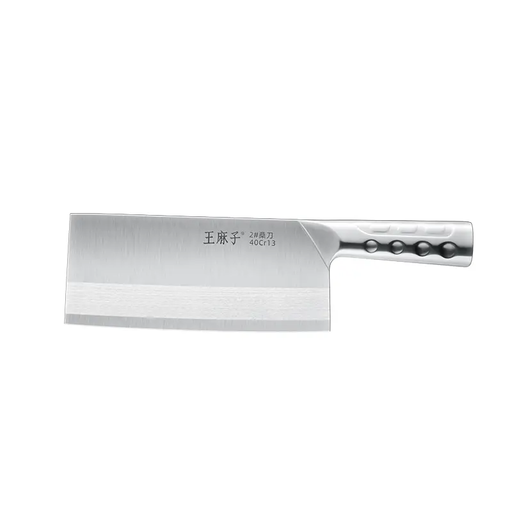
Why This Fits Their Persona: This is an ideal daily driver for the UK home cook who regularly prepares stir-fries, salads and other dishes requiring significant vegetable and boneless meat prep. It's a classic, purpose-built slicing cleaver.
It is explicitly a vegetable cleaver (*Sang Dao*), avoiding the "one-size-fits-all" myth. Its design is focused entirely on being a sharp slicing knife, not a chopper.
The forged stainless steel construction provides excellent durability and edge retention for everyday tasks, offering a significant step up from basic stamped blades.
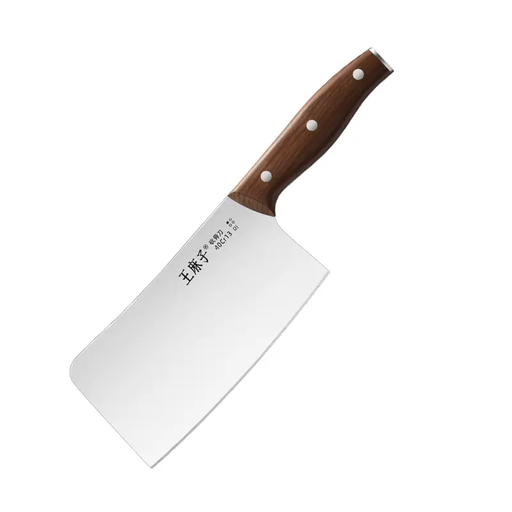
Why This Fits Their Persona: For the cook who buys whole chickens, racks of ribs, or other large cuts of meat. This is a specialised tool for heavy-duty tasks that a standard chef's knife or slicing cleaver cannot handle.
This is an unapologetic bone chopper knife. Its weight and thick, forged blade are designed for one purpose: delivering force safely and effectively, preventing damage to your finer knives.
The robust, fully forged high-carbon steel construction and ergonomic handle provide the necessary balance and durability for safely processing bones and tough joints.
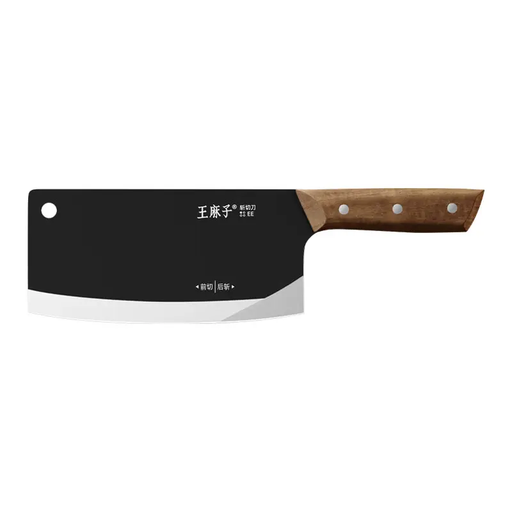
Why This Fits Their Persona: Perfect for someone setting up a kitchen for authentic Chinese cooking or an enthusiast who wants the right tool for every job. This set provides a complete solution.
This set is the ultimate answer to the "one-size-fits-all" trap. It provides two distinct, specialised knives—one for slicing and one for chopping—so you never have to compromise.
You get a comprehensive, authentic kitchen knife set. Both knives feature high-carbon steel and ergonomic handles, ensuring performance and versatility across all prep tasks.
We have compiled a complete, real-time list of products that fully satisfy these strict selection criteria and UK safety regulations.
The best method is using a whetstone. Due to the wide, flat blade, it's relatively easy to maintain a consistent angle. Start with a coarser grit (e.g., 1000) to establish the edge and finish with a finer grit (e.g., 3000-6000) for polishing. A honing steel can be used for regular maintenance between sharpenings to keep the edge aligned.
It is strongly advised not to. The harsh detergents, high heat and potential for knocking against other items can dull the blade, damage the handle (especially if it's wood) and may even cause spots of rust on certain high-carbon steels. Always hand wash your knife with mild soap and warm water and dry it immediately and thoroughly.
While they may look similar, their primary functions differ. A Western butcher's cleaver is almost exclusively a bone chopper knife—it is very thick, extremely heavy and designed for brute force. A traditional Chinese household cleaver is most often a Sang Dao (slicer), which is much thinner, lighter and used as an all-purpose chef's knife for a wide variety of tasks that do not involve bone.