
24/7 Customer Support

Free returns

Same-day & Next-day Delivery

Quality Guaranteed

Unlock Your Welcome Offers: FREE Delivery | Up to 80% OFF | Free 30-day JoyPlus trial
Download the APP
A versatile Chinese chef's knife can transform your kitchen preparation, making slicing, dicing and chopping feel effortless. However, the UK market is filled with options that look the part but fail to deliver. Many home cooks find themselves with a knife that is too heavy, dulls quickly or simply isn't suited for their cooking style. Before you invest, it's crucial to understand what separates a reliable kitchen workhorse from a piece of metal that will end up at the back of a drawer.
As the Joybuy Product Recommendation Officer, my role is to help you navigate these choices. We will look past the marketing hype and focus on the practical features that truly matter, ensuring you find a knife that serves you well for years to come.
Many buyers are disappointed with their purchase because they fall into a few common traps. Being aware of them is the first step towards making a smarter choice.
To avoid the pitfalls, focus on these three non-negotiable specifications. They are the true indicators of a knife's performance and longevity.
The heart of any sharp kitchen knife is its blade. Most Chinese chef's knives fall into two categories:
The shape and thickness of the blade dictate its function.
A comfortable, secure grip is essential for both safety and efficiency. The handle should feel like a natural extension of your hand. An ergonomic design reduces fatigue during lengthy food prep sessions. The balance point of the knife should ideally be where the blade meets the handle, giving you maximum control over the tip and the heel of the blade.
Based on these practical criteria, we have matched a few standout options to different types of home cooks.
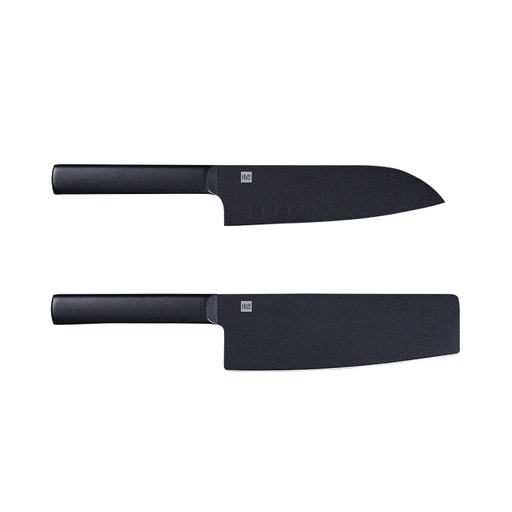
Why This Fits Their Persona: This knife is a practical choice for daily meal preparation. Its Santoku-inspired shape is versatile enough for slicing vegetables, trimming meat and general prep, making it a reliable all-rounder for the average UK kitchen.
It avoids vague material claims by specifying its 50Cr15MoV high-carbon stainless steel blade. The nano non-stick coating also addresses a common pain point of food sticking to the blade during rapid chopping.
Combines good edge retention with low-maintenance, rust-resistant properties. The ergonomic handle provides a comfortable and balanced grip for everyday use.
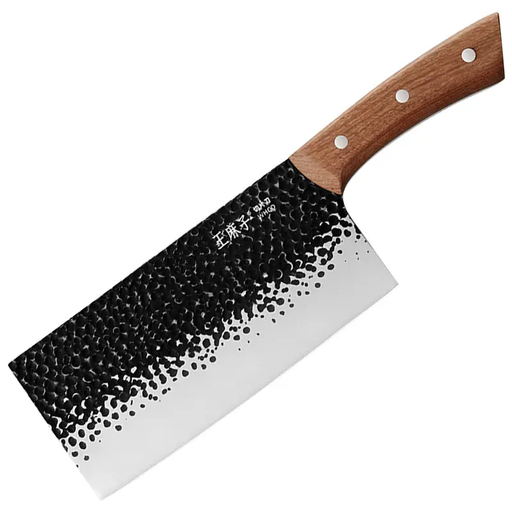
Why This Fits Their Persona: For the serious home cook who values precision, this dedicated slicing knife is an excellent tool. It is designed for flawless performance when preparing delicate ingredients, perfect for someone who enjoys the craft of cooking.
This knife sidesteps the "one-size-fits-all" trap by being an unapologetic specialist. It is a hand-forged knife for slicing, not a heavy chopper, ensuring it excels at its intended purpose without compromise.
The forged construction provides exceptional durability and balance. Its ergonomic handle is designed for control and comfort during intricate tasks, reducing hand fatigue.
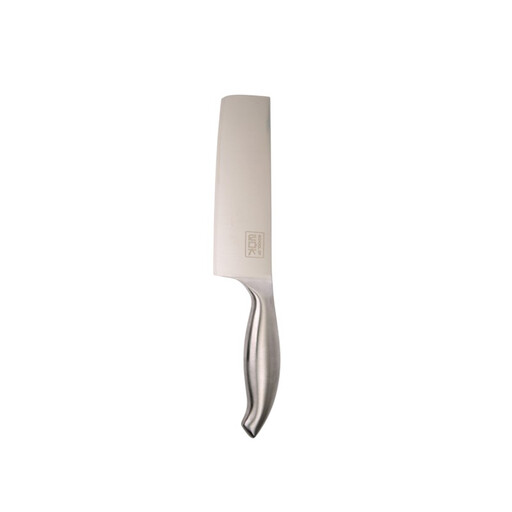
Why This Fits Their Persona: This cleaver is purpose-built for those who love cooking Asian cuisine. It is designed to handle all the prep for a stir-fry, from chopping vegetables to slicing meat and fish, making it a highly practical tool for a specific cooking style.
It manages expectations by being clear about its purpose. The product information explicitly warns against using it on hard bones, preventing the misuse that leads to damaged blades and disappointment.
Its 7-inch stainless steel blade is a versatile size for most stir-fry ingredients. The ergonomic handle ensures a comfortable grip, which is important when preparing multiple components for one dish.
We have compiled a complete, real-time list of products that fully satisfy these strict selection criteria and UK safety regulations.
Most Chinese chef's knives can be sharpened using a whetstone or a good quality pull-through sharpener. The key is to maintain a consistent angle, typically between 15-20 degrees. For a slicing knife, a finer angle (closer to 15 degrees) is preferable. Always clean the blade after sharpening.
It is strongly recommended that you do not. The high temperatures, harsh detergents and potential for the blade to knock against other items can dull the edge, damage the handle (especially if it is wood) and lead to premature corrosion. Always hand-wash your knife with warm, soapy water and dry it immediately.
While both are versatile, their design differs. A Chinese chef's knife typically has a tall, rectangular blade that is excellent for a push-chopping motion and for scooping ingredients off the cutting board. A Santoku knife is of Japanese origin and has a shorter, wider blade with a curved tip (known as a 'sheep's foot' profile). It is generally lighter and excels at the three "virtues" it is named for: slicing, dicing and mincing.