
24/7 Customer Support

Free returns

Same-day & Next-day Delivery

Quality Guaranteed

Unlock Your Welcome Offers: FREE Delivery | Up to 80% OFF | Free 30-day JoyPlus trial
Download the APP
A Chinese kitchen cleaver can handle chopping, slicing, dicing and stir-fry preparation with one broad blade. However, choosing by appearance alone can lead to an uncomfortable handle, a blade that is unsuitable for bones, or a knife that requires more maintenance than expected.
Before buying, UK shoppers should look beyond phrases such as “professional quality” or “long-lasting sharpness”. The useful questions are more practical: what is the blade made from, how heavy is it, what tasks is it designed for and how should it be cleaned?
Many Chinese chef knives are intended for vegetables, boneless meat, fish and herbs. A thin slicing knife or stir-fry knife may chip or bend if used on frozen food, hard bones or cartilage. A dedicated bone cleaver has a thicker, heavier construction for forceful chopping, while a household kitchen cleaver is usually more versatile for everyday preparation.
Always check the stated use before purchase. If the product instructions warn against bones or frozen food, treat it as a slicing and chopping knife rather than a heavy-duty tool.
Stainless steel can offer useful resistance to staining and corrosion, but it does not describe hardness, thickness or edge geometry on its own. A stainless steel cleaver may be thin and light for precise work, or thick and weighty for tougher ingredients.
Look for additional information such as the steel type, blade length, construction and recommended care. Where a hardness rating is provided, it can help with comparison, but it does not automatically indicate that a knife will suit your cutting style.
A larger blade is not automatically more capable. It can be awkward on a small worktop, particularly when preparing ingredients for one or two people. Conversely, a very light blade may feel less controlled during repetitive chopping.
For many home cooks, a blade around 170–190 mm offers a practical balance between food preparation space and manoeuvrability. Weight also matters: the 170 g Wangmazi multipurpose knife, for example, is positioned as a lighter option for controlled everyday preparation.
A broad, relatively flat blade suits chopping vegetables, herbs and boneless meat. It can also transfer prepared ingredients from the board to a wok or pan. A pointed or narrower blade may be more comfortable for trimming, peeling and detailed cuts.
If you mainly cook stir-fries, look for a medium or long straight-edge blade. If you prepare sashimi-style slices, vegetables or delicate ingredients, prioritise a thinner slicing profile. A multipurpose kitchen knife can cover several tasks, but it should not be treated as a substitute for a bone cleaver.
Common descriptions include stainless steel, high-carbon stainless steel, forged steel and full tang. These terms indicate different features:
Do not assume that a wooden handle is dishwasher-safe. Hand washing and immediate drying are usually safer for both the blade and handle.
A secure handle should feel stable without forcing you to grip tightly. Consider whether you prefer wood, pakkawood, rubberwood or an all-steel design. Natural wood can require more care, while a waterproof composite handle may be easier for frequent kitchen use.
Use a stable chopping board, keep fingers away from the cutting edge and never use a cleaver for prying or twisting. Store it in a block, sheath or suitable magnetic system, away from children.
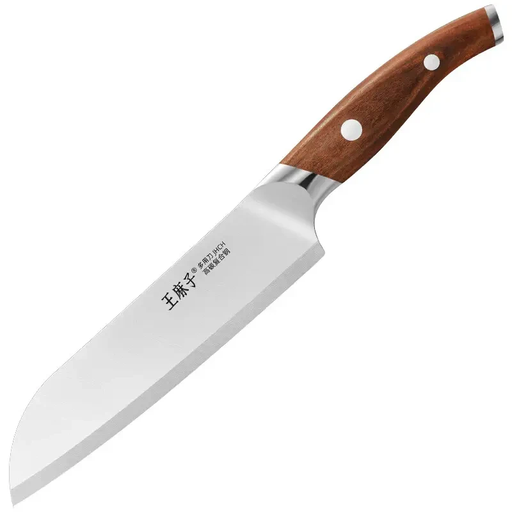
Why This Fits Their Persona: At 170 g, this compact option suits first-time buyers, smaller kitchens and cooks who want one light knife for vegetables, herbs, meat and sushi-style slicing.
Its stated weight helps shoppers avoid buying an unnecessarily heavy cleaver for routine preparation. It should still be reserved for suitable ingredients rather than hard bones.
50Cr15MoV steel; full-tang construction; non-slip ergonomic handle; multipurpose 170 g format.
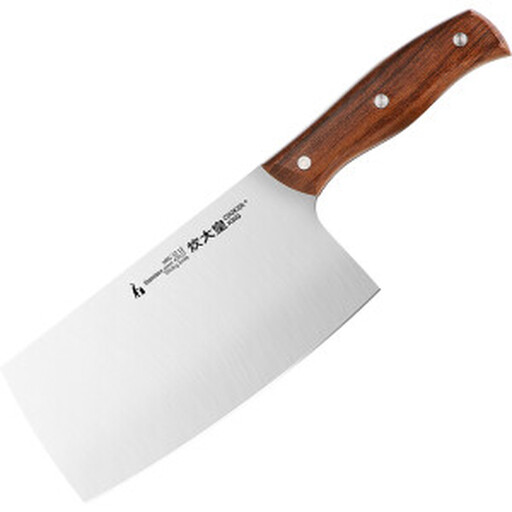
Why This Fits Their Persona: Suitable for cooks who value detailed specifications, a weight-forward design and a handle intended to resist moisture during regular food preparation.
The listing identifies 7Cr17MoV steel, a 15° double-bevel edge, full tang and triple rivets, giving buyers more detail than a generic “stainless steel” label.
Water-resistant pakkawood handle; wide blade for scooping; stated 58±2 HRC hardness rating.
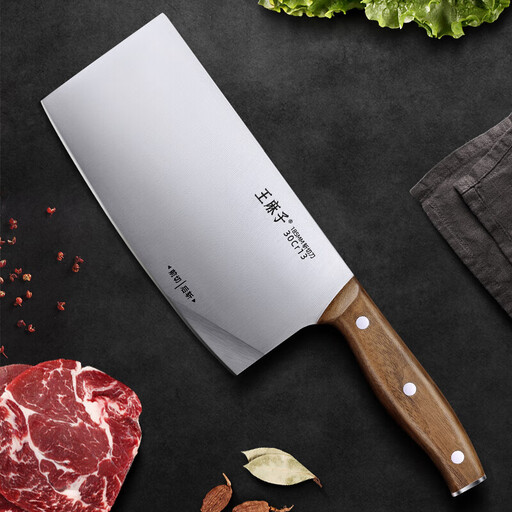
Why This Fits Their Persona: Designed for shoppers who regularly prepare tough meat, cartilage or bones and need a dedicated heavy-duty chopping knife rather than a lightweight slicing blade.
It is clearly positioned as a bone cleaver, helping prevent misuse of a thin household or stir-fry knife on hard ingredients.
Stainless steel blade; 9.1 × 30.8 cm stated dimensions; solid walnut handle.
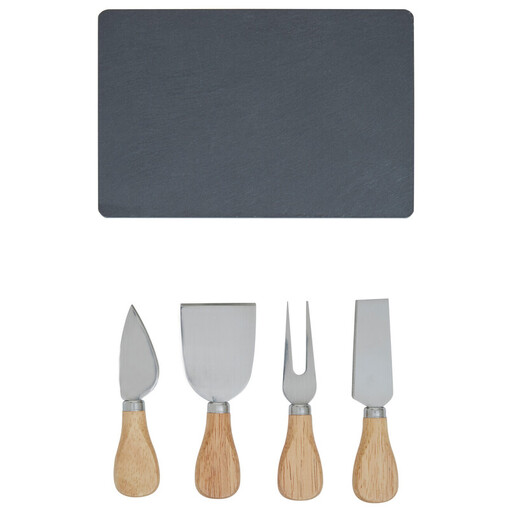
Why This Fits Their Persona: A practical choice for hosts who need serving equipment for cheese, charcuterie and small gatherings rather than a food-preparation cleaver.
It is sold as a complete cheese board and knife set, so buyers do not need to purchase serving knives separately or confuse it with a chopping cleaver.
Natural slate board; four stainless steel cheese knives; suitable for slicing, spreading and serving.
We have compiled a complete, real-time list of products that fully satisfy these strict selection criteria and UK safety regulations.
Hand wash most cleavers with warm water and mild detergent, then dry the blade immediately. Avoid leaving stainless steel submerged, as prolonged moisture can still cause marks or corrosion. Follow the individual product instructions where available; the COOKER KING hand-forged slicing knife, for example, is listed as hand-wash only.
Use a suitable chopping board and sharpen or hone the edge with a compatible tool. Do not place a sharp cleaver loose in a drawer. Products carrying an age restriction should only be purchased and used by adults, and all blades should be kept away from children.
Yes, a household kitchen cleaver can be useful for vegetables, herbs, boneless meat, fish and stir-fry ingredients. Choose a lighter or medium-weight model for routine preparation. Use a dedicated bone cleaver only when the product is specifically designed for hard ingredients.
A Chinese chef knife usually has a wider blade and is intended for chopping, slicing and transferring ingredients. A slicing knife is generally thinner and better suited to controlled, fine cuts. Neither should automatically be used for bones or frozen food unless the instructions allow it.
Lifespan depends on steel, construction, frequency of use and care. Regular hand washing, immediate drying, suitable sharpening and safe storage can help preserve the blade. Using a thin knife on bones, twisting the edge or cutting on unsuitable hard surfaces can shorten its usable life.