
24/7 Customer Support

Free returns

Same-day & Next-day Delivery

Quality Guaranteed

Unlock Your Welcome Offers: FREE Delivery | Up to 80% OFF | Free 30-day JoyPlus trial
Download the APP
A Chinese cleaver can handle many everyday preparation jobs, from slicing meat and chopping vegetables to mincing herbs for a stir-fry. However, not every broad-bladed knife is designed for the same work. Choosing by appearance alone can leave you with a blade that feels awkward, loses its edge quickly or is unsuitable for the ingredients you regularly prepare.
Before buying, look beyond phrases such as “professional”, “razor sharp” or “all-purpose”. The important details are the blade’s intended use, dimensions, construction and care requirements.
A thin vegetable cleaver or slicing cleaver is designed for controlled cuts through meat, fish, herbs and vegetables. It may be damaged by bones, frozen food or hard surfaces. A dedicated bone cleaver usually has a heavier blade and is built for impact, but it still requires controlled technique and a suitable chopping board.
Always check the product instructions before using a kitchen cleaver on poultry joints, cartilage or frozen ingredients.
A stainless steel cleaver offers useful resistance to corrosion, but it is not immune to staining or rust. Food acids, moisture and dishwasher heat can affect the blade and handle over time. Products that specifically recommend hand washing should be washed with mild detergent, rinsed and dried immediately.
A high-carbon steel chopping knife may offer different sharpening and edge characteristics, but it can require more careful drying and storage. Material alone does not determine the right choice; your cleaning habits matter too.
A longer blade can provide more cutting surface, but it may feel cumbersome on a small-footprint worktop. A compact vegetable cleaver can be easier to control for peeling, shaping and detailed preparation. For larger quantities of meat or vegetables, a 7-inch or 190 mm blade may offer a practical balance between reach and manoeuvrability.
Also check the overall dimensions, handle shape and weight where listed. A comfortable grip is particularly important if you prepare food for a family or operate a busy professional kitchen.
Chinese-style knives are often grouped by their intended task:
A flat edge is useful for push-cutting and chopping, while a pointed tip can help with detailed work such as trimming or shaping.
Look for clearly stated details such as forged stainless steel, hardened steel or high-carbon steel, depending on your preferences. A full tang design extends the blade material through the handle, which can support stability and strength, although it does not replace safe handling.
Handle materials vary. Stainless steel or synthetic handles are generally straightforward to wipe clean, while wooden handles can offer a traditional feel but need careful drying. An ergonomic, secure grip should allow you to keep your fingers away from the edge without forcing your wrist into an awkward position.
Hand washing and immediate drying are sensible habits for most cleavers. Use a stable, non-slip chopping board rather than glass, stone or other hard surfaces. Store the knife in a block, sheath or secure drawer insert where the blade cannot contact other utensils.
A steel or suitable sharpener may help maintain the edge, but sharpening tools must match the blade construction and edge angle. Do not use a delicate slicing cleaver for tasks intended for a heavy chopping knife.
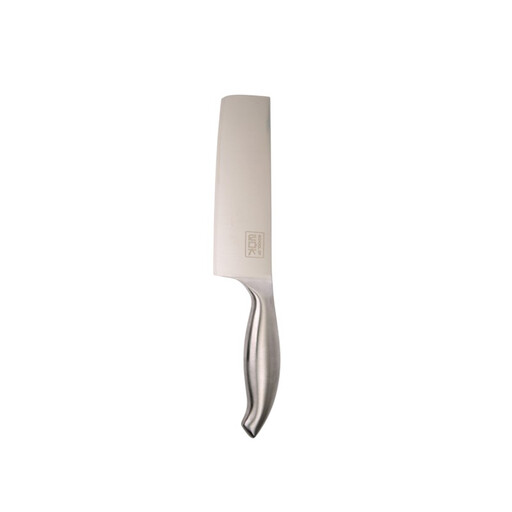
Why This Fits Their Persona: The medium 7-inch format is a practical starting point for UK home cooks preparing vegetables, meat, fish and stir-fry ingredients without choosing an oversized blade.
Its stated use covers everyday ingredients, while the instructions clearly warn against bones and frozen foods.
Stainless steel construction, a straight edge and an ergonomic handle; it can be maintained with a suitable steel or sharpener.
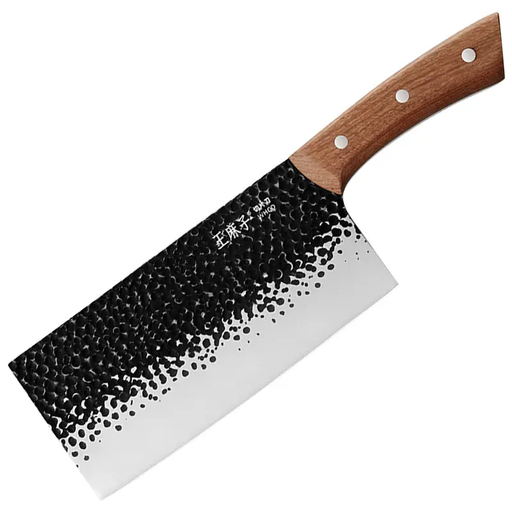
Why This Fits Their Persona: The 190 mm slicing design suits cooks who value controlled cuts through meat, vegetables and herbs during longer preparation sessions.
It is presented as a slicing cleaver rather than a bone tool, helping buyers match the blade to the correct preparation method.
190 mm blade, full tang construction and a stated focus on slicing, dicing and mincing.
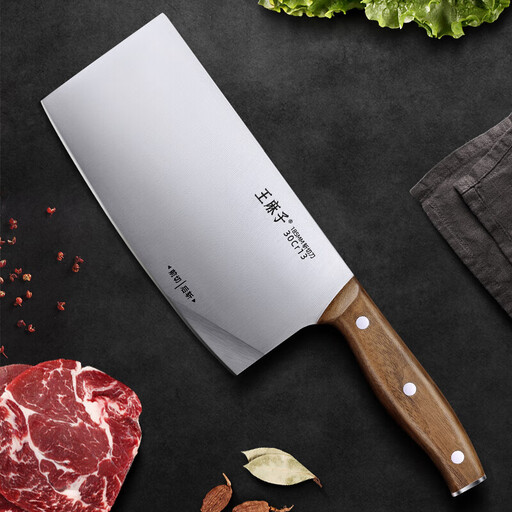
Why This Fits Their Persona: Butchers and cooks who regularly prepare suitable bones, cartilage or frozen meats may prefer a heavier cleaver designed for demanding chopping tasks.
Its product description identifies it as a bone cleaver, unlike thinner slicing or vegetable-focused blades.
Stainless steel blade, full tang construction and walnut handle; listed dimensions are 9.1 × 30.8 cm.
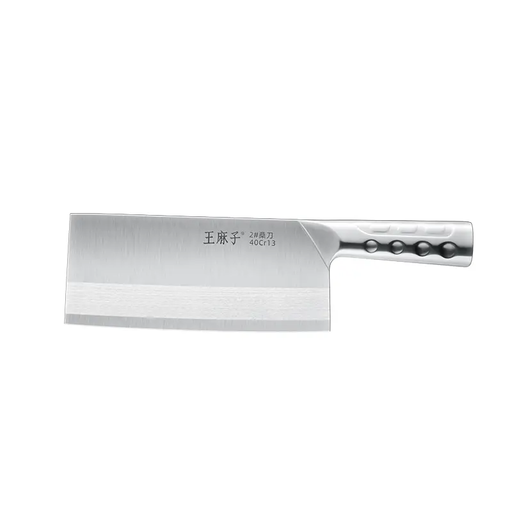
Why This Fits Their Persona: Home cooks wanting one main chopping knife for meat, vegetables and routine food preparation may appreciate this household-oriented format.
The stated food uses are broad, while the stainless steel and full tang details provide clearer information than appearance-led marketing.
Forged stainless steel, full tang construction and an ergonomic handle for slicing, dicing and chopping.
We have compiled a complete, real-time list of products that fully satisfy these strict selection criteria and UK safety regulations.
Yes, provided you select a manageable blade length and have enough clear worktop space. A 5.5-inch model can suit detailed preparation, while a 7-inch or 190 mm knife offers more cutting area for regular family cooking. Store it securely and use a stable chopping board.
There is no fixed lifespan. Frequency of use, ingredients, cutting-board material and sharpening technique all affect edge performance. Hand washing, prompt drying and avoiding bones with a slicing or vegetable cleaver can help preserve the edge. Sharpen only with a tool suitable for the blade.
Only if the product instructions specifically allow it. Thin stainless steel slicing cleavers and small cleavers may be damaged by frozen ingredients. For permitted heavy-duty use, choose a bone cleaver and work carefully on an appropriate board. Never strike a blade against glass, stone or another hard surface.