
24/7 Customer Support

Free returns

Same-day & Next-day Delivery

Quality Guaranteed

Unlock Your Welcome Offers: FREE Delivery | Up to 80% OFF | Free 30-day JoyPlus trial
Download the APP
A versatile Chinese cleaver can be the most valuable tool in your kitchen, capable of everything from finely mincing garlic to slicing through vegetables with satisfying ease. However, the UK market is filled with options that look the part but fail to deliver. Many home cooks and even professional chefs end up with a knife that is either too fragile for its intended use or too cumbersome for daily prep, leading to frustration and wasted money.
As a Product Recommendation Officer at Joybuy, I see where buyers often go wrong. Before you make a purchase, it's crucial to understand the common pitfalls that can leave you with a poorly performing knife.
To avoid these traps, focus on a few core parameters. Understanding these will help you select a high-quality Chinese chef knife that matches your cooking style.
The material of the blade is the foundation of its performance. There is no single "best" material; the right choice depends on how you plan to use and care for your knife.
forged kitchen knife styles. It can be sharpened to a very fine edge and holds that sharpness for a long time. However, it requires more maintenance. It must be washed and dried immediately after use and lightly oiled to prevent rust. This is often the material of choice for a dedicated bone chopper knife.stainless steel cleaver is much more resistant to rust and corrosion, making it a lower-maintenance option for a busy household kitchen. Modern stainless steel alloys, such as 50Cr15MoV, offer a good balance of sharpness, durability and rust resistance, though they may need honing more frequently than their high-carbon counterparts.Chinese cleavers generally fall into two categories, and using the wrong one for the job is the quickest way to ruin your knife.
vegetable cleaver, this knife has a thin, rectangular blade designed for precision. It excels at slicing, dicing and mincing vegetables and boneless meats. Its broad, flat side is also perfect for crushing garlic and scooping ingredients from the board to the pan.meat cleaver. It features a much thicker, heavier blade, often with a slight curve to the spine. Its weight and robust construction are designed to chop through bones, cartilage and tough joints without chipping the edge.The tang is the portion of the blade that extends into the handle. For a tool like a cleaver, which relies on balance and strength, a full tang is non-negotiable. This means the steel forms a single, continuous piece from the tip of the blade to the end of the handle. A full tang provides superior strength, durability and balance, making the knife feel like a natural extension of your hand.
To help you navigate the options, we have matched some products from our collection to specific user needs, ensuring they meet the practical criteria discussed above.
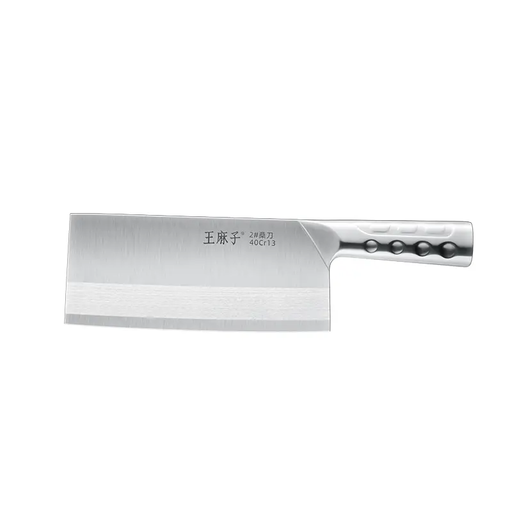
Why This Fits Their Persona: This is an ideal all-rounder for the typical UK household. It's designed for the most common kitchen tasks—chopping vegetables for a stir-fry, slicing chicken for a curry, or dicing onions. It offers great utility without requiring specialist care.
It is clearly defined as a "Sangdao" or vegetable cleaver, avoiding the "one-size-fits-all" trap. Its purpose is slicing and dicing, not bone chopping.
Made from stainless steel for low-maintenance durability and rust resistance. Its balanced design makes daily food prep efficient and comfortable.

Why This Fits Their Persona: For the cook who buys whole chickens, racks of ribs, or deals with large, tough cuts of meat. This is a specialised tool built for power and impact, allowing you to break down ingredients with confidence.
This is a purpose-built bone chopper, not a general-use cleaver. Its significant weight and thick, forged blade are designed to absorb impact, preventing the chipping that would destroy a lighter slicing knife.
The forged high-carbon steel construction provides the necessary resilience for heavy chopping. Its ergonomic handle ensures a secure grip for safe, powerful cuts.
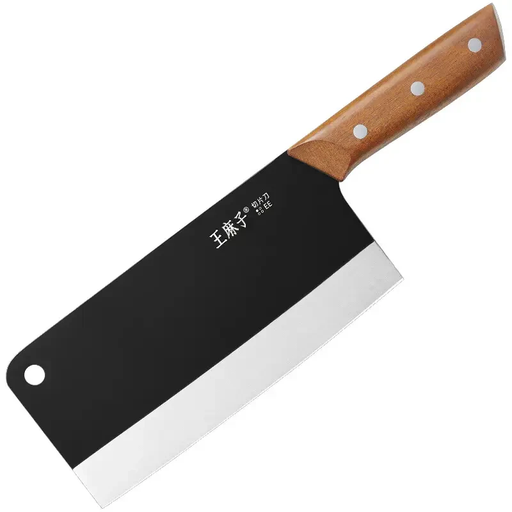
Why This Fits Their Persona: This user appreciates craftsmanship and superior performance. A hand-forged knife offers a unique feel and balance that enhances the cooking experience, turning food prep from a chore into a pleasure.
It sidesteps the "poor balance" trap. The hand-forging process and full tang construction create an exceptionally well-balanced tool, while the natural Acacia wood handle provides a comfortable, secure grip.
The hand-forged blade provides excellent edge retention for precise slicing. The blackened finish and Acacia wood handle give it a distinctive, premium aesthetic.
We have compiled a complete, real-time list of products that fully satisfy these strict selection criteria and UK safety regulations.
Proper care is simple but essential. After each use, hand wash the knife with mild soap and warm water, then dry it immediately and thoroughly with a soft cloth. To prevent any risk of rust, apply a thin coating of food-safe mineral oil to the blade before storing it. Never place a high-carbon steel knife in the dishwasher.
For most tasks, absolutely. A slicing-style Chinese cleaver is a highly versatile professional chef knife that can chop, slice, dice and mince with great efficiency. The wide, flat blade is also an excellent tool for crushing garlic or ginger and for transferring chopped ingredients from the cutting board to the pan. The main difference in technique is that it is designed for a push-pull or tap-chopping motion, not the rock-chopping motion common with curved Western knives.
A forged kitchen knife is crafted from a single bar of steel that is heated and hammered into its final shape. This process aligns the grain structure of the steel, resulting in a stronger, heavier blade that typically holds an edge for longer. A stamped knife is cut or "stamped" out of a large sheet of steel, like a biscuit cutter. While often more affordable, stamped knives are generally lighter and may not have the same durability or balance as their forged counterparts.