
24/7 Customer Support

Free returns

Same-day & Next-day Delivery

Quality Guaranteed

Unlock Your Welcome Offers: FREE Delivery | Up to 80% OFF | Free 30-day JoyPlus trial
Download the APP
Navigating the world of Chinese cooking sauces can feel overwhelming. With shelves lined with bottles that look similar but promise different results, it is easy to make a purchase that doesn't quite deliver the authentic flavour you were hoping for. Many home cooks in the UK find themselves with a cupboard full of underused condiments, bought on a whim, that fail to elevate their dishes.
As the Joybuy Product Recommendation Officer, my role is to help you see past the marketing and focus on what truly matters. Let's look at two common pitfalls that lead to disappointing meals and wasted money:
By understanding a few core principles, you can stock your pantry with confidence and create dishes that taste just right.
Before adding a bottle to your basket, it's crucial to understand its intended function. The labels may be in a different language, and the descriptions can be vague. Here are the key parameters to check.
This is the most critical distinction to master. These two sauces are not substitutes for one another.
Oyster sauce is a thick, rich and savoury condiment made by cooking down oyster extracts. It imparts a complex umami flavour and a glossy sheen to stir-fries and marinades. It is a staple in Cantonese cooking. For those with dietary restrictions, excellent alternatives exist:
To move beyond basic stir-fries, exploring regional sauces is key. A mala seasoning from Sichuan, for example, provides the signature numbing-and-spicy sensation from Sichuan peppercorns and chillies, something a standard chilli sauce cannot replicate. Similarly, pastes like Chu Hou are specifically designed for classic Cantonese stews and braises.
To help you choose, we have matched some popular options to different cooking styles and needs.
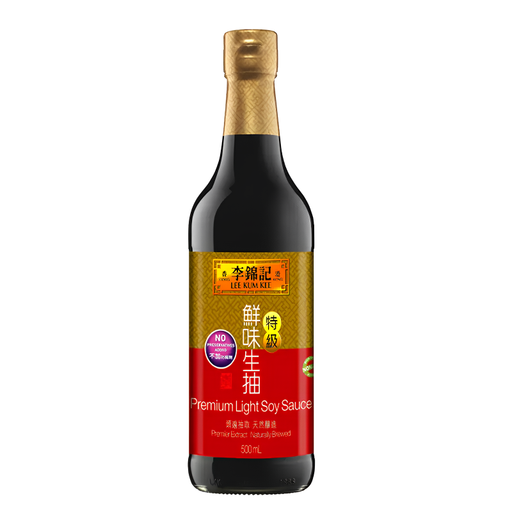
Why This Fits Their Persona: This is a foundational sauce for anyone regularly cooking Chinese food. It is a reliable, high-quality staple for daily stir-frying, creating a dipping sauce for dumplings or as the salty base for a marinade.
This is a dedicated light soy sauce, not a generic "all-purpose" sauce. It provides the specific salty, umami flavour required for authentic seasoning, avoiding the vague taste of blended stir-fry sauces.
Brewed from non-GMO defatted soybeans, it has a pronounced umami flavour and rich soy aroma. It is a versatile kitchen essential from a globally recognised brand.

Why This Fits Their Persona: For anyone who loves making slow-cooked dishes like braised beef brisket or chicken wings, this sauce is indispensable. It provides the deep, appetising mahogany colour that is the hallmark of many classic stews.
This is a purpose-built dark soy sauce, which directly solves the problem of dishes not looking rich enough. It prevents the common error of using light soy sauce for colour and ending up with a dish that is too salty and pale.
It is less salty than its light counterpart and has a slight sweetness, adding depth of flavour alongside its primary function of adding colour. A little goes a long way.

Why This Fits Their Persona: Perfect for individuals with coeliac disease or gluten sensitivity who refuse to compromise on flavour. This allows them to enjoy authentic Chinese cooking without worrying about hidden wheat in their sauces.
It is clearly labelled and formulated as a gluten-free soy sauce. This helps users avoid the common pitfall of accidentally consuming gluten, which is a standard ingredient (as wheat) in most traditionally brewed soy sauces.
It delivers a rich umami flavour comparable to standard premium soy sauces, ensuring that dietary needs do not mean sacrificing taste. It can be used as a direct 1:1 replacement for regular light soy sauce.
We have compiled a complete, real-time list of products that fully satisfy these strict selection criteria and UK safety regulations.
The primary difference is their function. Light soy sauce is for adding salty, savoury flavour (seasoning). Dark soy sauce is for adding a rich, dark colour and a hint of sweetness to dishes, particularly braises and stews. They are not interchangeable.
Most soy sauces, being high in salt, are quite stable. However, for the best flavour, it is recommended to store them in the refrigerator after opening, where they can last for several months to a year. Sauces like oyster sauce or those containing oils or fresh ingredients should always be refrigerated and typically used within 3-6 months. Always check the label for specific storage instructions.
Traditional oyster sauce is made from oysters and is not suitable for vegetarians. However, there are excellent vegetarian alternatives available, often labelled as vegetarian stir fry sauce or mushroom-based oyster sauce. These are designed to provide a similar rich umami flavour and texture, making them a perfect substitute in any recipe that calls for oyster sauce.