
24/7 Customer Support

Free returns

Same-day & Next-day Delivery

Quality Guaranteed

Unlock Your Welcome Offers: FREE Delivery | Up to 80% OFF | Free 30-day JoyPlus trial
Download the APP
Chinese dried tofu snacks are a practical choice for office drawers, university bags, movie nights and quick side dishes. They are usually made from pressed tofu or concentrated soya protein, then seasoned, braised, steamed or cut into chewy tofu strips.
However, attractive packaging does not always tell you whether a pack suits your diet, flavour preferences or portion needs. Before buying ready-to-eat dried tofu, check the ingredients, nutrition panel, pack format and storage instructions rather than relying only on descriptions such as “traditional”, “high protein” or “authentic”.
Dried tofu is plant-based in origin, but seasonings may contain animal-derived ingredients or ambiguous flavourings. For example, some products list chicken flavour seasoning, while others contain soya sauce with wheat. Do not assume that “tofu snack” means vegan or vegetarian.
Read the complete ingredients list and allergen statement. UK shoppers should look specifically for soya, wheat or gluten, sesame, egg, sulphites and any meat or seafood-related flavouring. If you follow a strict diet, confirm the suitability with the product information before ordering.
Protein values are normally shown per 100g, but individual packs can be as small as 30g or 70g. A product listing 24.4g protein per 100g provides approximately 17.1g in a 70g pack, assuming the stated nutrition remains consistent. This is more useful than comparing headline figures alone.
Also consider the full nutrition panel. Chinese savoury snacks can contain noticeable amounts of salt, oil or sugar, particularly when prepared with braising sauces and spice blends.
A 150g bag may suit sharing or several snack occasions, but an opened pack may need to be consumed promptly or refrigerated, depending on the label. Individually wrapped pieces can be more practical for commuting, lunchboxes and shared serving.
Check whether the product is ready to eat, individually packed and suitable for storage in a cool, dry place. Follow the packaging instructions after opening rather than treating every product as shelf-stable indefinitely.
For a more substantial vegetarian soya protein snack, compare the listed soya content and protein per 100g. Laoli products in this selection list soybeans at at least 75%, while Dao Hua Cun steamed tofu products list 97% soy protein product. These figures describe the recipe, not a health endorsement, but they help distinguish soya-focused snacks from products where seasoning and oil make up a larger proportion.
Different names indicate different eating experiences:
Use the per-100g panel to compare protein, salt, fat, saturates, carbohydrate and sugar. For example, the listed five-spice 70g product provides 24.4g protein and 2.5g salt per 100g, while the 150g slow-marinated five-spice product provides 18.9g protein and 1.6g salt per 100g.
Food additives such as E621, E202, E635 and colourings may appear in seasoned tofu snacks. Their presence is not a reason to make a medical judgement, but shoppers who prefer simpler ingredient lists should compare labels carefully. Always check the current packaging, as formulations and labelling can change.
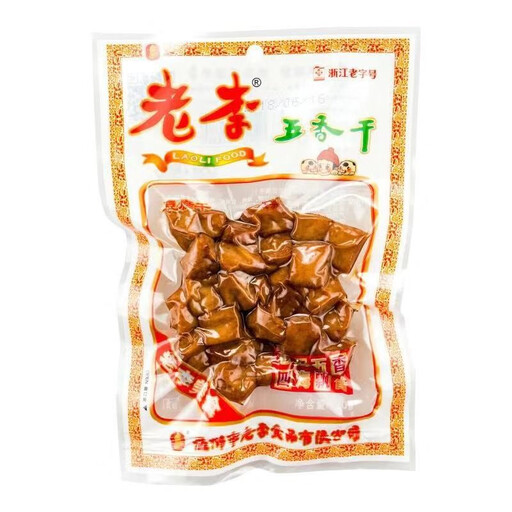
Why This Fits Their Persona: The 70g individual pack offers a manageable way to try Chinese tofu snack flavours without committing to a larger bag. It is ready to eat and easy to carry for a commute, lecture or work break.
The pack size reduces the risk of opening a large bag that may not be finished quickly. Its listed soybean content is at least 75%, making the recipe easier to assess.
70g format; ready to eat; five-spice flavour; 24.4g protein per 100g as listed.
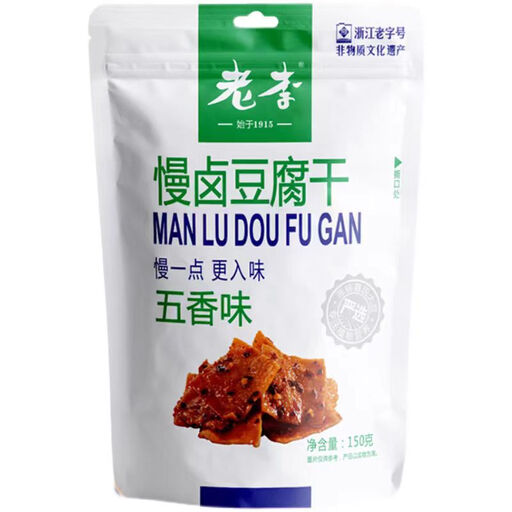
Why This Fits Their Persona: A larger pack suits shoppers looking for a fuller five-spice profile and enough food for sharing, lunch accompaniment or repeated snack breaks.
The listing provides clear soy content, allergens and nutrition per 100g, allowing a more informed comparison than flavour-led packaging alone.
150g pack; soybeans listed at ≥75%; 18.9g protein per 100g; ready to eat.
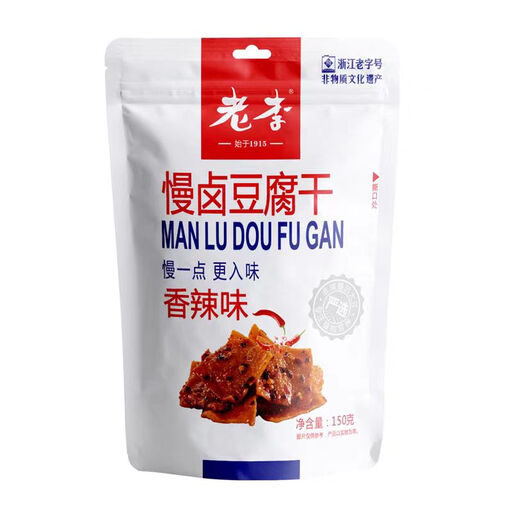
Why This Fits Their Persona: The 150g format works for frequent snackers, shared tables and shoppers who want a more pronounced chilli flavour with a chewy texture.
The flavour is identified as spicy rather than being hidden behind a general savoury description. The label also states storage and ready-to-eat instructions.
150g bag; ≥75% soybeans; spicy braised preparation; 19.2g protein per 100g.
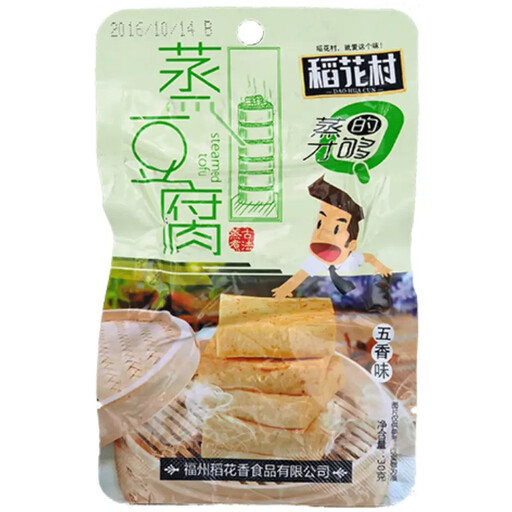
Why This Fits Their Persona: The small individually sized pack is convenient for a desk, packed lunch or portioned snack. Its five-spice profile offers an alternative to chilli-forward Chinese savoury snacks.
The 30g size makes portion planning straightforward. The ingredient list identifies soy protein and wheat-containing soya sauce, helping shoppers check dietary suitability.
30g pack; listed as 97% soy protein product; ready to eat; five-spice seasoning.
We have compiled a complete, real-time list of products that fully satisfy these strict selection criteria and UK safety regulations.
Many are labelled ready to eat and can be opened and served directly. Check the individual product instructions, particularly for mushroom or sauce-based varieties. Once opened, follow the stated refrigeration and consumption guidance.
The unopened shelf life is shown on the packaging, but there is no single lifespan for every product. Some labels advise consuming soon after opening, while others recommend refrigeration. Keep packs in a cool, dry place away from direct sunlight and check the best-before information before purchase.
Some may be suitable, but this cannot be assumed from the word tofu. Review the complete ingredients and allergen statement for chicken flavouring, egg, seafood-related ingredients, soya, wheat and other relevant components. For strict vegan requirements, look for clear suitability information and verify the current label.