
24/7 Customer Support

Free returns

Same-day & Next-day Delivery

Quality Guaranteed

Unlock Your Welcome Offers: FREE Delivery | Up to 80% OFF | Free 30-day JoyPlus trial
Download the APP
Welcome. I'm Joy, your Product Recommendation Officer at Joybuy. My role is to help you navigate the complex world of shopping by providing clear, practical advice. Today, we're exploring the rich and diverse category of Chinese fermented condiments. For many, these jars of paste and curd are the secret to authentic flavour, but for those unfamiliar, the aisle can be confusing. Choosing the wrong product can lead to a dish that tastes nothing like the recipe you were following.
Many shoppers in the UK find themselves caught in a few common traps. Let's look at how to sidestep them.
To ensure you bring home the right condiment for your kitchen, focus on these three core parameters. They will empower you to look past the marketing and understand what's truly inside the jar.
The foundation of any Chinese fermented condiment is its primary ingredient and how it's processed. This is the single most important factor determining its taste and use.
Before you buy, check the ingredient list for flavour indicators. The salt content is particularly important.
A shorter, more recognisable ingredient list is often a sign of quality. Traditional fermentation develops complex umami paste flavours over time. Products that rely on a long list of additives and flavour enhancers may be compensating for a shorter, less developed process. Look for brands that highlight their use of non-GMO soybeans and traditional brewing methods, as this often correlates with a more authentic and nuanced flavour.
To help you choose, we've matched some excellent options to different cooking styles and needs.
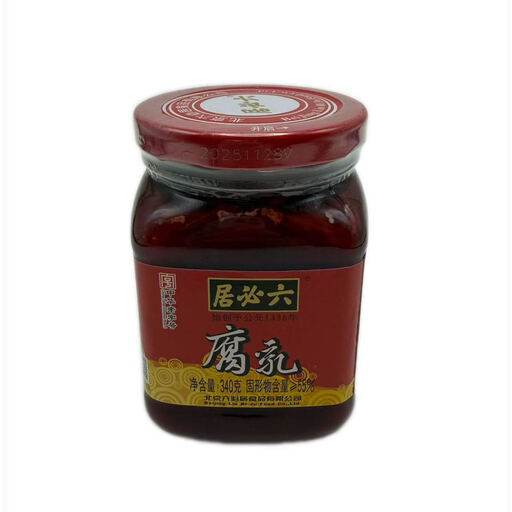
Why This Fits Their Persona: For those in the UK looking to recreate the exact taste of home, Liubiju is a time-honoured brand with nearly 500 years of history. This is the classic condiment for morning congee or steamed buns.
It sidesteps the "hidden additive" pitfall by relying on natural microbial fermentation and a traditional recipe to develop its soft, creamy texture and distinctive savoury flavour.
Authentic flavour from a celebrated heritage brand; soft, creamy texture that melts in the mouth.

Why This Fits Their Persona: An adventurous British cook or a student stocking their first pantry needs a reliable workhorse. This classic soybean paste is a foundational ingredient for countless stir-fries, braises and noodle sauces.
This avoids the "one-size-fits-all" trap by being a genuine, versatile yellow bean paste. It's not a niche sauce, but a core building block for authentic Chinese cooking.
Made with non-GMO soybeans; delivers a deep, savoury umami flavour that enhances a wide variety of dishes.

Why This Fits Their Persona: This is for the cook who craves a powerful flavour punch. The combination of Hunan wild chillies and savoury douchi creates an intensely aromatic and spicy condiment that's perfect for topping rice and noodles.
It avoids the one-dimensional flavour trap by pairing the sharp heat of wild peppers with the deep, salty umami of fermented black beans, creating a complex and layered taste experience.
Authentic, bold Hunan flavour; contains no added artificial preservatives for a cleaner ingredient profile.
We have compiled a complete, real-time list of products that fully satisfy these strict selection criteria and UK safety regulations.
Once opened, most of these products require refrigeration. Always use a clean, dry spoon to scoop out the contents to prevent introducing bacteria, which can cause spoilage. A concentrated paste or curd stored correctly can last for several months, but it's always best to check the packaging for specific storage instructions and recommended consumption periods.
No, they are quite different. While both originate from soybeans, fermented bean curd (furu) is fresh tofu that has been air-dried, inoculated with mould spores and allowed to ferment in a brine of salt, rice wine and other flavourings. This process transforms its texture to be soft and creamy and gives it a potent, salty and savoury flavour, much like a strong cheese. It is used as a condiment, whereas tofu is a primary protein source.
This depends entirely on the product. Some pastes, often labelled as dipping sauces, are formulated to be eaten raw with fresh vegetables. However, many traditional pastes, especially the thick, dark and very salty varieties, are considered a raw ingredient. They are meant to be cooked, often by frying them in oil at the beginning of a recipe, which mellows their saltiness and releases their deep, aromatic flavours. Always check the usage instructions on the label.