
24/7 Customer Support

Free returns

Same-day & Next-day Delivery

Quality Guaranteed

Unlock Your Welcome Offers: FREE Delivery | Up to 80% OFF | Free 30-day JoyPlus trial
Download the APP
A Chinese hot pot soup base can turn a weekday meal into a shared table dish with very little preparation. Add the seasoning to boiling water, arrange meat, tofu, seafood, noodles and vegetables, then cook everything in the broth. However, choosing the right product is not simply a question of picking the most colourful packet.
For UK shoppers, three common pitfalls deserve attention:
The most suitable Chinese hot pot soup base is the one that matches your cooking group, pan size, spice preference and dietary requirements.
Start with the type of broth you actually want to serve. A Sichuan hot pot base usually combines chilli, broad bean paste and Sichuan pepper, creating both heat and a numbing sensation. A spicy hot pot seasoning can be oil-based and intense, so it may suit robust ingredients such as beef, lamb, mushrooms and tofu better than delicate seafood.
For a gentler meal, consider a clear broth hot pot base, tomato flavour or a three-delicacies recipe. Tomato bases generally bring sweetness and acidity, while mushroom-based broths provide savouriness without chilli heat. Other options include:
Check how much liquid each packet makes. A 110g or 120g pouch may be intended for around one pot, while other products require 1–2.5 litres of water. The packet weight alone does not show how many servings you will get.
For example, the 130g LITTLE SHEEP clear soup base is designed for 1–1.5 litres of boiling water, while the 250g Qi Shan vegetarian base makes approximately 2–2.5 litres. The Haidilao Sukiyaki mix specifies 500ml of water, making it practical for a small pan or individual meal.
Portioned blocks or single-use pouches can reduce waste for students and smaller households. A larger pack may offer more flexibility for families, provided the remaining product can be stored safely after opening.
Compound seasonings can contain several allergens. Common declarations include soya, wheat, sesame, peanuts, milk, mustard, fish, crustaceans and sulphites. This matters particularly when serving a group where guests may have allergies or follow a specific diet.
Salt levels also vary significantly. The listed nutrition information includes examples ranging from 3.5g salt per 100g in the Qi Shan vegetarian base to 15g per 100g in some spicy or kimchi products. These values are not directly comparable by serving unless you also consider the dilution instructions, but they are useful for identifying particularly concentrated seasonings.
Do not assume a product is vegetarian because it contains mushrooms or vegetables. The Thai tom yum base, for instance, lists shrimp paste, fish sauce, pork bone broth and beef bone broth. Conversely, the Qi Shan product is described as plant-based, but it still contains soya, wheat and sesame, so it is not suitable for people avoiding those allergens.

Why This Fits Their Persona: Its 1–1.5 litre preparation guidance suits a first hot pot at home, whether you are cooking for flatmates or a small family.
The stated dilution range makes portion planning clearer than buying a concentrated seasoning without serving guidance.
Mild clear broth profile; contains fermented soya, white pepper and goji berry; suitable for meat, seafood and vegetables.

Why This Fits Their Persona: A practical choice for shoppers who want a defined Japanese-style taste rather than a generic spicy broth.
The instructions specify 500ml of water, helping prevent an overly diluted or excessively salty result in a small pot.
Sweet-and-savoury sukiyaki profile; can also be used for noodle soup or simmering thinly sliced beef and vegetables.

Why This Fits Their Persona: Designed for larger group meals where a strongly seasoned Sichuan broth and substantial ingredient selection are central to the occasion.
Its directions state one full 320g bag with 1,000ml water, giving a clear starting ratio instead of leaving strength entirely to guesswork.
Contains Pixian broad bean paste and Sichuan pepper; also suitable for meat, seafood, vegetables and tofu.
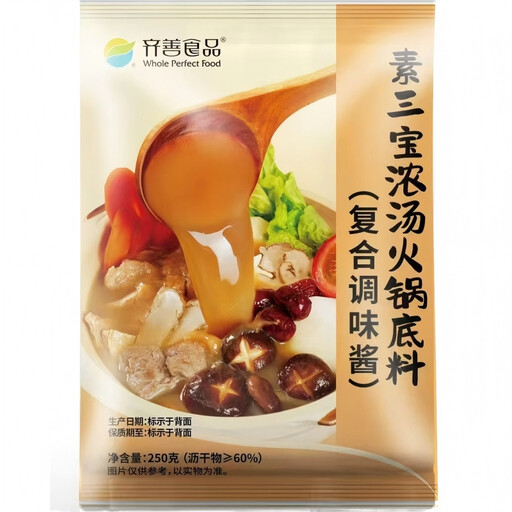
Why This Fits Their Persona: Suitable for households planning hot pot around vegetables, tofu, mushrooms and noodles rather than meat or seafood.
It is specifically described as plant-based, while the ingredient list lets shoppers check its soya, wheat and sesame allergens before ordering.
Contains three mushroom varieties with 11% mushrooms listed; one pack is intended for approximately 2–2.5 litres of water.
We have compiled a complete, real-time list of products that fully satisfy these strict selection criteria and UK safety regulations.
Use a stable electric hot pot, induction hob or suitable saucepan on a heatproof surface. Add the base to boiling water according to the packet instructions and stir until dissolved. Keep the broth simmering, then cook ingredients in batches.
Separate raw meat and seafood from cooked food, use clean chopsticks or serving utensils and ensure ingredients are thoroughly cooked. For leftovers, cool and refrigerate promptly according to the product’s storage instructions. Opened liquid or paste bases commonly require refrigeration and prompt consumption.
A clear broth or tomato hot pot base is usually easier to manage than a highly concentrated Sichuan paste. Tomato bases can also be used for noodles, rice and soup, while a clear broth allows each ingredient’s flavour to remain more distinct.
There is no universal ratio. Follow the packet first: examples range from 500ml of water for the Haidilao Sukiyaki soup mix to 1,000ml for the Shoo Loong Kan base and up to 2.5 litres for the Qi Shan vegetarian product. Adjust only after checking the saltiness and concentration.
Yes. Many products can season noodle soup, stir-fries, stews or braised dishes. Use a smaller quantity initially, particularly with spicy hot pot seasoning, kimchi and Sichuan varieties, as concentrated bases can quickly dominate a dish.