
24/7 Customer Support

Free returns

Same-day & Next-day Delivery

Quality Guaranteed

Unlock Your Welcome Offers: FREE Delivery | Up to 80% OFF | Free 30-day JoyPlus trial
Download the APP
Chinese instant noodles can be a convenient cupboard option for students, office workers, Asian food enthusiasts and busy households. However, choosing between instant noodle bowls, dry noodles and larger multipacks involves more than picking the most colourful packet. Flavour intensity, preparation method, allergens, portion size and storage all affect whether a product suits your routine.
This guide from the Joybuy Product Recommendation Officer focuses on practical details rather than exaggerated marketing language, helping you compare Chinese noodle bowls and other Asian instant noodles before ordering.
A bigger container does not automatically mean a more balanced or suitable meal. Some products have a large net weight because they include starch noodles, seasoning oils, vinegar and toppings. Check the net weight, preparation instructions and nutrition panel together, particularly if you plan to eat instant noodles regularly.
For example, the Tian Xiao Hua potato noodle bowl weighs 274g, while the Wan He sesame paste rice noodles weigh 126g. The difference is significant when comparing price per serving, cupboard space and how filling the meal may feel.
Spicy beef noodles, hot and sour potato noodles and chilli-seasoned bowls can also contain sesame oil, peanuts, vinegar, soy seasoning, garlic or aromatic spices. These ingredients affect the overall taste and introduce allergen considerations.
Read the allergen declaration before buying. The products featured here contain combinations of wheat or other gluten-containing cereals, soybeans, sesame and peanuts. Anyone managing an allergy or intolerance should check the packaging supplied with the order, as formulations and labelling can change.
Not every instant noodle bowl is prepared in the same way. Some require a single five-minute soak, while others need draining and a second addition of boiling water. Dry noodles may have different instructions from soup-style products.
A product that needs several steps may be less suitable for a busy office kitchen without a sink or colander. Conversely, draining can help create a thicker, more concentrated sauce rather than a soup.
Check whether the noodles require:
Wan He Sesame Paste Rice Noodles require boiling water and approximately five minutes of soaking, with stirring during preparation. The Tian Xiao Hua bowl requires the noodles to be soaked, drained twice and then mixed with the seasonings. Master Kong’s Spicy Beef Jerky Dry Noodles are described as a dry noodle option that does not require boiling water according to the supplied product information, making the preparation format worth checking carefully on the pack.
For quick meals, compare both individual net weight and the number of bowls in the noodle multipack. A 12-bowl pack may offer convenience for shared households, student accommodation or workplace storage, but it also needs sufficient cupboard space and a suitable best-before date.
The Unif Noodles Beef & Sauerkraut pack contains 12 bowls of 125g each. Master Kong’s pack contains 12 bowls of 144g each. These formats are useful when you want a ready supply, but buying a multipack of an unfamiliar flavour can be wasteful if the seasoning profile does not suit you.
Seasoning sachets can contain oil, sugar, flavour enhancers, vinegar and concentrated salt. Compare the salt per 100g and read the serving guidance rather than relying on flavour labels such as “rich”, “traditional” or “authentic Chinese flavours”.
The supplied Unif product lists 6.5g of salt per 100g, while Wan He lists 4.6g per 100g. These figures are not directly equivalent to the amount consumed unless you compare the same portion and preparation method, but they are useful for initial screening. Wan He also contains peanuts, sesame, soybeans and wheat. Tian Xiao Hua contains peanuts, sesame, soybeans and gluten-containing cereals.
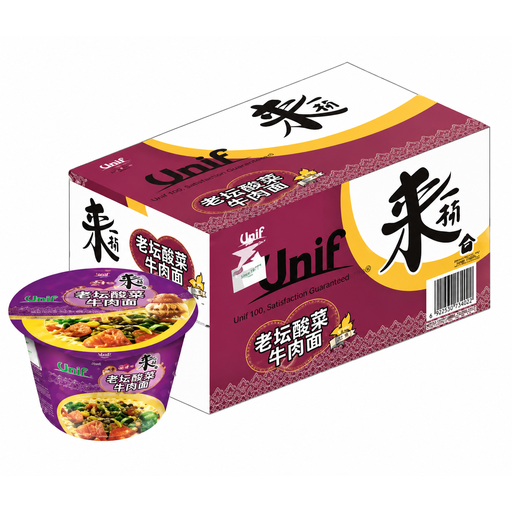
Why This Fits Their Persona: A 12-bowl multipack gives students, shared flats and busy households an easy way to keep individual Chinese noodle bowls available for lunches or late meals.
The product information clearly lists the noodle block, sauce, powder and dehydrated vegetable sachets, so buyers can see what is included rather than judging the contents from the bowl size alone.
125g individual bowls; includes vegetables, sauce and powder sachets; convenient for home, office or travel.
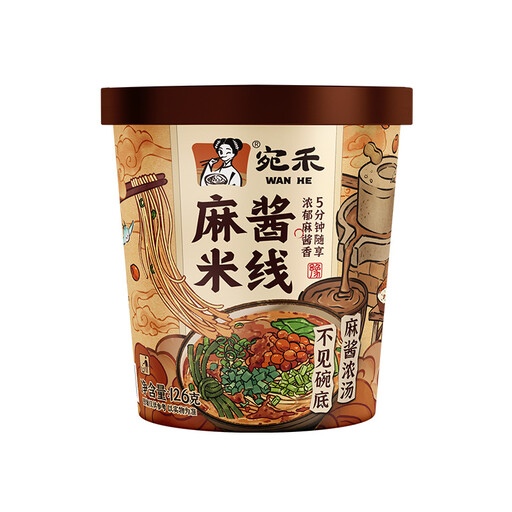
Why This Fits Their Persona: Suitable for shoppers seeking a thicker sesame and peanut flavour with several toppings and adjustable chilli and vinegar sachets.
The five separate components are specified, including sesame paste, peanut pieces, kelp, spring onion, chilli oil and vinegar. This gives better control over heat and seasoning.
126g bowl; five-minute boiling-water preparation; sesame, peanut, kelp and spring onion toppings.
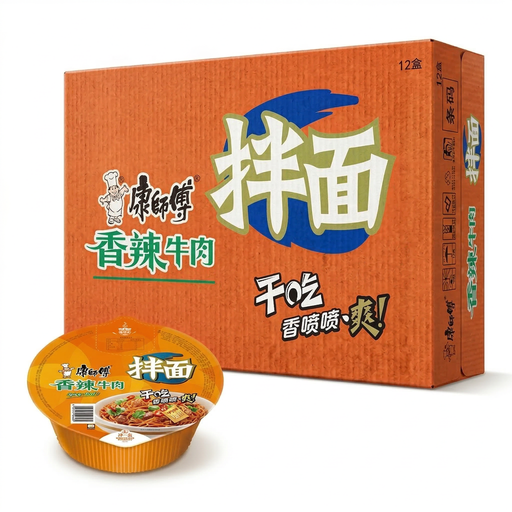
Why This Fits Their Persona: The dry format suits shoppers who prefer concentrated seasoning and a beef jerky-style profile for lunch breaks, late-night snacks or quick meals.
The product is identified specifically as dry noodles, helping shoppers distinguish it from a soup bowl before ordering. Check the supplied pack instructions for the exact preparation method.
144g per bowl; 12-bowl pack; beef jerky-style seasoning with a chilli-forward flavour profile.
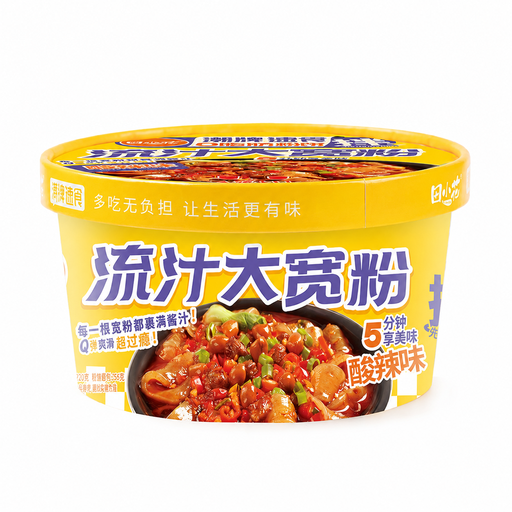
Why This Fits Their Persona: Its wide potato noodles, larger 274g format and hot and sour seasoning suit shoppers wanting a substantial bowl with a more involved preparation process.
The instructions clearly state a five-minute soak, draining after about three minutes, a second two-minute soak and final draining. This avoids the common mistake of treating every bowl as a one-step meal.
274g bowl; wide potato-based noodles; separate spicy oil, vinegar and vegetable packets.
We have compiled a complete, real-time list of products that fully satisfy these strict selection criteria and UK safety regulations.
Many bowl formats only need a kettle, but check whether the product requires draining. Wan He uses boiling water and a covered five-minute soak, while Tian Xiao Hua requires two draining stages. An office with no sink or suitable container may be more convenient for a single-soak or dry-noodle format.
Store unopened products in a cool, dry place away from direct sunlight, following the packaging instructions. Check the best-before date before buying a large noodle multipack, particularly if you live alone or are trying an unfamiliar flavour.
Read the complete ingredient list and allergen statement for every product. The options described here may contain wheat or other gluten-containing cereals, soybeans, sesame and peanuts. Do not rely solely on the flavour name or product photograph; verify the information on the current packaging before consumption.