
24/7 Customer Support

Free returns

Same-day & Next-day Delivery

Quality Guaranteed

Unlock Your Welcome Offers: FREE Delivery | Up to 80% OFF | Free 30-day JoyPlus trial
Download the APP
A Chinese kitchen cleaver can handle many everyday tasks, from slicing vegetables and mincing herbs to preparing boneless meat. However, not every wide-bladed knife is suitable for the same work. A thin slicing blade should not be treated like a heavy-duty cleaver, while a thick bone-cutting knife may feel cumbersome for delicate preparation.
Before buying, look beyond phrases such as “razor sharp”, “professional-grade” or “all-purpose”. These descriptions can hide important differences in steel, blade thickness, weight, handle construction and intended use.
A broad blade does not automatically mean a knife is suitable for chopping bones. Chinese-style knives generally cover several categories:
A kitchen chopping knife designed for vegetables may be damaged if used to strike through hard bones. Check the product description for its intended applications before ordering.
“Stainless steel” describes a broad material category rather than one fixed performance level. Steel grade, heat treatment, blade geometry and sharpening quality all influence how the edge behaves. A high-carbon stainless steel may offer a useful balance of hardness and corrosion resistance, but it still needs appropriate care.
Look for a named steel grade where available, such as 50Cr15MoV, 7Cr17MoV or 9Cr18MoV. Do not rely on unsupported claims about lifetime sharpness or effortless cutting.
A heavy-duty cleaver can provide useful momentum, but too much weight may reduce control during long preparation sessions. Conversely, a very light blade may not feel substantial enough for robust chopping.
A full-tang construction generally means the blade material extends through the handle, although the exact construction should be confirmed in the listing. Handle shape, grip texture and overall balance matter just as much as blade steel, particularly in a busy household kitchen.
For a household kitchen knife, stainless or high-carbon stainless steel can be practical because it offers resistance to staining when cleaned and dried properly. A named steel grade gives you more useful information than a vague reference to “premium metal”.
Even a corrosion-resistant blade should be washed by hand when recommended, dried promptly and stored away from moisture. Avoid leaving any cleaver submerged in a sink.
Blade dimensions should match your chopping board, hand strength and recipes. A 170 g knife, such as the Wangmazi Chinese Cleaver Knife listed below, may suit cooks who prefer lighter handling. A 190 mm cleaver offers a larger working area, while a 280–313 mm chopping knife requires more storage space and may be intended for more forceful tasks.
The blade profile is also important:
A secure handle should sit comfortably in your grip without excessive movement. Full-tang designs can provide a stable feel, while waterproof or synthetic handle materials may be easier to maintain in a damp kitchen.
Check whether the knife is dishwasher-safe. One supplied product specification states hand washing only, with immediate drying and regular honing. Unless the listing specifically permits machine washing, hand wash a sharp kitchen knife with mild detergent and dry it with a soft cloth.
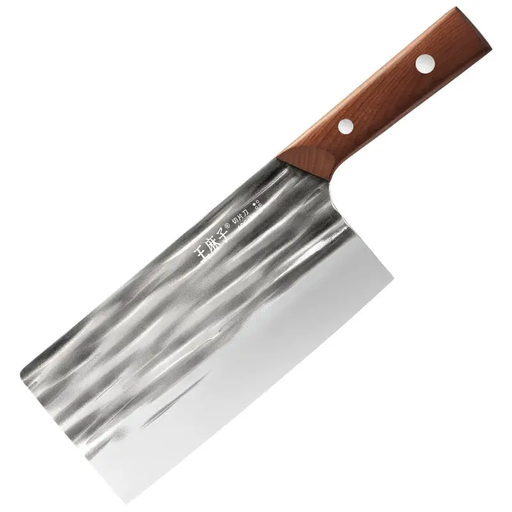
Why This Fits Their Persona: A straightforward household kitchen knife for everyday vegetable, fruit and meat preparation without selecting separate blades for each basic task.
The listing identifies stainless steel and full-tang construction, giving buyers more useful information than a generic “sharp knife” label.
Stainless steel construction; described for meat cutting, vegetable preparation and slicing.
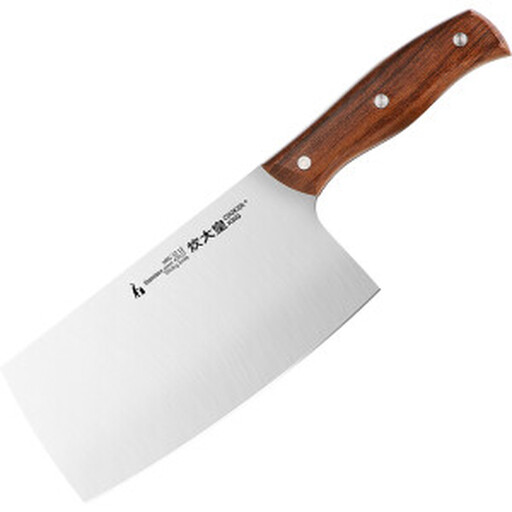
Why This Fits Their Persona: Suitable for cooks who want clearly stated construction details and a knife that can cover chopping, slicing and food-scooping tasks.
The listing provides steel grade, stated hardness, edge angle and handle material, helping buyers compare specifications rather than marketing language alone.
7Cr17MoV stainless steel; 58±2 HRC stated hardness; 15° double-bevel edge; waterproof pakkawood handle.
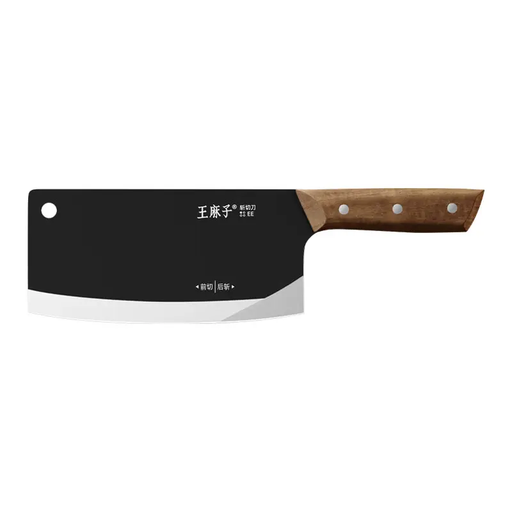
Why This Fits Their Persona: A practical match for frequent cooks who want separate tools for robust chopping and more controlled slicing.
The two-knife format reduces the temptation to use one blade for every task, particularly when switching between delicate slicing and tougher preparation.
Includes a chopping knife and slicing knife; described as high-carbon steel with wooden handles.
Use a stable chopping board and keep fingers curled away from the cutting edge. A Chinese chef’s knife should not be used for prying, twisting or opening packaging. Hard bone work requires a suitable thick-bladed model and controlled technique; never force a thin slicing blade through resistant material.
After washing, dry the blade and store it in a knife block, blade guard or suitable magnetic strip. Hone or sharpen according to the blade design, and stop using the knife if it develops chips, looseness or other damage. Keep it securely away from children.
We have compiled a complete, real-time list of products that fully satisfy these strict selection criteria and UK safety regulations.
Yes, a general-purpose model can prepare vegetables, herbs, boneless meat and fruit. Select a lighter, thinner blade for slicing and a thicker design only if your recipes require more forceful chopping.
There is no fixed lifespan. Frequency of use, cutting-board material, food types and technique all affect edge wear. Hand washing, avoiding glass boards and using a suitable honing or sharpening method can help maintain the edge.
Check the individual listing first. Hand washing is usually the safer choice for preserving sharpness, handle condition and corrosion resistance. Dry the blade immediately after washing rather than leaving it wet in a rack or sink.