
24/7 Customer Support

Free returns

Same-day & Next-day Delivery

Quality Guaranteed

Unlock Your Welcome Offers: FREE Delivery | Up to 80% OFF | Free 30-day JoyPlus trial
Download the APP
A versatile Chinese kitchen knife can be a transformative tool for any home cook, streamlining everything from dicing vegetables to slicing meat. However, the market is filled with options that look similar but perform very differently. Many buyers in the UK find themselves with a knife that is ill-suited for their needs, either because it's the wrong type or made from subpar materials. As the Joybuy Product Recommendation Officer, my role is to help you navigate these choices and find a tool that offers genuine value and performance.
Before you make a decision, it's important to be aware of a few common purchasing traps.
To avoid these pitfalls, focus on a few key technical details. Understanding these will help you select a multipurpose kitchen knife that truly fits your cooking style.
The function of a Chinese cleaver is defined by its blade's thickness and weight.
The type of steel determines a knife's sharpness, durability and maintenance requirements.
The tang is the part of the blade that extends into the handle. A full tang means the steel runs the entire length of the handle as a single piece. This provides superior balance, strength and durability, making the knife feel like a solid, reliable extension of your hand. In contrast, partial tangs can be a point of weakness over time. Look for handles made from durable, non-slip materials like treated wood or modern composites that offer a comfortable and secure grip.
Based on these practical criteria, we have matched several products to different user needs.
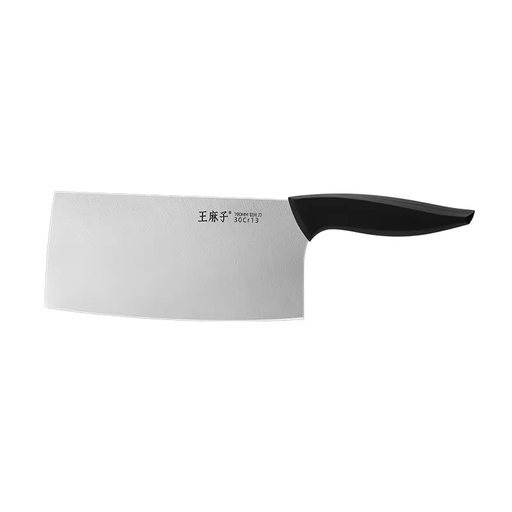
Why This Fits Their Persona: This is an ideal all-rounder for the typical UK family kitchen. It's designed for daily tasks like chopping vegetables for a stir-fry, slicing chicken breasts or dicing onions, offering great utility without requiring specialist care.
It is clearly a slicing knife, not a bone chopper, avoiding the "one-size-fits-all" trap. Its stainless steel construction makes it a practical, low-maintenance choice for busy households.
Forged from sharp stainless steel for good edge retention and corrosion resistance. The balanced design and comfortable handle provide control for a wide range of prep work.
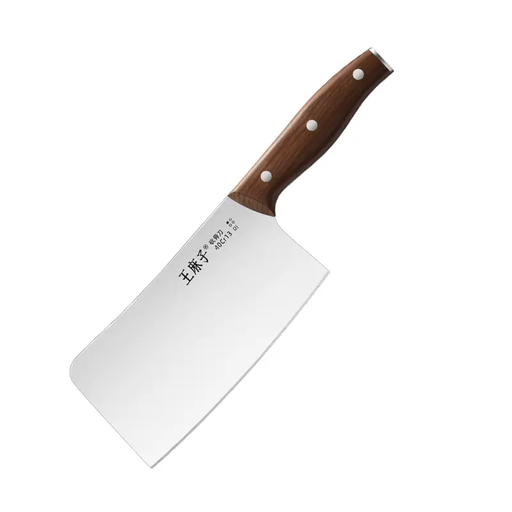
Why This Fits Their Persona: For the home cook who regularly prepares whole chickens, racks of ribs or other large cuts of meat with bone. This is a purpose-built tool designed for power and durability, not delicate slicing.
This is the definition of a specialist tool. Its significant weight and thick, robust blade are designed for one job: chopping through tough materials. It prevents users from destroying their primary slicing knife.
Forged from high-carbon steel for resilience and power. The weight is balanced to provide chopping force and the ergonomic handle ensures a secure grip during demanding use.
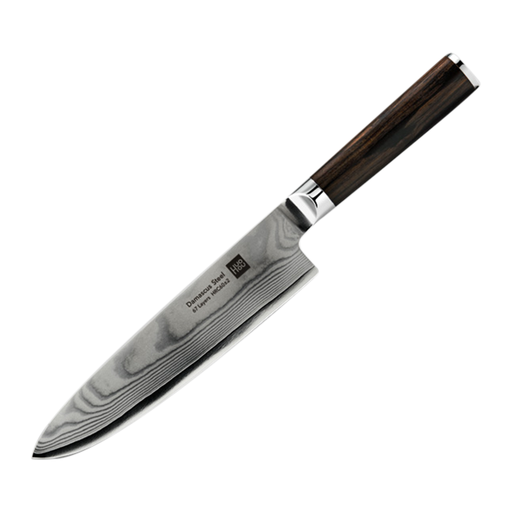
Why This Fits Their Persona: This user appreciates fine craftsmanship and top-tier performance. The layered Damascus steel and ebony handle appeal to their aesthetic sense, while the high-performance core and sharp edge meet their demands for precision.
It sidesteps the "style over substance" trap by specifying its high-performance 90Cr14MoV core. The Damascus pattern is a result of its construction, but the cutting performance comes from this quality central layer of steel.
The 67-layer construction provides a balance of hardness and flexibility. The blade is hand-sharpened to a fine 16° edge for exceptionally smooth and precise slicing.
We have compiled a complete, real-time list of products that fully satisfy these strict selection criteria and UK safety regulations.
While both are versatile kitchen knives, they have distinct designs. A Chinese cleaver has a tall, rectangular blade that is useful for chopping as well as scooping ingredients. A Santoku knife, which originates from Japan, has a shorter blade with a curved tip (often called a "sheep's foot" shape) that is well-suited for a rocking motion for mincing and dicing. The Santoku is generally lighter and smaller than a typical Chinese vegetable cleaver.
High-carbon steel requires more care than stainless steel. To prevent rust, it is crucial to hand wash and thoroughly dry the knife immediately after each use. Do not leave it to soak in the sink or put it in the dishwasher. For long-term care, you can apply a thin coat of food-safe mineral oil to the blade before storing it. This creates a protective barrier against moisture.
Yes, a Chinese vegetable cleaver or slicing knife is excellent for cutting boneless meat and poultry. Its sharp, thin edge allows for clean, precise slices. However, it should never be used to cut through bones, frozen food or other hard materials, as this can cause the fine edge to chip or crack. For those tasks, you must use a dedicated meat cleaver or bone chopper.