
24/7 Customer Support

Free returns

Same-day & Next-day Delivery

Quality Guaranteed

Unlock Your Welcome Offers: FREE Delivery | Up to 80% OFF | Free 30-day JoyPlus trial
Download the APP
Chinese pickled mustard greens can turn plain rice, noodles or congee into a more satisfying meal in seconds. However, products sold under similar names can vary considerably. Some are crunchy pickled mustard tuber, some are leafy preserved mustard greens while others contain chilli oil, sweeteners or additional seasonings.
For UK shoppers, the main challenge is not simply finding an authentic product. It is choosing one that matches the intended dish, portion size, salt preference and storage routine.
“Chinese pickled mustard greens” is often used as a broad search term. In practice, the product may be made from:
Mustard tuber usually offers a firmer, crunchier bite, making it suitable for congee, noodles and ready-to-eat side dishes. Leaf mustard is more appropriate when a recipe requires cooking, simmering or a softer texture.
Individual 70g or 80g packs are practical for students, lunchboxes and occasional use. They also reduce the need to store an opened pouch. Larger 280g to 800g packs may offer more food for households that regularly prepare Chinese meals, but they require careful refrigeration after opening.
Compare the total net weight, number of individual packs and storage instructions rather than judging value by the front-of-pack size alone.
Preserved vegetables are commonly salty because salt forms part of the preservation process. For example, the listed salt content ranges from 1.2g per 100g in Chang Pickled Sour Mustard to 8g per 100g in Wu Jiang Mustard Tuber Light Flavour. These figures are not directly comparable unless the serving size and preparation method are considered.
Always check the UK label for:
Choose slices or crunchy chunks when you want a noticeable bite in rice bowls, noodles or congee. Shredded varieties distribute more evenly through stir-fries, dumpling fillings and soups.
A product described as “crunchy” may still vary in firmness depending on the cut and preparation. Mustard tuber generally retains a denser texture than leafy pickled greens.
The main flavour categories include:
For a simple side dish, ready-to-eat original or lightly seasoned packs are convenient. For cooking, a less heavily flavoured product gives you more control over the finished dish.
A single 80g pouch can suit one or two servings. Multipacks such as 80g × 4 or 80g × 5 are useful for regular lunches, while 350g to 500g packs suit family cooking. An 800g pack is more appropriate for frequent use or shared households.
After opening, many products should be refrigerated and consumed promptly. Keep the packaging or transfer the contents to an airtight container, following the specific product label. Do not assume that a shelf-stable unopened pouch can remain at room temperature after opening.
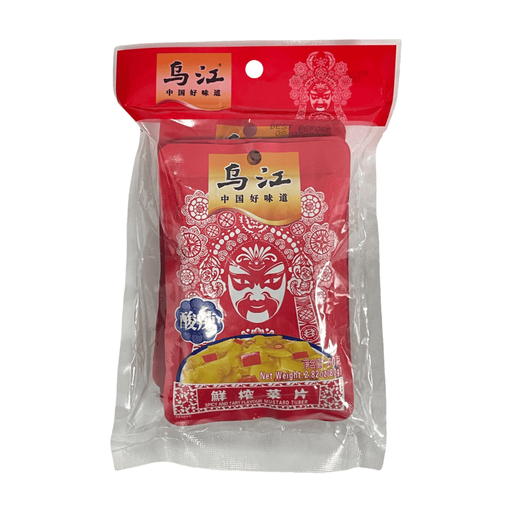
Why This Fits Their Persona: The compact 80g pack provides a straightforward way to try Sichuan-Chongqing-style pickled mustard without committing to a large quantity. It is ready to eat with porridge, noodles or rice.
The product format and 80g quantity are clearly stated, helping avoid buying a large pack before confirming that the flavour and texture suit your meals.
Sliced mustard tuber; ready to eat; listed mustard allergen and storage guidance.
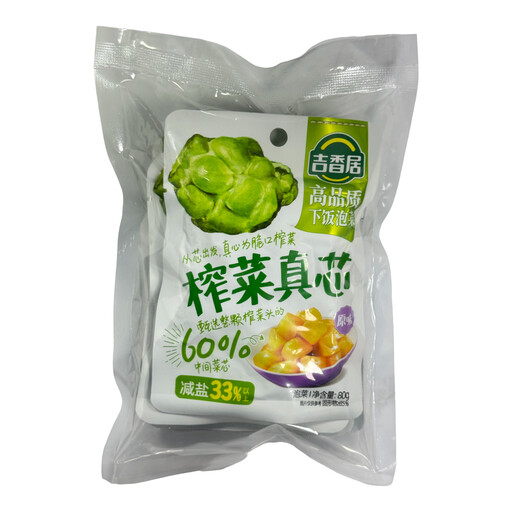
Why This Fits Their Persona: Five individually packed portions suit shoppers who value freshness between servings and want a consistent original flavour for rice, congee or simple Chinese meals.
The ingredient declaration lists mustard stem at 90% or more, while the individual packs reduce repeated exposure to an opened pouch.
400g total weight; original flavour; individually sealed 80g packs; ready to eat.
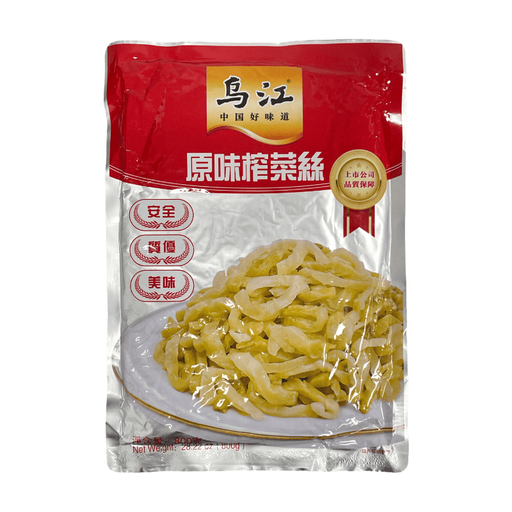
Why This Fits Their Persona: The larger pack is designed for households, catering or regular use in noodles, soups, stir-fries and steamed dishes.
The 800g net quantity makes the volume clear, so frequent users can compare it with multipacks rather than relying on vague “value” wording.
Ready to eat; 800g pack; suitable for congee, noodles, soups, stir-fries and steamed dishes.
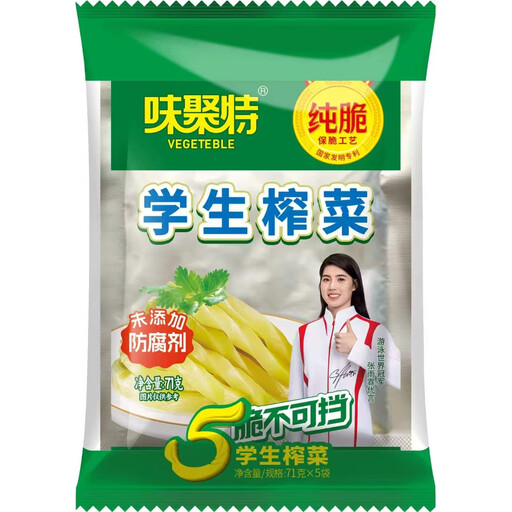
Why This Fits Their Persona: Individual 71g packs are convenient for students, packed lunches and quick meals where a ready-to-eat Chinese side dish is more practical than opening a large container.
The five-pack format makes portion planning easier, while the listing identifies mustard, sesame and soy allergens for label checking.
355g total; individually packed; ready to eat with rice, noodles or steamed bread.
Use the product according to its texture and seasoning:
Vegetarians should check the full ingredient list rather than relying only on the product name. Some varieties may contain fish-related seasonings, animal-derived ingredients or sauces that are not obvious from the front of the pack.
We have compiled a complete, real-time list of products that fully satisfy these strict selection criteria and UK safety regulations.
Not always. Zhacai generally refers to pickled mustard tuber, especially products associated with Fuling in Chongqing. “Chinese pickled mustard greens” is a wider term that can also include leaf mustard, mustard stem and other preserved vegetables.
Ready-to-eat products can usually be served directly, but rinsing may reduce saltiness. Products labelled as requiring cooking, such as some shredded preserved greens, should be rinsed, drained and cooked according to the packaging instructions.
Storage life varies by product. Keep opened packs refrigerated when instructed and consume promptly. For longer storage, follow the label rather than relying on the unopened best-before date. Discard any product showing an unusual odour, mould or slimy texture.