
24/7 Customer Support

Free returns

Same-day & Next-day Delivery

Quality Guaranteed

Unlock Your Welcome Offers: FREE Delivery | Up to 80% OFF | Free 30-day JoyPlus trial
Download the APP
Chinese pickled radish is a practical way to add salty, sour, spicy or savoury flavour to everyday meals. It can transform plain rice, congee, noodles and steamed buns without requiring extra cooking. However, products labelled as Chinese radish pickle can vary considerably in texture, ingredients, portion size and storage requirements.
For UK shoppers, the main challenge is separating useful product information from vague descriptions such as “traditional flavour” or “premium ingredients”. The label, pack format and intended use usually tell you more than the front-of-pack marketing.
A crunchy pickled radish may be made from fresh radish, salted radish or air-dried radish. These formats produce different results:
If texture matters, look for wording such as “crisp”, “crunchy”, “air-dried” or “strips”, but always check the ingredients and serving instructions as well.
There is no universal UK scale for the heat of a spicy pickled radish. “Spicy”, “chilli flavour” and “Sichuan-style” may refer to chilli, Sichuan pepper, garlic, peppercorns or oil-based seasoning. These create different sensations.
For example, Sichuan pickled radish may contain peppercorns for a numbing aromatic effect, while chopped-chilli varieties generally provide a sharper heat. If you prefer a milder accompaniment, choose a plain or lightly seasoned radish and use a smaller serving first.
Pickled foods commonly contain salt, and some products include sesame, soya, fish, wheat, crustaceans or sulphites. A product can be convenient without matching every dietary requirement.
Before ordering, check:
This is particularly important when buying a large jar or sharing pack for occasional use.
The quantitative ingredient declaration, or QUID, shows the percentage of the named ingredient. Examples in this range include products listing radish at 93%, 90% or more, 79.6% and 78%. A higher stated radish percentage does not automatically determine flavour or texture, but it helps you compare products more clearly.
Choose the format according to how you eat it:
Read beyond the word “spicy”. Ingredients such as chilli, rapeseed oil, soybean oil, sesame, garlic, ginger, vinegar, sugar and Sichuan pepper indicate the likely flavour direction.
A Chinese pickled radish with vinegar or lactic acid may taste tangier. An oil-seasoned product can be richer and more aromatic. A sweet-spicy version may suit noodles or steamed buns, while a sharper radish condiment can cut through fried or oily food.
Many products are ready-to-eat radish accompaniments, requiring no cooking. Others, such as duck soup seasoning, must be simmered. Confirm the instructions before purchase.
Shelf-stable packs are convenient for cupboards, but most should be refrigerated after opening. Use a clean utensil, reseal the packaging and follow the stated consumption period. A frozen radish-filled bun is a different category altogether: it needs steaming and must remain at -18°C or below until preparation.
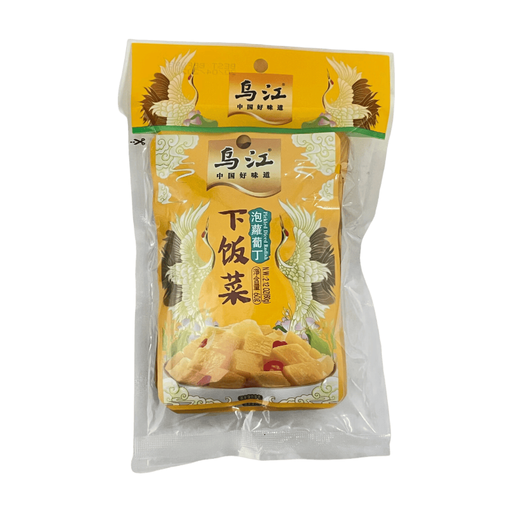
Why This Fits Their Persona: Four small packs make it easier to try a spicy pickled radish without committing to a large jar. The cubes can accompany rice, porridge or noodles.
The multipack format supports portion control and avoids opening one oversized container for occasional use.
Radish is listed at 93%; four 60g sachets are easy to store and carry.
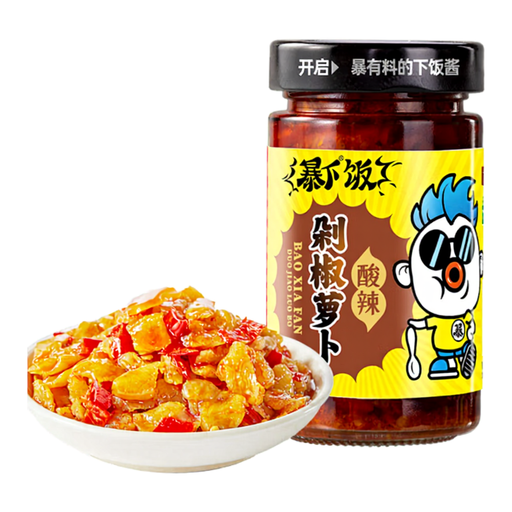
Why This Fits Their Persona: This is suited to shoppers seeking a defined spicy-and-sour profile, with chopped chilli, garlic and vinegar for serving alongside rice, congee, noodles or steamed dishes.
The ingredient list makes the flavour direction clearer than a general “spicy” label. Fish is declared as an allergen, supporting informed purchasing.
200g sharing pack; listed serving uses include side dishes, condiments and cooking.
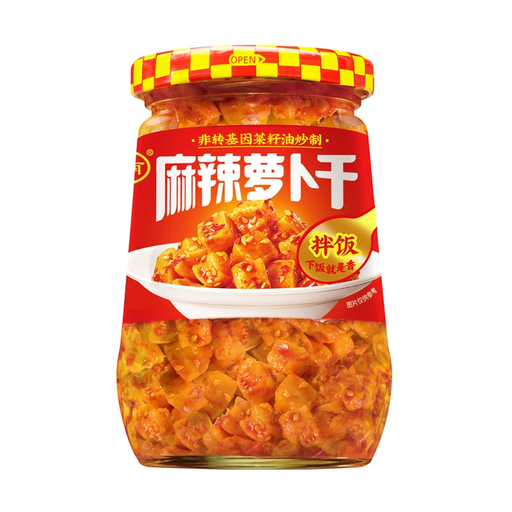
Why This Fits Their Persona: Its larger bottle suits households that regularly serve dried radish with porridge, rice, noodles, steamed buns or bento meals.
The product is clearly described as ready to eat and suitable for cooking, rather than requiring buyers to guess how to use an air-dried format.
335g pack; contains sesame and states 4.6g salt per 100g, making serving and allergen checks more straightforward.
For a milder, more traditional accompaniment, consider JI XIANG JU Radish Cube 80g × 5, which lists radish at 90% or more and provides individually packed portions. For a larger, less spicy option, Qian Jiang Xiaoshan Pickled White Radish 500g is labelled ready to eat and can be refrigerated after opening.
We have compiled a complete, real-time list of products that fully satisfy these strict selection criteria and UK safety regulations.
Use small amounts of Chinese pickled radish to add contrast to:
Drain oily products before serving if you prefer a lighter texture. For whole pickled daikon, slice thinly; for cubes, mix directly into rice or use as a topping.
Many products are ready to eat directly from the pack, including seasoned cubes, strips and side dishes. Always check the usage instructions. Soup bases and frozen radish-filled buns require cooking.
The answer depends on the product. Some labels advise refrigeration and consumption within three to five days, while others provide a longer period. Follow the packaging rather than relying on a general estimate, and use a clean utensil when serving.
Pickled radish can contain a significant amount of salt. Compare the nutrition table per 100g, check the portion size and consider rinsing suitable products where the instructions allow it. If you have specific dietary requirements, review the complete UK ingredient and allergen label before buying.