
24/7 Customer Support

Free returns

Same-day & Next-day Delivery

Quality Guaranteed

Unlock Your Welcome Offers: FREE Delivery | Up to 80% OFF | Free 30-day JoyPlus trial
Download the APP
Navigating the world of Chinese soup can feel overwhelming. You're looking for those rich, comforting flavours you've enjoyed in restaurants or perhaps grew up with, but the supermarket aisle presents a confusing array of packets, pastes and jars. As a Joybuy Product Recommendation Officer, my role is to help you see past the marketing jargon and choose products that deliver genuine flavour and value. Let's break down how to avoid common purchasing mistakes and find the perfect Chinese soup for your kitchen.
Many shoppers find their homemade attempts fall flat, often due to a few recurring issues with store-bought products. Being aware of these can save you both money and disappointment.
To ensure you're getting a quality product, focus on a few core parameters. These details will tell you more about the soup's character than any marketing slogan.
The format of the soup product is the biggest indicator of its flavour and convenience level.
Chinese soup base in this format provides a deep, complex foundation for dishes like hot pot or noodle soup. They are a great middle-ground between scratch cooking and instant mixes.hot and sour soup mix or similar instant Chinese soup is designed for maximum convenience. The key here is to scrutinise the ingredients list for the ratio of real ingredients (like mushroom powder) to salt and flavour enhancers.A quick scan of the ingredients list can reveal the product's quality. Look for a list that starts with recognisable foods like tomatoes, cabbage, mushrooms or bones. Be mindful of the sodium content, as many bases can be excessively salty. Also, check for flavour enhancers like E621 (monosodium glutamate), E631 and E635. While not inherently bad, their high placement on an ingredients list can suggest they are used to compensate for a lack of real flavour.
"Chinese soup" is an incredibly broad term. A fiery Sichuan Chinese hot pot base is worlds apart from a delicate, sweet Cantonese Chinese dessert soup. Products that name a specific region (e.g., Guizhou, Sichuan, Dongbei) or a particular dish (e.g., Sour Cabbage and Pork Hot Pot) are often more likely to provide a genuinely authentic Chinese soup experience, as they are formulated to replicate a distinct culinary tradition.
Based on these criteria, here are a few options from our catalogue, matched to different needs and preferences.
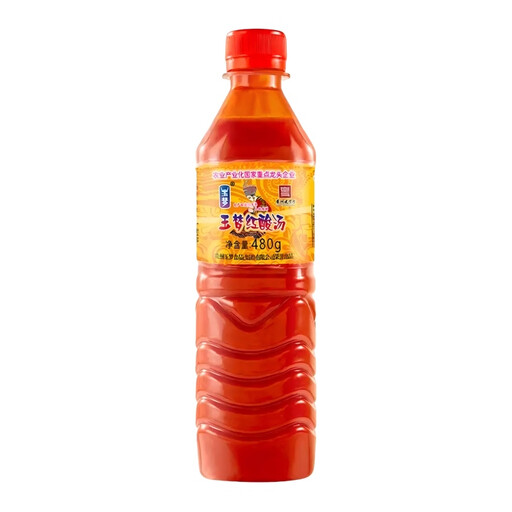
Why This Fits Their Persona: This is for the person who wants an authentic, regional flavour foundation to build upon. It's perfect for making Guizhou-style sour soup fish or beef, providing a complex base that you can customise with fresh ingredients.
It sidesteps the "authentic flavour" trap by being regionally specific. The flavour comes from fermented tomatoes and chillies, not a generic "spicy" profile. It's a base, not an all-in-one mix, avoiding the "just add water" illusion.
Its primary advantage is its versatility and genuine sour-spicy profile, inherited from traditional Kaili fermentation techniques. It contains no artificial colours.
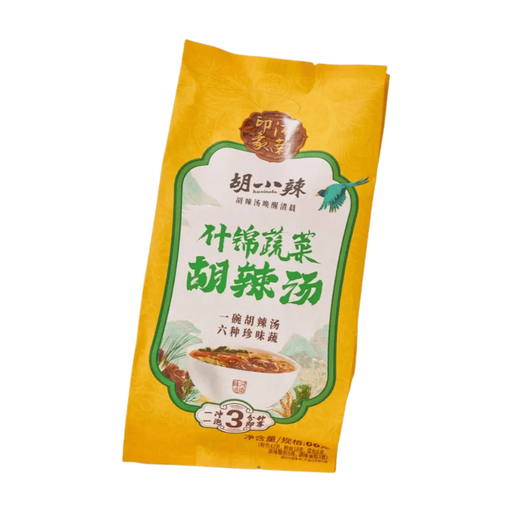
Why This Fits Their Persona: For those needing a quick, satisfying meal for a work-from-home lunch or a simple dinner. This Henan-style spicy soup kit provides everything needed for a flavourful bowl in minutes.
It overcomes the "just add water" illusion by providing separate sachets for freeze-dried vegetables, vermicelli, vinegar and oil. This preserves the texture and flavour of each component, creating a more substantial and satisfying result.
Its main benefit is convenience without major compromise. The inclusion of freeze-dried tofu, black fungus and mushrooms provides a much better texture than a simple powder mix.
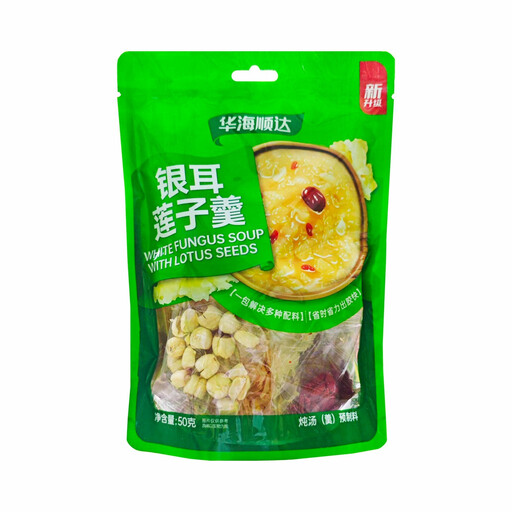
Why This Fits Their Persona: This is ideal for someone interested in traditional Chinese nourishing dessert soups (*tong sui*). It's not a savoury soup, but a naturally sweet, gentle blend intended for wellness and light enjoyment.
This product is the antithesis of a processed mix. It completely avoids vague labelling by being a simple pack of dried ingredients: silver ear, lotus seeds, lily bulbs, red dates and goji berries. You have full control over the cooking and sweetness.
It is entirely natural, containing no added sugar, salt or preservatives. It allows you to create a genuinely traditional and nourishing sweet soup from scratch with the convenience of pre-portioned ingredients.
We have compiled a complete, real-time list of products that fully satisfy these strict selection criteria and UK safety regulations.
This varies significantly between products. A thick, concentrated paste might require 1 to 1.5 litres of water to create a balanced hot pot broth, whereas a small sachet of powder may only need 250ml for a single serving. Always check the package for the manufacturer's recommended ratio. It is often a good idea to start with slightly less water than suggested, taste and then dilute further if needed.
Yes, absolutely. Versatile hot pot bases are excellent for more than just hot pot. Aromatic bases like tomato, mushroom or sour cabbage can be diluted to create a flavourful stock for noodle soup, used as a braising liquid for meats and tofu, or even added in small amounts to stir-fries to boost their flavour.
The main difference is flavour profile and when they are eaten. Savoury soups are a core part of a main meal. Chinese dessert soups, known as tong sui (糖水), are sweet and are typically served between meals as a snack or after dinner. They often feature ingredients like red beans, mung beans, silver ear fungus, lotus seeds and rock sugar, and are appreciated for both their taste and their nourishing qualities in traditional Chinese food philosophy.