
24/7 Customer Support

Free returns

Same-day & Next-day Delivery

Quality Guaranteed

Unlock Your Welcome Offers: FREE Delivery | Up to 80% OFF | Free 30-day JoyPlus trial
Download the APP
A warm, fluffy steamed bun can be a comforting breakfast, a quick lunch or a delightful part of a home-cooked dim sum spread. However, when you buy frozen Chinese steamed buns online, the experience can sometimes be disappointing. What arrives might not match the picture on the packet, leaving you with a less-than-satisfying meal.
As a Joybuy Product Recommendation Officer, my role is to help you navigate the crowded digital aisles. We'll look past the marketing photos and focus on what truly matters, ensuring the frozen bao buns you choose deliver on their promise of flavour and texture. Here are a few common pitfalls to watch out for.
To avoid these issues, you don't need to be a food scientist. You just need to know what to look for on the product page. Focusing on these three areas will significantly improve your chances of picking a delicious product.
First, it's important to know what you're buying, as different buns serve different purposes.
Always take a moment to scan the ingredients. While frozen foods require certain stabilisers, a shorter, more recognisable list is often a good indicator of quality.
Look for specific ingredients like "pork, bok choy or shiitake mushrooms" listed high up. Be wary of vague terms like "meat protein" or an over-reliance on monosodium glutamate (E621), which, while a common flavour enhancer, can sometimes be used to compensate for a lack of authentic ingredients. For sweet buns, check if they use real taro, red bean or salted egg yolk rather than just "flavouring."
Under UK food labelling regulations, many products must state the percentage of key ingredients. This is called a QUID. For a pork bun, you might see "Pork (25%)" in the ingredient list. This is your most reliable tool against the "disappearing filling" pitfall. It gives you a factual measure of how much of the main ingredient you're actually getting, helping you make a more informed choice when you buy Asian steamed buns online.
Based on these practical criteria, here are a few recommendations from our catalogue, matched to different needs and preferences.

Why This Fits Their Persona: This is the ideal solution for a quick, savoury and satisfying meal. After a long day, you can have a hot, comforting pork bao ready in about 10 minutes with minimal effort, making it a perfect freezer staple for anyone short on time.
It avoids the flavour pitfall with a straightforward ingredient list where pork, spring onion and ginger are clearly listed, promising a classic, recognisable taste profile rather than just salt.
Features a classic juicy pork filling and soft dough. As a product made in the United Kingdom, it adheres to local production standards.
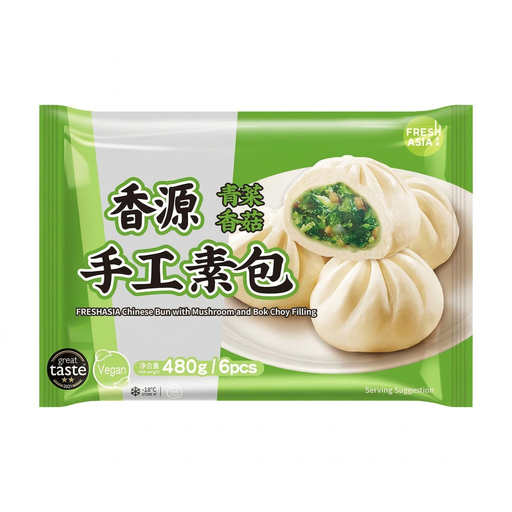
Why This Fits Their Persona: For those seeking a satisfying vegetarian baozi, this bun offers a flavourful alternative to meat. It's a great way to enjoy a classic dim sum experience without compromising on a plant-based diet, providing a savoury and textured filling.
It directly counters the "disappearing filling" myth with a QUID of 33% Bok Choy. This transparency assures you that the primary ingredient is present in a substantial quantity, promising a bun filled with vegetables, not just dough.
A flavourful vegetarian filling with distinct textures from bok choy, mushrooms and black fungus. It's a quick and convenient way to enjoy a classic vegetable bun.

Why This Fits Their Persona: For those who love to experiment in the kitchen, these gua bao are the perfect blank canvas. They allow for complete creative control, ready to be stuffed with anything from traditional Taiwanese braised pork to crispy fried chicken or spicy mapo tofu.
This product inherently avoids the "lack of filling" trap because it is designed to be filled by you. The focus is entirely on providing a high-quality, soft, and pliable bun that serves as a reliable vessel for your own culinary creations.
Highly versatile folded bun shape. The soft, slightly sweet wrapper is the classic choice for authentic Taiwanese-style street food and is quick to steam from frozen.
We have compiled a complete, real-time list of products that fully satisfy these strict selection criteria and UK safety regulations.
The primary difference is the filling. Bao or baozi are buns that are filled before being steamed. The fillings can be savoury, like minced pork or vegetables, or sweet, like red bean or lotus seed paste. Mantou, on the other hand, are plain, unfilled steamed buns. They have a subtle sweetness and are served as a staple carbohydrate, much like bread, to accompany main dishes or for dipping.
You can easily create a makeshift steamer. Take a large pot with a well-fitting lid. Place a small, heat-proof bowl or a metal trivet in the bottom. Add about an inch of water, ensuring it doesn't come above your makeshift stand. Place the frozen buns on a heat-proof plate, set the plate on top of the bowl or trivet, bring the water to a boil, then reduce the heat to a simmer. Cover the pot and steam for the time recommended on the package, typically 10-12 minutes, until they are hot and fluffy.
Yes, and it's a delicious way to prepare them, creating a crispy bottom known as sheng jian bao. For the best results, it's often recommended to steam the buns for about 5-7 minutes first to ensure they are cooked through and fluffy. Then, heat a little oil in a non-stick frying pan over a medium heat and place the steamed buns in the pan. Fry for 2-3 minutes or until the bottoms are golden brown and crisp. Serve immediately.