
24/7 Customer Support

Free returns

Same-day & Next-day Delivery

Quality Guaranteed

Unlock Your Welcome Offers: FREE Delivery | Up to 80% OFF | Free 30-day JoyPlus trial
Download the APP
Chinese tea drinks cover a wide range of flavours and formats, from chilled bottled oolong to loose-leaf white tea, jasmine tea, Pu’er tea, matcha and instant milk tea. The right choice depends on how you plan to drink it: as an everyday option at your desk, a multipack for the household or a traditional brew for slower tea breaks.
However, attractive packaging and phrases such as “natural”, “light” or “premium” do not always tell you what matters most. Before buying, check the following common pitfalls.
A tea drink can contain fruit juice, syrups, honey, sugar or milk powder. For example, a grapefruit oolong drink lists 2g of sugar per 100ml, while a honey-refined peach oolong preserve lists 55g of sugars per 100g. These may suit shoppers seeking sweetness, but they are not equivalent to sugar-free oolong tea.
Always check the nutrition panel per 100ml and calculate the amount in the whole bottle. A 500ml drink with 2g of sugar per 100ml contains approximately 10g per bottle.
Sugar-free bottled Chinese tea can range from roasted and full-bodied to floral and delicate. Oolong, green tea and jasmine tea each have different aromas and finishes. Some products may also contain sweeteners, acidity regulators or vitamin C, even when the sugar value is zero.
Read both the ingredients list and the nutrition table. This helps you distinguish plain brewed tea from a flavoured or sweetened tea beverage.
Loose-leaf Chinese tea and tea bags require hot water, suitable steeping time and storage away from moisture and strong odours. Ready-to-drink tea requires no brewing but may need refrigeration after opening. Large bottles are practical for sharing, yet should be consumed promptly once opened.
For UK households, the most convenient format is often the one that matches actual usage. Buying a large case of bottled tea may create waste if you mainly drink tea alone, while individual tea bags may be less suitable for a family or office fridge.
For shoppers looking for low-sugar tea drinks, compare:
For instance, Suntory Zero Sugar Oolong Tea lists 0g sugar and 0kcal per 100ml, whereas its low-sugar version lists 4.7g of sugar per 100ml. Both are tea beverages, but they serve different preferences.
Choose based on where the drink will be used:
Tea naturally contains caffeine, although the amount varies by leaf, processing and brew strength. If you prefer a gentler option, check the product description and serving guidance rather than assuming all white tea or herbal-style drinks are caffeine-free.
Tea Story Osmanthus White Tea uses Fuding Shou Mei white tea and osmanthus and is described as low caffeine. Its instructions recommend 90–95°C water and a two-to-five-minute steep, with the tea bag suitable for two to three further infusions. This is different from bottled tea, which is ready to drink without equipment.
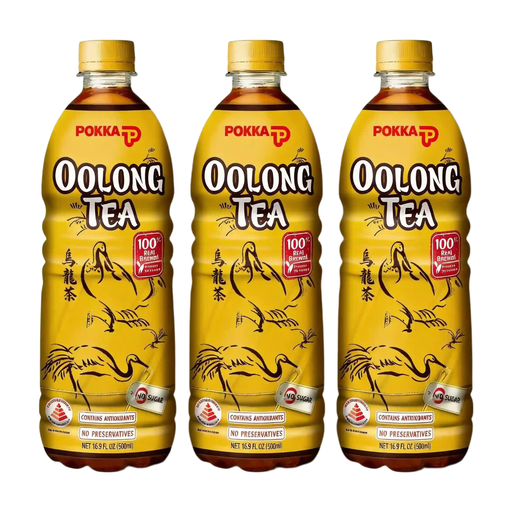
Why This Fits Their Persona: A smaller three-bottle pack gives first-time buyers a practical way to try sugar-free oolong tea at home, work or while travelling without committing to a large case.
The listing specifies 0g sugar and 0kJ per 100ml, making the nutrition information easier to compare with sweetened tea drinks.
500ml ready-to-drink format; ingredients list water, oolong tea and ascorbic acid.

Why This Fits Their Persona: Suits tea drinkers who want a more traditional loose-leaf-style infusion with the convenience of individually portioned tea bags.
The pack states 0g sugar per 100ml brewed and provides specific water temperature and steeping guidance rather than relying only on lifestyle wording.
Fuding Shou Mei white tea with osmanthus; 24 individually wrapped 2g tea bags in a two-pack format.

Why This Fits Their Persona: A 15-bottle case is suited to busy offices, student households and regular drinkers who want bottled Chinese tea available without daily shopping.
The listing identifies it as a no-added-sugar ready-to-drink black oolong and gives a complete 500ml bottle count for planning storage.
0g sugar and 0kcal per 100ml; can be served chilled or at room temperature.

Why This Fits Their Persona: A powder format is convenient for warm drinks at home, in student accommodation or during an office break.
The ingredient list clearly includes sugar, creamer and milk, so shoppers can avoid mistaking milk tea for an unsweetened tea drink.
Quick preparation with hot water; contains milk and is supplied in a 190g sealed bag.
We have compiled a complete, real-time list of products that fully satisfy these strict selection criteria and UK safety regulations.
Yes. Products labelled ready-to-drink can be consumed directly and are often served chilled. Check storage instructions after opening; many should be refrigerated and consumed within 12–24 hours.
Look for a clearly stated 0g sugar per 100ml and check that the ingredients do not include sugar, syrup or juice. Unsweetened oolong and green tea are common options. “Low sugar” is not the same as sugar-free, so compare the figures carefully.
It can offer more servings from one pack, particularly when tea leaves or tea bags can be re-steeped. Bottled tea costs more per serving but saves preparation time. Compare pack size, number of servings, storage and your usual drinking habits before deciding.