
24/7 Customer Support

Free returns

Same-day & Next-day Delivery

Quality Guaranteed

Unlock Your Welcome Offers: FREE Delivery | Up to 80% OFF | Free 30-day JoyPlus trial
Download the APP
Chinese vegetarian snacks offer more variety than crisps or biscuits, from chewy konjac strips to seasoned tofu, dried beans and soy-based “steak” snacks. They can suit office drawers, university bags, travel and casual sharing, but attractive packaging does not always reveal the details that matter.
For UK shoppers, the main checks are ingredients, allergen information, portion format, texture and salt content. A snack described as vegetarian may still contain wheat, sesame, peanuts, mollusc-derived flavourings or other ingredients that do not suit every vegan or plant-based diet.
Words such as “steak”, “tripe” or “beef flavour” usually describe texture or seasoning rather than the main ingredient. However, flavouring formulas differ. Read the full ingredient list instead of relying only on the front of the pack.
For strict vegan shoppers, also check for milk, egg, fish, shellfish, honey and animal-derived flavourings. A product marketed as a vegetarian snack is not automatically suitable for every vegan diet.
Konjac snacks often have relatively modest energy values per 100g, but spicy sauces, soy sauce and pickled seasoning can increase salt. For example, the listed salt content ranges from 1.9g to 8.2g per 100g across the products in this guide.
Because individual sachets are small, it is easy to eat several portions without noticing the total. Use the nutrition panel, which should be compared on a per 100g basis, as well as the serving size.
Soy is common in vegetarian tofu snacks, dried tofu snacks and plant-based protein snacks. Wheat may appear in soy sauce, wheat flour or gluten-based protein. Sesame and peanuts are also frequent in spicy Sichuan snacks and sesame-seasoned konjac.
In the UK, allergens should be clearly emphasised on the packaging. Always check the current pack, particularly if you have an allergy or are buying for someone else.
Choose the format that matches your appetite and purpose:
Do not assume that “plant-based protein” means low fat, low salt or nutritionally complete. Compare the whole nutrition table.
“Sichuan-style” can mean chilli heat, Sichuan pepper numbness, pickled sourness or a combination. If you prefer a gentler introduction, barbecue or sesame paste flavours may be easier to manage than mala or hot-and-sour varieties.
Texture also varies:
Individually wrapped snacks are practical for commuting, packed lunches and sharing. A 360g box containing 20 portions gives a clear 18g serving format, while a 302g assorted tofu pack is more suitable for sampling several flavours.
For opened larger bags, follow the storage instructions. Some products require refrigeration after opening, whereas ambient individually wrapped products can remain sealed in a cool, dry cupboard until needed.
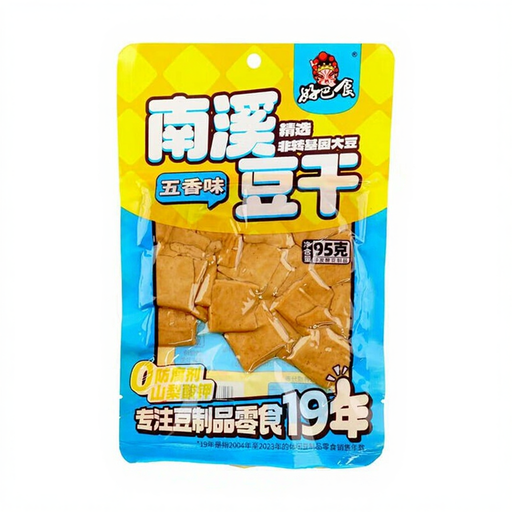
Why This Fits Their Persona: A compact entry point for shoppers exploring Chinese vegetarian snacks without committing to a large box. The five-flavour format also suits students and office snack drawers.
The product description identifies soybeans at 47%, allowing buyers to see the primary base rather than relying on a meat-style name.
Five savoury flavour profiles; 95g pack; ready to eat and made with soybeans, vegetable oil, sesame and traditional spices.
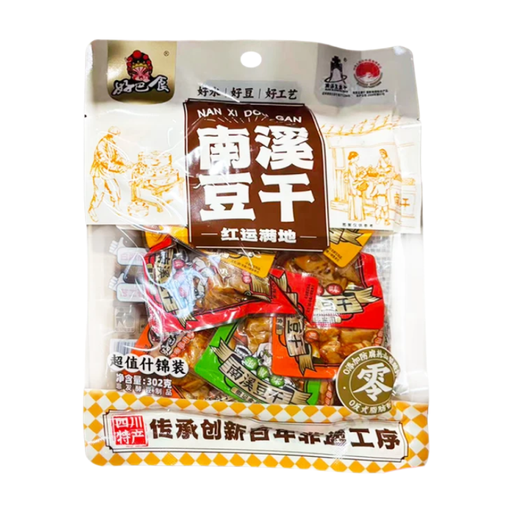
Why This Fits Their Persona: Suitable for Sichuan snack enthusiasts who want variety for sharing, tasting or pairing with drinks.
The pack lists four variants separately, so shoppers can see the flavour range and compare the nutrition panels before opening.
Soybeans are listed at 48%; four flavours include Spicy Hot, Spicy, Grilled and Pickled Chilli; protein is listed at 16g per 100g.
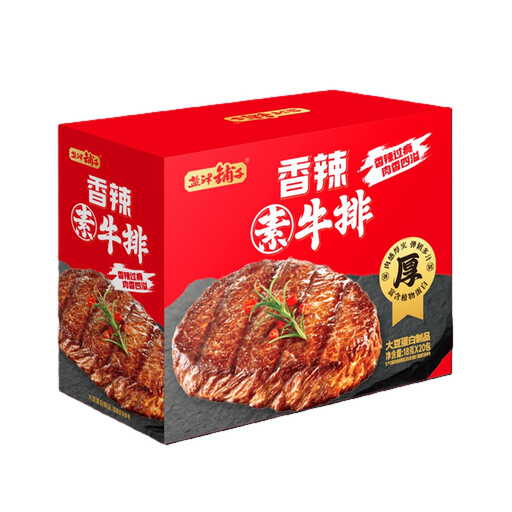
Why This Fits Their Persona: A practical choice for commuters, travellers and busy workers who want individually wrapped, ready-to-eat portions.
The 18g x 20 format makes portion size visible and avoids the uncertainty of repeatedly opening a large bag.
Ready to eat; 20 individual packs; 17.2g protein per 100g; spicy seasoning includes chilli, Sichuan peppercorn and Pixian broad bean paste.
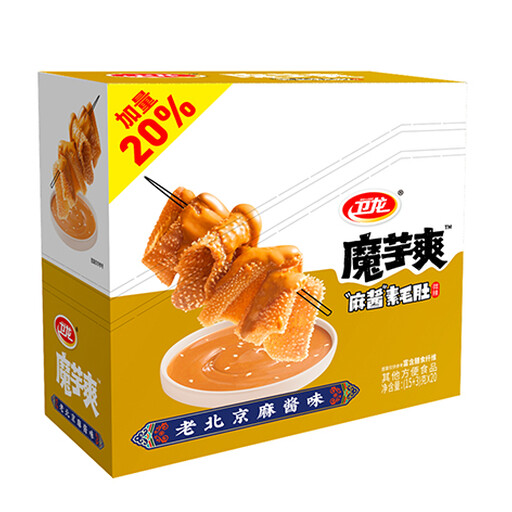
Why This Fits Their Persona: A sesame-led alternative for shoppers who want a chewy konjac texture without choosing a chilli-forward flavour.
The individual packs help with portion planning, while the ingredient list makes its peanut, sesame, soy and mollusc allergens visible for checking.
20 individually wrapped portions; sesame paste and peanut butter seasoning; 155 kcal and 2g protein per 100g as listed.
We have compiled a complete, real-time list of products that fully satisfy these strict selection criteria and UK safety regulations.
Some are plant-based, but suitability depends on the full ingredient list and the product’s labelling. Soy, konjac, starch and vegetables are common bases, while wheat, sesame and peanut allergens are also frequent. Check for dairy, egg, fish, shellfish and animal-derived flavourings before buying.
Most unopened ambient snacks should be kept in a cool, dry place away from direct sunlight. After opening, follow the individual instructions: some products should remain sealed, while others need refrigeration and prompt consumption. Do not rely solely on the appearance or smell of the product after opening.
Individually wrapped snacks are convenient because they reduce mess and make portions easier to manage. Konjac boxes and individually packed vegetarian steak snacks are particularly practical for desks, packed lunches and journeys. For air travel, check current airline and destination rules, and keep products in their original sealed packaging where possible.