
24/7 Customer Support

Free returns

Same-day & Next-day Delivery

Quality Guaranteed

Unlock Your Welcome Offers: FREE Delivery | Up to 80% OFF | Free 30-day JoyPlus trial
Download the APP
Navigating the world of Chinese vinegar can feel overwhelming. You stand in the aisle, faced with a wall of dark bottles, all promising authentic flavour. Yet, choosing the wrong one can leave your dumpling dipping sauce tasting flat or your braised pork belly lacking that signature complex tang. As a Joybuy Product Recommendation Officer, my role is to help you see past the labels and select the right bottle for your kitchen.
Many home cooks fall into a few common traps. Understanding them is the first step to making a better choice.
To avoid these pitfalls, focus on a few core parameters. Checking these details on the bottle will tell you more about the contents than any marketing slogan.
The grains used for fermentation are the foundation of the vinegar's flavour profile.
The production method significantly impacts the final taste. Look for mentions of solid-state fermentation, a traditional technique that yields a more complex and aromatic product. Another key indicator is the Total Acidity, usually listed as g/100ml. A higher number (e.g., ≥5.0g/100ml) often indicates a more robust and flavourful vinegar, though the goal is always a balance of sourness, sweetness and aroma.
A shorter, simpler ingredient list is often a good sign. For a high-quality glutinous rice vinegar, you should expect to see ingredients like water, glutinous rice, wheat bran and salt. Be mindful of long lists that include multiple sweeteners, flavour enhancers or artificial colourings if you are seeking a more traditional product.
To make your choice easier, here are a few recommendations matched to different cooking needs and preferences.

Why This Fits Their Persona: This is the quintessential vinegar for anyone serious about their dumplings. Its balanced, malty flavour is the classic pairing for pork and chive dumplings, xiao long bao or pan-fried gyoza, providing the perfect tangy counterpoint without being overpowering.
As a Protected Geographical Indication (PGI) product, its origin and production method are guaranteed, avoiding the "one-size-fits-all" confusion. It delivers the authentic Zhenjiang profile.
Made from glutinous rice using traditional solid-state fermentation. It offers a complex, mellow and well-balanced sourness that is highly versatile for dipping, dressings and braises.
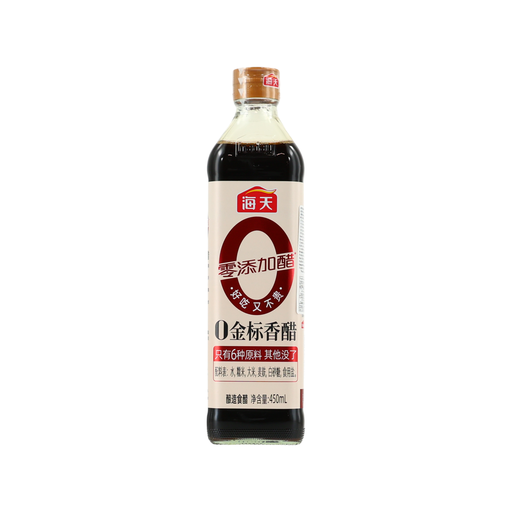
Why This Fits Their Persona: For the cook who scrutinises every label, this vinegar offers peace of mind. It's ideal for creating clean-tasting dressings, marinades and sauces where the pure flavour of the ingredients is paramount, without interference from common additives.
This product directly counters the hidden additives trap. Its "No Additives" formula is free from added colourings, preservatives and flavour enhancers, ensuring a pure and authentic taste.
It features a simple, clean ingredient list of just water, rice, salt and sugar. The flavour is mellow and smooth, restoring the authentic taste of traditionally fermented vinegar.
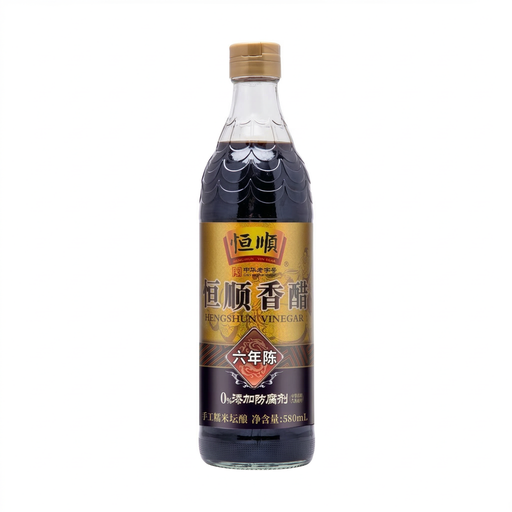
Why This Fits Their Persona: For those preparing complex braised dishes like red-cooked pork or sophisticated sauces, this vinegar provides an unmatched depth of flavour. Its long ageing process creates a smooth, mellow character that elevates a dish rather than simply making it sour.
This product's clear "six years aged" statement cuts through the vague "aged" myth, providing a verifiable mark of quality and flavour development that justifies its premium positioning.
Matured for six years to develop a highly complex, mellow and well-balanced flavour. It is an excellent choice for adding profound depth to braises, sauces and dressings.
We have compiled a complete, real-time list of products that fully satisfy these strict selection criteria and UK safety regulations.
The main differences are the ingredients, production process and flavour. Chinese black vinegar is typically made from glutinous rice, sorghum or other grains. It is aged, giving it a dark colour and a rich, complex, malty and sometimes slightly sweet flavour. In contrast, Chinese rice vinegar is made from rice, is not typically aged for long and has a clear or pale-yellow colour with a milder, more straightforwardly sharp and acidic taste.
Due to its high acidity, Chinese vinegar is a very stable pantry item. When stored in a cool, dark place with the cap tightly sealed, an opened bottle can last for years with minimal loss of quality. While some labels may suggest refrigeration, it is not strictly necessary. You might notice the flavour mellowing slightly over a very long period, but it will remain safe to use.
Yes, they are the same product. "Chinkiang" is an older, postal-system romanisation of the name of the city "Zhenjiang" in Jiangsu province, which is famous for producing this type of black vinegar. Both names refer to the same iconic Asian cooking vinegar.