
24/7 Customer Support

Free returns

Same-day & Next-day Delivery

Quality Guaranteed

Unlock Your Welcome Offers: FREE Delivery | Up to 80% OFF | Free 30-day JoyPlus trial
Download the APP
A Chinese kitchen cleaver can replace several separate kitchen tools, but the broad rectangular shape can be misleading. Some models are designed for vegetables and slicing, while others are heavier chopping knives intended for poultry or tougher ingredients. Choosing by appearance alone may leave you with a blade that feels awkward, loses its edge quickly or is unsuitable for the tasks you actually perform.
This guide explains what to check before buying a Chinese chef's knife, kitchen cleaver knife or cleaver knife set for a UK kitchen.
A thin, light vegetable cleaver is not the same as a heavy meat cleaver. Thin blades are useful for slicing fish, cutting vegetables and mincing herbs, but using them on bones or frozen food can damage the edge. Conversely, a heavy chopping knife may feel tiring when used for fine slicing or everyday prep.
Check the intended use, blade thickness and stated weight rather than relying on the word “cleaver” in the product title.
Terms such as “high-carbon”, “forged” and “stainless steel” describe material or manufacturing features, not a guaranteed cutting experience. Edge retention also depends on the blade geometry, heat treatment, sharpening method and how the knife is used.
A stainless steel kitchen knife may be easier to maintain, while a high-carbon forged kitchen knife may require more careful drying to reduce the risk of staining or corrosion. Always check the full care instructions.
A sharp blade is not useful if the handle feels insecure. Look for a balanced design, a grip that suits your hand and construction details such as full tang where specified. Wooden handles can offer a traditional feel, but they generally require hand washing and prompt drying.
Dishwasher use is another common hidden issue. High heat, detergent and prolonged moisture can affect both the edge and handle. If a product states “hand wash only”, treat this as an essential care requirement rather than a minor suggestion.
For most UK home kitchens, a blade around 170–190 mm offers a practical balance between cutting area and control. A 190 mm cleaver can make short work of cabbage, squash and larger cuts, but may feel cumbersome on a small chopping board.
A lighter knife, such as a 170 g model, may suit cooking students, smaller hands or cooks who prepare vegetables and fish regularly. Heavier designs provide more momentum for chopping but should not be used to force cuts through unsuitable materials.
Consider the difference between these commonly listed materials:
For vegetable chopping, slicing meat and general Chinese cooking, a relatively thin edge is often more useful than excessive blade weight. For poultry joints or tougher ingredients, choose a model specifically described for heavier chopping and follow its usage guidance.
A full tang design, where the blade material extends through the handle, can provide a stable feel, although product specifications should be checked rather than assumed. Ergonomic handles may help with comfort during longer preparation sessions, but grip security also depends on keeping both your hands and the handle dry.
In the UK, hand washing with mild detergent, immediate drying and safe storage are sensible habits for any kitchen cleaver knife. Use a stable chopping board, keep fingers clear of the cutting path and store the blade away from children. Never use a cleaver as a pry bar or twisting tool.
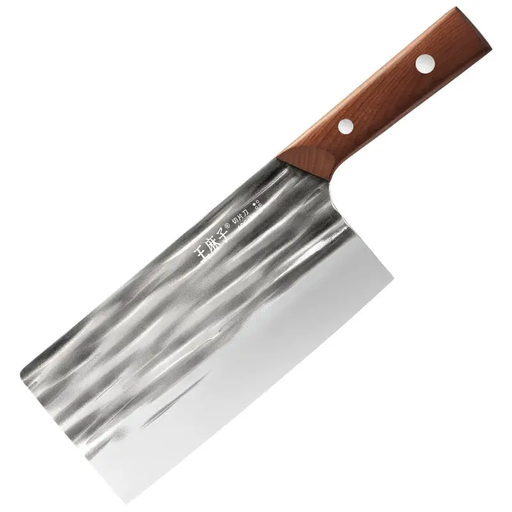
Why This Fits Their Persona: This straightforward multipurpose kitchen knife suits first-time buyers who want one stainless steel tool for routine slicing, dicing and mincing without immediately purchasing a larger set.
Its listed stainless steel construction and household positioning make the intended everyday use clearer than choosing a cleaver solely for its appearance.
Stainless steel construction; designed for meat, vegetables, fruit, slicing, dicing and mincing.
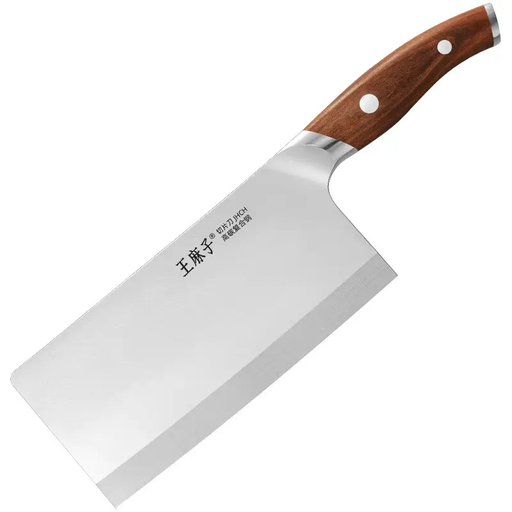
Why This Fits Their Persona: The specified 9Cr18MoV steel and natural rosewood handle appeal to cooks who value material details and a traditional handle for regular food preparation.
The product information identifies the steel and handle materials, helping shoppers compare tangible specifications instead of relying on vague quality language.
9Cr18MoV steel specified; rosewood handle; listed for meat, vegetables, slicing and herb mincing.
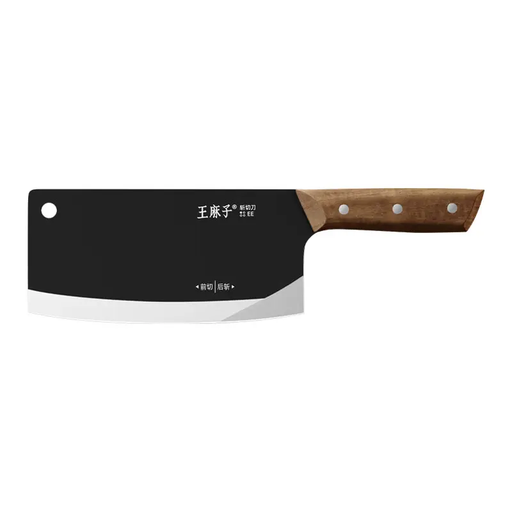
Why This Fits Their Persona: This cleaver knife set separates heavier chopping from lighter slicing, making it suitable for cooks who prepare meat, poultry, vegetables and fine garnishes in the same session.
The two-knife format avoids forcing one blade to perform both delicate slicing and heavier chopping. Use the chopping blade only for tasks permitted by its instructions.
Includes chopping and slicing knives; product description specifies high-carbon steel and wooden handles.
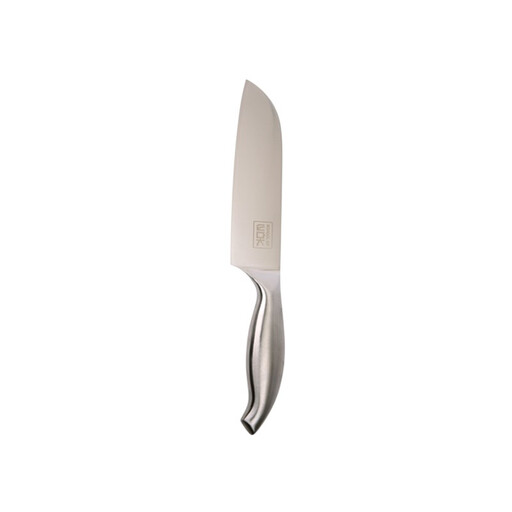
Why This Fits Their Persona: The 7-inch profile is suited to stir-fry preparation and fish slicing, while its size remains practical for a typical domestic chopping board.
Its description clearly warns against bones and frozen foods, helping prevent the common mistake of treating a slicing cleaver as a heavy meat cleaver.
7-inch stainless steel blade; flat profile with a curved edge; listed for general tasks and fish slicing.
We have compiled a complete, real-time list of products that fully satisfy these strict selection criteria and UK safety regulations.
Yes, many vegetable cleaver and Chinese chef's knife designs are intended for cabbage, carrots, peppers, herbs and other routine ingredients. Choose a manageable weight and avoid using a thin blade on bones or frozen food.
A blade around 170–190 mm is a practical starting point for many home cooks. Smaller blades can offer greater control for detailed preparation, while longer blades provide more surface area for larger vegetables and cuts of meat.