
24/7 Customer Support

Free returns

Same-day & Next-day Delivery

Quality Guaranteed

Unlock Your Welcome Offers: FREE Delivery | Up to 80% OFF | Free 30-day JoyPlus trial
Download the APP
Chisel tip markers are useful for everything from school posters and lettering to warehouse labels, shop signage and DIY marking. Their angled nib can create a broad line with the flat edge or a narrower stroke with the pointed corner. However, choosing by colour or pack size alone can lead to disappointing results.
The main buying traps are often hidden in the ink formula, surface compatibility and nib construction. A washable marker may not remain visible on glossy card, while a permanent marker may stain clothing or release noticeable fumes. A wide chisel tip can cover a sign quickly but may be awkward for small writing. Before buying, match the marker to the person, task and surface.
Washable dual tip markers generally use water-based ink and are designed to lift more easily from skin and fabrics. However, results can vary according to the material, how long the ink has dried and whether the fabric is machine-washable. For younger children, check the stated age guidance, ventilated cap design and ink information rather than relying on the word “washable” alone.
Permanent chisel tip markers can be suitable for materials such as paper, plastic and metal, but “permanent” does not mean ideal for every surface. Ink may feather on porous materials, fail to adhere properly to damp surfaces or remain difficult to remove from finished furniture. If you need outdoor or craft applications, look for clearly stated waterproof, acrylic or multi-surface properties.
A jumbo chisel tip marker is practical for large lettering and display work, but a 10–15 mm nib is not suited to small labels. Conversely, a fine chisel edge may take too long to fill large areas. Check the stated line range where available and consider whether you need one nib size or a combination of tip styles.
A conventional chisel tip offers two practical writing widths: the broad face for coverage and the narrow edge for lettering. Brush and chisel tip markers add flexibility for illustrations, calligraphy-style lettering and colouring. Reversible nibs can offer a round and chisel option, reducing the need to carry separate sets.
For young users, a thicker ergonomic barrel may be easier to hold. For trade use, choose a barrel that remains comfortable during repeated marking and a cap that can be replaced securely to reduce drying.
For outdoor signs or frequently handled labels, check for stated water resistance, waterproof performance, fade resistance and drying behaviour. These terms describe different characteristics, so do not assume one guarantees the others. Store markers according to the instructions: many perform better when tightly capped, while some paint pens should be stored flat.
For masonry work, a marker is not a substitute for a tool. A masonry chisel set is designed for striking and removing stone, cement or mortar and requires eye protection and gloves. Keep such tools away from children and inspect them before use.
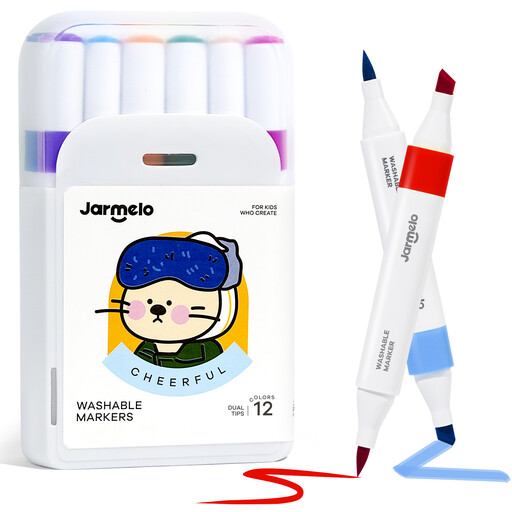
Why This Fits Their Persona: A practical choice for families, primary classrooms and children aged around 4–8 who need both broad colouring and finer drawing control.
The water-based, alcohol-free and odourless ink is described as 90% washable from skin and most fabrics; prompt cleaning is still advisable.
12 colours, brush and chisel tips, ventilated caps and a handled storage case.
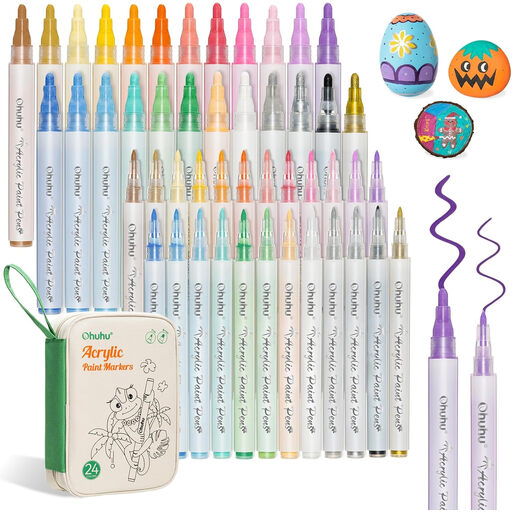
Why This Fits Their Persona: Suitable for crafters who work across several materials and want coordinated colours with more than one application width.
The product specifies water-based acrylic ink and lists use on rock, wood, fabric, ceramic, glass, plastic and paper. Test an unseen area first.
48 pens, 24 matched colours, 0.7 mm fine tips and reversible 4 mm chisel tips.
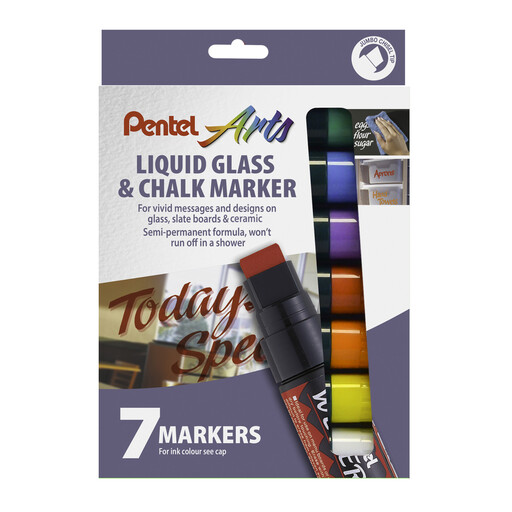
Why This Fits Their Persona: A signage-focused option for cafés, schools, events and businesses writing on conventional slate chalkboards or glass.
Its stated use excludes vinyl, wood and painted MDF chalkboards, helping buyers avoid applying the ink to unsuitable surfaces.
Seven assorted colours, 10–15 mm jumbo chisel tips and semi-permanent wet-erase ink.
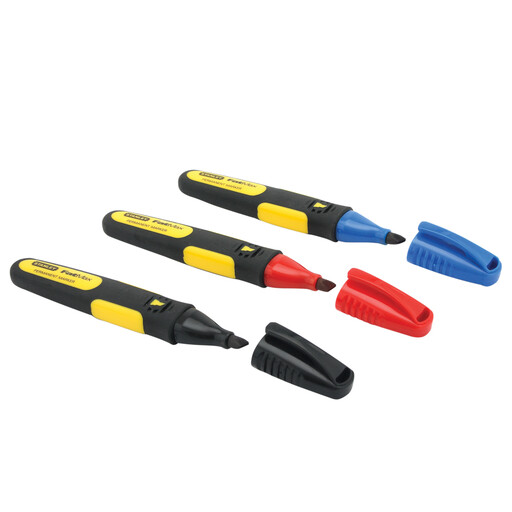
Why This Fits Their Persona: Designed around repeated marking tasks in construction, workshops and general DIY, where different ink colours can aid visibility.
The listing identifies permanent, waterproof and fade-resistant ink, while also advising ventilation and avoiding eye or skin contact.
Black, blue and red markers with chisel tips for broad strokes and narrow-edge lines.
A chisel-tip marker is for drawing, labelling or writing. If your task involves cutting grooves, removing mortar or shaping masonry, choose a dedicated tool such as the ValueMax 3 Piece Masonry Chisel Set. It includes 10 mm, 12 mm and 16 mm chromium-vanadium steel chisels, with stated blade hardness of HRC 53–60 and plastic-coated handles.
Wear safety glasses and protective gloves, keep the blades clean and store them dry. View the wider chisels range when you need tools rather than stationery markers.
We have compiled a complete, real-time list of products that fully satisfy these strict selection criteria and UK safety regulations.
Washable, water-based markers with age guidance and ventilated caps may be suitable for children when used under supervision. Check the packaging, keep caps away from young children and do not assume that permanent or acrylic markers are appropriate for unsupervised use.
Lifespan depends on use, pressure, nib wear and storage. Recap markers immediately after use and store them as directed. Paint pens may need shaking and priming before the first application, while dried-out nibs are difficult to restore.
Check the product warnings and ink type. Some permanent markers advise use in a well-ventilated area. For indoor classrooms or children’s activities, water-based washable markers are generally a more suitable category than permanent or solvent-based options.