If labelled protein matters in an occasional chocolate treat, Mars lists 10.1g protein and 17.8g sugars in its 50g MARS Protein Chocolate Bar, which also carries a precautionary nut warning. A conventional single bar can instead be a portable treat when protein is not the priority. University College London Hospitals NHS Foundation Trust says the right exercise snack depends on why it is needed, the activity and its duration, so do not assume any chocolate bar meets a specific training or glucose-management need.
Who is this choice for?
Occasional treat buyers
You want to pack one chocolate bar for after training or a long day, without relying on it as your main exercise snack. University College London Hospitals NHS Foundation Trust describes chocolate as a treat rather than a regular snack.
People comparing protein labels
You are interested in the protein listed for a whole bar, but also want to compare its sugars, energy and serving size with those of a conventional bar.
Allergy-aware snack packers
You need to check both ingredients and precautionary allergen statements on the exact wrapper. The Mars, Snickers and KitKat bars considered here declare different ingredients and warnings.
What should you check before choosing?
Decide whether the bar is simply a treat or needs to serve a specific purpose during activity, then compare the whole serving and its allergen information.
| Priority | What to check | Your needs |
|---|
| Snack purpose |
Consider why you need food, the type of activity and how long it lasts. University College London Hospitals NHS Foundation Trust says these factors affect exercise-snack choice. |
I want a chocolate treat, not a bar I am counting on for planned exercise fuel or glucose management. |
| Whole-bar nutrition |
Compare figures for the entire bar, not a per-100g figure from a different-sized serving. Mars lists 10.1g protein, 17.8g sugars and 189kcal for its 50g MARS Protein bar; Nestlé lists 2.8g protein, 21.3g sugars and 209kcal for KitKat 4 Finger Milk. |
If protein is my reason for choosing a chocolate-style bar, I also want to know its sugars and energy per bar. |
| Allergens |
Read the current ingredients and may-contain statement. Mars warns that its Protein bar may contain peanuts and specified tree nuts; the Snickers 40g recipe includes peanuts, and KitKat 4 Finger Milk includes wheat and milk. |
I need a bar whose exact wrapper fits the allergens I must avoid, including any precautionary warnings. |
| Bar size |
Check the weight of one bar and whether a multipack contains individually portioned bars. A pack count alone does not give you per-bar nutrition. |
I would rather pack one defined bar than mistake a larger pack or sharing format for a single serving. |
What is easy to overlook?
-
Assuming chocolate is suitable workout fuel
University College London Hospitals NHS Foundation Trust says exercise-snack choices depend on their purpose, the activity and its duration. A bar chosen as a treat does not automatically meet a planned exercise need.
Decide what the snack needs to do before packing it. For diabetes-related decisions, follow your individual clinical advice rather than substituting a chocolate bar.
-
Choosing on the protein figure alone
Mars lists 10.1g protein in its 50g MARS Protein bar, alongside 17.8g sugars. A protein-led name does not describe the whole serving.
Compare protein, sugars and energy on the same per-bar basis, and check the size of the bar you are buying.
-
Missing an ingredient or may-contain warning
The researched recipes differ: the Snickers 40g bar contains peanuts, while the MARS Protein 50g bar carries a may-contain warning for peanuts and several tree nuts. KitKat 4 Finger Milk includes wheat and milk.
Read the current wrapper for the exact variant, particularly when an allergy or a shared-space food restriction matters.
-
Applying school-food rules to an adult gym bag
England’s Requirements for School Food Regulations 2014 define confectionery to include chocolate. Department for Education school-food guidance concerns food provided in state-funded schools in England, not an adult’s personal gym-bag snack.
If you are supplying food in a school, check the requirements for that setting and UK nation rather than applying an England-specific rule to every gym-bag choice.
Which brands offer relevant bars?
Mars
Mars lists a 50g MARS Protein Chocolate Bar alongside its conventional chocolate range.
- Mars lists 10.1g protein and 189kcal per 50g Protein bar.
- The same bar lists 17.8g sugars and may contain peanuts, almonds, hazelnuts and pecan nuts.
Snickers
The standard Snickers Chocolate Bar 40g is a peanut-containing option for someone seeking a conventional treat.
- Its stated 40g size makes the standard bar identifiable as a single serving.
- Mars lists peanuts, milk and egg white powder among its ingredients; check the exact wrapper for all allergens.
KitKat
KitKat offers several bar formats; its 4 Finger Milk bar is a defined 41.5g wafer-and-chocolate serving.
- Nestlé lists 209kcal, 21.3g sugars and 2.8g protein for the 4 Finger Milk bar, allowing a whole-bar comparison.
- The 4 Finger Milk ingredients include wheat and milk.
Galaxy
Galaxy’s 42g Milk Chocolate Bar is a conventional milk-chocolate choice rather than a protein-led one.
- Mars identifies the bar’s 42g size, which helps distinguish it from other formats.
- Mars gives its nutrition per 100g and lists milk and soya ingredients; use the exact pack when comparing a whole bar.
Cadbury
Cadbury Dairy Milk comes in individual bars as well as larger and sharing formats.
- The range gives shoppers a choice of pack formats.
- Check the weight, nutrition and ingredients of the particular single bar rather than applying figures from another Dairy Milk format.
Joybuy options for packing one bar
These multipacks offer KitKat wafer bars or Snickers Creamy Peanut Butter bars for packing one at a time as an occasional treat. They are different variants from the standard single bars compared above.
 No image available
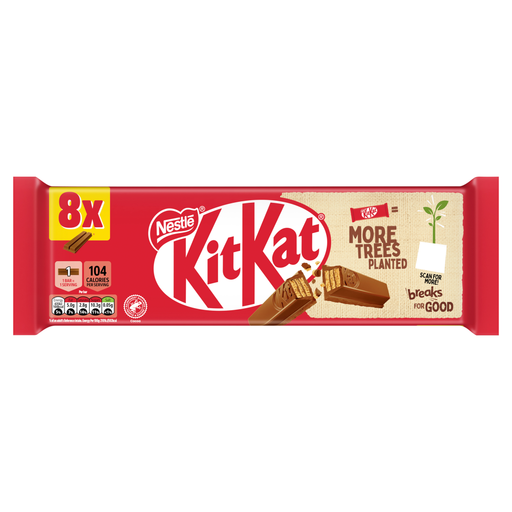
KitKat 2 Finger Milk, 8 × 20.7g
The stated 20.7g bar size makes it possible to pack one wafer bar as a treat. Check the wrapper for milk and wheat if either ingredient matters to you; do not use nutrition figures for the different KitKat 4 Finger bar to assess this one.
View on Joybuy
 No image available
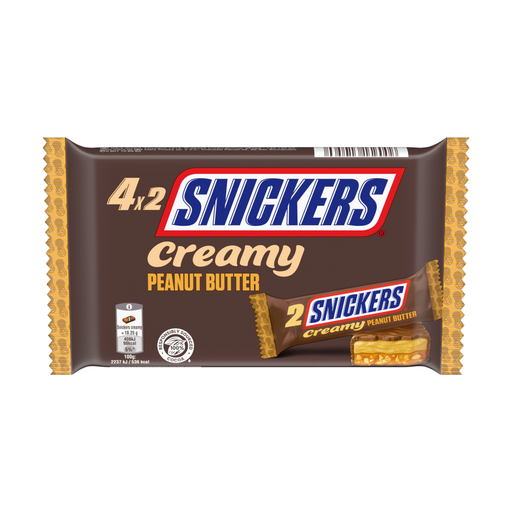
Snickers Creamy Peanut Butter, 4-pack
This peanut-butter variant offers four bars for separate treat occasions. Check its wrapper for peanuts, milk, egg, soya and precautionary tree-nut wording. Confirm the individual bar size and per-bar nutrition before comparing it with the standard Snickers 40g bar.
View on Joybuy
Common questions
Is a chocolate bar suitable before or during a workout?
Not automatically. University College London Hospitals NHS Foundation Trust says an exercise snack depends on why it is needed, the type of activity and how long it lasts. Choose for that purpose rather than treating an occasional chocolate bar as a default exercise snack.
Should I use chocolate if my blood glucose drops during exercise?
Do not rely on chocolate as a default treatment. North Cumbria Integrated Care advises people managing diabetes during exercise to bring appropriate food and to avoid chocolate and fatty foods in that context. Follow your individual diabetes plan or advice from your diabetes team.
Which of the compared single bars lists the most protein per bar?
Among the three standard or protein-style bars compared here, Mars lists 10.1g protein for its 50g MARS Protein Chocolate Bar. Nestlé lists 2.8g for KitKat 4 Finger Milk; Mars lists 9.0g per 100g for the standard Snickers 40g bar, equivalent to approximately 3.6g per bar. These figures do not describe the different Joybuy multipack variants above.
Do school-food rules affect an adult’s gym-bag chocolate bar?
The England school-food requirements do not govern an adult carrying a personal chocolate bar to the gym. England’s Requirements for School Food Regulations 2014 define confectionery to include chocolate, while Department for Education guidance addresses food provided in state-funded schools in England. If food is being supplied in a school, check the requirements for its nation and setting.


