Parents buying an occasional treat for home
A multipack can provide a defined serving if you decide how often to offer it and how many bars to serve. NHS guidance advises keeping both the frequency and amount of sugary foods low.


For an occasional after-school treat at home, an individually wrapped bar with a stated weight makes it easier to decide the serving before opening a multipack. Compare nutrition per bar and check the exact pack’s allergens; the NHS advises keeping the frequency and amount of sugary foods low, so individual wrapping does not make chocolate an everyday snack.
A multipack can provide a defined serving if you decide how often to offer it and how many bars to serve. NHS guidance advises keeping both the frequency and amount of sugary foods low.
Check the exact flavour and pack before serving or sharing it. The checked KitKat 2 Finger Milk bar lists milk and wheat; the checked Snickers 40g bar lists peanuts, milk, soya and egg, and says it may contain other nuts.
A school purchase needs a separate check against the rules for the setting. The Requirements for School Food Regulations 2014 classify chocolate as confectionery, while Department for Education school-food guidance concerns food provided in state-funded schools in England.
Start with the amount in one bar, then read its nutrition and allergen information for the exact variant you intend to serve.
| Priority | What to check | Your needs |
|---|---|---|
| Serving size | Check the weight of one bar, whether bars are individually wrapped and how many are in the pack. Decide the serving by the individual unit, not the outer pack. | I want to choose the amount before opening the multipack, rather than rely on an open sharing bar. |
| Nutrition per bar | Compare energy and total sugars for the amount actually served. KitKat UK lists 104 kcal and 10.2g total sugars for its checked 20.7g 2 Finger Milk bar; Mars lists 229 kcal and 23g total sugars for its checked 42g Galaxy Smooth Milk bar. A label’s total-sugars figure is not the same measure as the NHS free-sugars guidance. | If I am comparing different bar sizes, I need figures for one bar—not just figures per 100g—so the servings are comparable. |
| Allergens | Read the current ingredients, emphasised allergens and precautionary statements on the precise flavour and pack size. Do not carry an allergen declaration over to another variant. | Before sharing a pack, I need to know that each child can have the particular bar being offered. |
| Where it will be served | Distinguish a treat bought for home from food supplied to pupils. For state-funded schools in England, check the applicable school-food requirements; the 2014 regulations classify chocolate as confectionery. | Am I buying for an occasional treat at home, or choosing food that a school will provide? |
A wrapper defines a unit, but it does not change how often sugary food is served. The NHS advises keeping both the frequency and amount of sugary foods low.
Decide in advance when the multipack will be used as an occasional treat, rather than making a bar the automatic after-school choice.
Bar sizes and per-bar figures can differ. KitKat UK lists 10.2g total sugars in its checked 20.7g 2 Finger Milk bar; Mars lists 23g in its checked 42g Galaxy Smooth Milk bar.
Read the weight, energy and total sugars for the serving the child would actually have.
The checked KitKat 2 Finger Milk bar lists milk and wheat. The checked Snickers 40g bar lists peanuts, milk, soya and egg, and says it may contain other nuts.
Check the current label of every exact variant before serving it, particularly when a multipack will be shared.
Department for Education school-food guidance concerns food provided in state-funded schools in England. Department of Health and Social Care guidance on high-fat, sugar or salt promotions addresses businesses operating in and selling to England.
If buying for a school, check the requirements for that setting. For a treat at home, make the serving and ingredient checks separately.
Cadbury identifies its Dairy Milk Freddo as an 18g chocolate bar, a unit size to consider when planning an occasional serving.
KitKat UK lists its 2 Finger Milk chocolate biscuit bar at 20.7g, with 104 kcal and 10.2g total sugars per bar.
Mars lists its checked Galaxy Smooth Milk multipack as four 42g bars, with 229 kcal and 23g total sugars per bar.
SNICKERS UK lists its checked 40g bar at 198 kcal and 20g total sugars per bar.
Mars describes its namesake chocolate bar as combining nougat, caramel and chocolate.
These multipacks offer individually defined chocolate-bar or chocolate-wafer portions for an occasional treat at home. Check the serving and current pack label for each variant; the list is not a school-food selection.
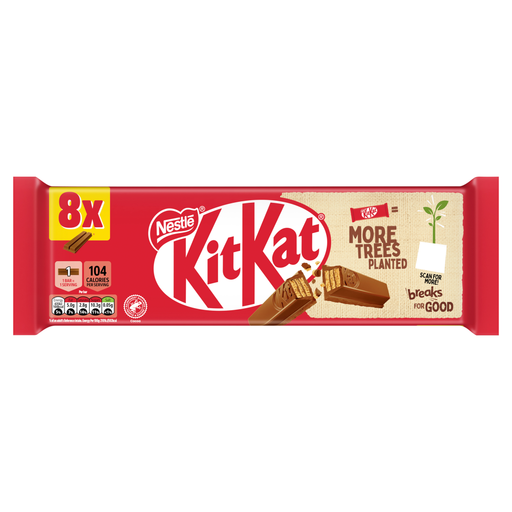 No image available
Eight 20.7g bars provide a stated individual serving for an occasional treat. The listing gives 104 kcal per bar and identifies milk and wheat; check the current pack for total sugars per bar and its full allergen declaration.
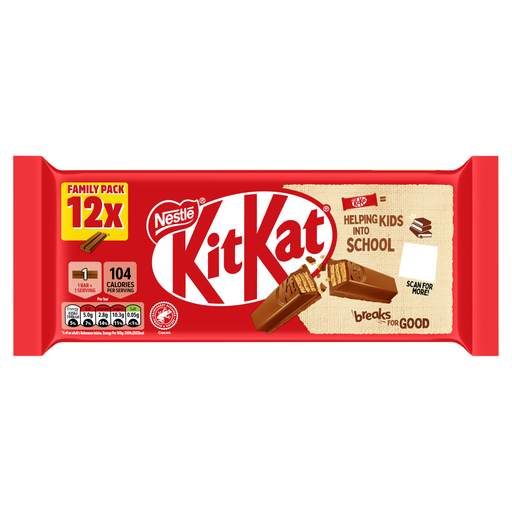 No image available
This 12-pack states a 20.7g serving and 104 kcal per bar. Milk and wheat are identified in the product details. Check the current pack’s total-sugars figure before comparing it with another bar: the listing and KitKat UK’s figure for a 20.7g bar differ.
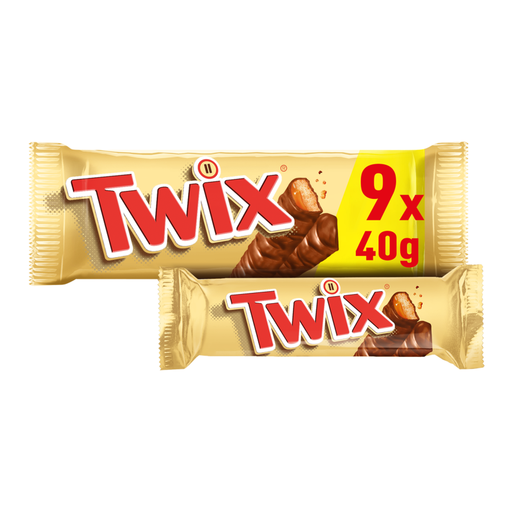 No image available
Each 40g twin pack has two 20g fingers, so the amount served depends on whether one finger or both are offered. The listing identifies milk, soya and wheat and notes possible cereals containing gluten and nuts. Check the pack for total sugars for the serving chosen.
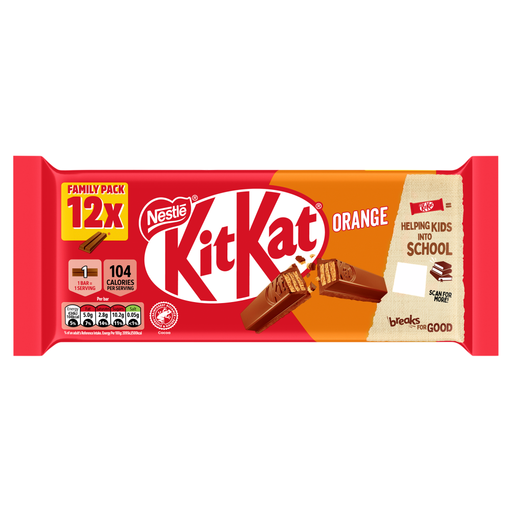 No image available
Twelve individually wrapped 20.7g orange-flavoured bars provide a defined unit for an occasional serving. The product details identify wheat and milk. Read this flavour’s current label for its per-bar nutrition and full allergen declaration rather than using the milk variant’s figures.
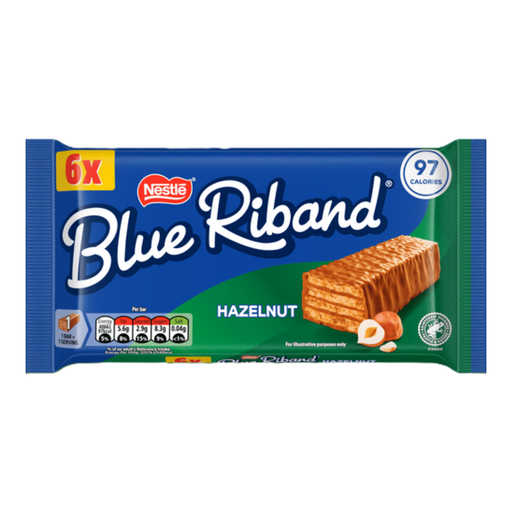 No image available
Six individually wrapped 17.5g chocolate-coated wafer bars provide a stated unit size. The listing identifies wheat, milk, soya and hazelnuts, with possible peanut and other-nut traces. Check the current pack’s allergen statement and per-bar nutrition before serving.
Treat it as an occasional choice rather than an everyday default. The NHS advises keeping the frequency and amount of sugary foods low; individual wrappers can help you decide a serving, but they do not change that advice.
No. The NHS guidance concerns free sugars, while a pack’s nutrition panel states total sugars, which can also include sugars naturally present in milk. Use the per-bar figure to compare products, not as an exact calculation of free sugars.
Check the current allergen declaration on the exact flavour and pack for every child who might receive it. The checked KitKat 2 Finger Milk bar lists milk and wheat; the checked Snickers 40g bar lists peanuts, milk, soya and egg and may contain other nuts.
No: supplying food to pupils requires a separate check of the rules for that school and setting. The Requirements for School Food Regulations 2014 classify chocolate as confectionery, and Department for Education school-food guidance concerns food provided in state-funded schools in England. An occasional treat bought for home is a different decision.
The Department of Health and Social Care guidance cited here addresses promotions by businesses operating in and selling to England, not a household’s choice of an at-home serving. Keep that retail guidance separate from school-food requirements and from checks of the product label.