Parents choosing a home or day-out treat
A bar’s weight and format matter alongside flavour. Check whether the pack is one smaller bar, a twin bar or a larger block, then read its labelled serving information.


For a home or day-out treat, choose the exact bar by its ingredients, the child’s preferred texture and the portion you intend to serve: plain chocolate, wafer, biscuit, caramel and peanut-containing bars are different choices. Check the current wrapper before buying, particularly for allergens. Food provided by a school in England is a separate context: Department for Education guidance restricts confectionery and chocolate across the school day under the School Food Standards.
A bar’s weight and format matter alongside flavour. Check whether the pack is one smaller bar, a twin bar or a larger block, then read its labelled serving information.
Choose from the current wrapper, not the appearance of the chocolate. Snickers contains peanuts, while the KitKat and Twix examples contain wheat; precautionary allergen statements also need attention.
A privately bought holiday treat and food provided by a school are different situations. Department for Education guidance restricts confectionery and chocolate across the school day under England’s School Food Standards.
Start with the setting and any allergens, then compare the precise format and labelled portion of bars the child would enjoy.
| Priority | What to check | Your needs |
|---|---|---|
| Allergens | Read the current ingredients and any “may contain” statement for the exact variant. Check fillings and wafer or biscuit components, not just the chocolate coating. | If I’m choosing for a child with an allergy, I need a bar that fits their established allergy arrangements. A bar without visible nuts is not necessarily free from nut warnings. |
| Bar size | Compare pack weight, pieces and the label’s per-bar or per-serving figures. Nestlé lists its KitKat 4 Finger Milk bar at 41.5g; the Tesco listing for Mars describes a 51g bar. | For one treat, I want to know whether I’m buying a smaller individual bar, two fingers in one pack or a larger block that I plan to divide. |
| Texture and filling | Check whether the named variant is plain milk chocolate, wafer, nougat and caramel, peanut-containing chocolate or biscuit fingers. Fillings can change the allergen checks needed. | A crisp wafer may appeal more than plain chocolate, or the child may prefer caramel. I can choose the format only after checking its ingredients. |
| Where it will be served | Distinguish a family-controlled holiday snack from food provided by a school. Department for Education guidance restricts confectionery and chocolate across the school day under England’s School Food Standards. | For a treat at home, I can consider the bar’s ingredients and portion. If I’m supplying food through an England school, I need to use its approved food arrangements instead. |
The named examples include Nestlé’s 41.5g KitKat 4 Finger bar, Tesco’s 51g Mars bar and a 50g Twix twin bar. Those formats do not contain the same amount per pack.
Check the exact weight, number of pieces and labelled nutrition basis before comparing two bars.
Peanuts are an ingredient in the Snickers example, and wafer or biscuit bars can contain wheat. The Food Standards Agency explains that “may contain” statements flag allergens that could be unintentionally present.
Read the physical wrapper for the chosen variant and use the child’s existing allergy arrangements when deciding whether it is suitable.
Department for Education guidance identifies confectionery and chocolate as restricted across the school day under England’s School Food Standards. That school-food context is different from a family buying a holiday treat for home.
For food provided through an England school, check its approved food arrangements rather than selecting a chocolate bar for that purpose.
Department of Health and Social Care guidance describes England-specific restrictions on the placement and volume-price promotion of applicable high-fat, sugar or salt products at qualifying retailers. Shelf placement does not answer whether food is suitable for a school setting.
Judge a home purchase by the product label and intended use; for school-provided food, check the school’s arrangements and the rules applicable to its location.
These named variants illustrate different formats; details for one bar should not be transferred to another size or recipe from the same brand.
Cadbury Dairy Milk 45g is an individually sized plain milk-chocolate option.
Galaxy Milk Chocolate Bar 42g is a plain milk-chocolate choice rather than a filled or wafer bar.
The Mars Milk Chocolate Bar 51g combines milk chocolate with nougat and caramel.
The described 48g Snickers bar combines peanuts, nougat and caramel.
The 50g Twix Chocolate Twin Bar has two biscuit-and-caramel fingers coated in milk chocolate.
KitKat 4 Finger Milk is a 41.5g milk-chocolate-covered wafer bar.
These options are larger chocolate blocks for a home holiday treat, rather than the smaller individual bars discussed above. Compare their ingredients and decide what portion you intend to serve.
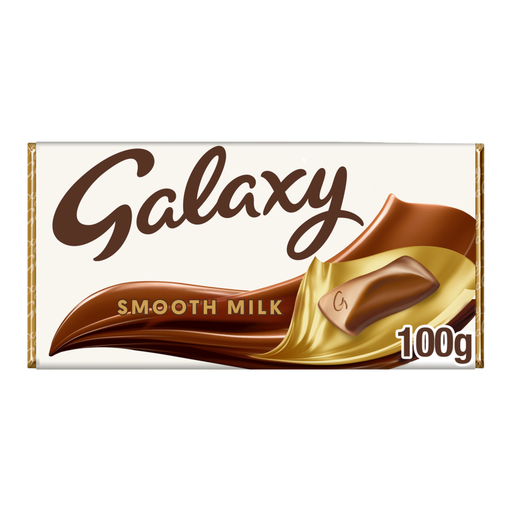 Image unavailable
A plain milk-chocolate option for a home treat, supplied as a 100g block. Check whether that size suits the portion you intend to serve. The product description lists milk and soya and says it may contain nuts; check the current wrapper against any allergy requirements.
 Image unavailable
This 180g milk-chocolate bar contains caramel pieces and sea salt; its size makes the intended portion worth checking. The product description lists milk and soya and says it may contain gluten-containing cereals, eggs, nuts and peanuts. Read the current wrapper if allergens affect the choice.
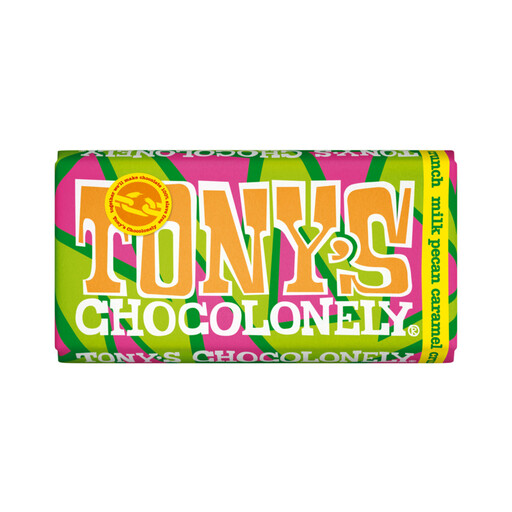 Image unavailable
For a nut-and-biscuit format, this 180g milk-chocolate bar contains pecans, caramel and biscuit pieces. Pecans are an ingredient; the description also lists milk, soya, wheat and barley, and says it may contain eggs, nuts and peanuts. Check the current wrapper and the portion you intend to serve.
Department for Education guidance restricts confectionery, chocolate and chocolate-coated products across the school day under England’s School Food Standards. For food provided through a school, use its approved food arrangements. This is a different situation from a family buying a holiday treat for home.
Check the exact current wrapper before choosing a bar. Peanuts are an ingredient in the Snickers example; the Tesco Mars listing says it may contain peanuts and nuts, while its Twix listing carries a precautionary statement for hazelnut and almond. Use the child’s established allergy arrangements when assessing any precautionary warning.
No. Nestlé lists KitKat 4 Finger Milk as a 41.5g bar, while the Joybuy KitKat 2 Finger listing describes a multipack of twelve 20.7g bars. Check the nutrition and allergen information for the exact format you buy rather than transferring figures between them.
The current wrapper is the label to check for the bar you will serve. Retailer product information for the Mars and Twix examples advises shoppers that ingredients, nutrition and allergens may change, so compare the delivered pack with any requirements before serving it.