Recreational 5k runners
If you want something before a short run, the useful question is whether a bar fits your timing and feels familiar, rather than whether it is labelled as an energy snack.


For a recreational 5k, a chocolate bar is an optional familiar snack or after-run treat, not essential running fuel. University of Birmingham Sport & Fitness and the British Dietetic Association advise carbohydrate-rich, low-fat choices before exercise; if you still want a bar, compare the portion you will eat, allow for digestion and check that its ingredients suit you.
If you want something before a short run, the useful question is whether a bar fits your timing and feels familiar, rather than whether it is labelled as an energy snack.
If you want a bar anyway, compare carbohydrate and fat for the amount you intend to eat. A treat after the run avoids making that choice immediately before running.
If you have an allergy or intolerance, use the current wrapper to check ingredients and precautionary allergen statements for the exact bar.
Decide whether you need a pre-run snack at all, then compare timing and the portion you would actually eat.
Choose when: You want a pre-run option that follows the British Dietetic Association's advice to choose carbohydrate-rich, low-fat food before exercise.
Consider: The amount and timing still need to suit the run and your own tolerance.
Choose when: You want an optional snack you already tolerate, or a treat after the 5k.
Consider: The cited bars contain fat, while University of Birmingham Sport & Fitness advises low-fat food particularly in the 1–2 hours before a run.
| Priority | What to check | Your needs |
|---|---|---|
| Timing and comfort | Consider how soon you will run and whether you have eaten that product before. University of Birmingham Sport & Fitness advises high-carbohydrate, low-fibre and low-fat food in the 1–2 hours before running. | I want a snack that fits the time I have before setting off, without trying an unfamiliar bar just before the run. |
| Actual portion | Compare carbohydrate and fat for the number of fingers or bars you will eat. For example, TWIX UK lists values per 20g finger, not per two-finger portion. | If I eat one finger rather than two, I want the nutrition figures to reflect one finger. |
| Ingredients | Read the current wrapper's ingredient and allergen statements for the exact product; do not assume another format has the same recipe. | With an allergy or intolerance, I need to check the bar I will actually eat. |
| Pack format | Check whether the listing is for one bar or a multipack, and whether the stated weight describes one portion or the whole pack. | I may want one bar for the run, even if the product is sold as several individually portioned bars. |
A bar can provide carbohydrate while also containing fat. University of Birmingham Sport & Fitness advises low-fat, low-fibre choices particularly close to a run.
Compare carbohydrate and fat for the portion you plan to eat, rather than judging the bar by an energy claim.
TWIX UK states nutrition per 20g finger; KitKat UK states figures for its 41.5g 4 Finger Milk bar. Those figures describe different eating portions.
Check the wrapper and compare the precise amount you intend to eat.
Chocolate-bar formats and ingredient statements differ, so a brand name alone cannot establish whether a particular bar suits an allergy or intolerance.
Read the current wrapper, including any precautionary allergen statement, before eating.
How a snack feels during a run can vary between people; an unfamiliar portion and timing add uncertainty on the day.
If you plan to eat a bar before running, try that product, amount and timing during an ordinary training run first.
These are references for comparing named bar formats, not an indication that every format appears in the Joybuy products below.
Tesco Groceries lists 36g carbohydrate and 8.1g fat for a 51g Mars Milk Chocolate Bar.
TWIX UK lists 13g carbohydrate and 4.7g fat per 20g finger of its Chocolate Twin Finger format.
KitKat UK lists its 4 Finger Milk bar at 41.5g, with 26.1g carbohydrate and 10.2g fat per bar.
A.F. Blakemore Foodservice lists Cadbury Boost as a 48.5g bar, with 59g carbohydrate and 28g fat per 100g.
Mars / Galaxy UK lists 23g carbohydrate and 14g fat for its 42g Galaxy Milk Chocolate Bar.
These Joybuy options are multipacks of portioned chocolate bars for someone considering a familiar optional snack or an after-run treat. They are not single-bar purchases.
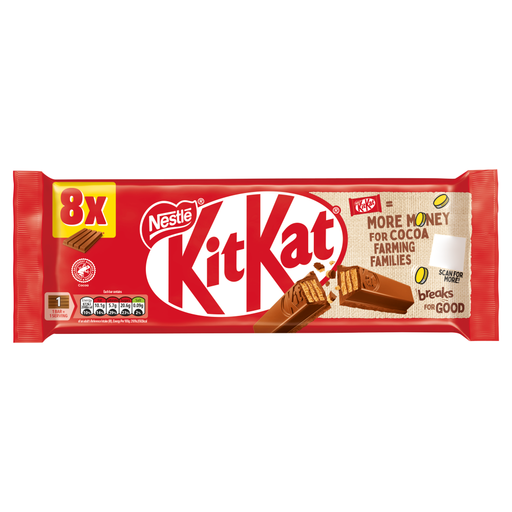 No image available
Consider this format if you want a KitKat 4 Finger portion but are buying several bars at once. The listed pack contains eight bars and weighs 332g; check the current wrapper for nutrition and ingredients for the bar you intend to eat.
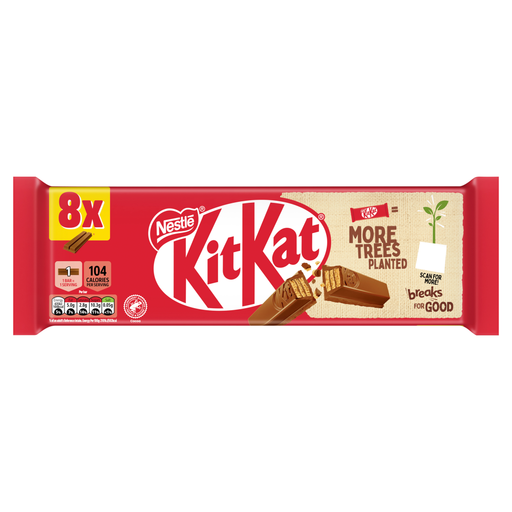 No image available
The stated 20.7g bar offers a smaller portion format to consider if you already know this product suits your pre-run timing. It is sold as an eight-bar pack; use the current wrapper to check nutrition and ingredients.
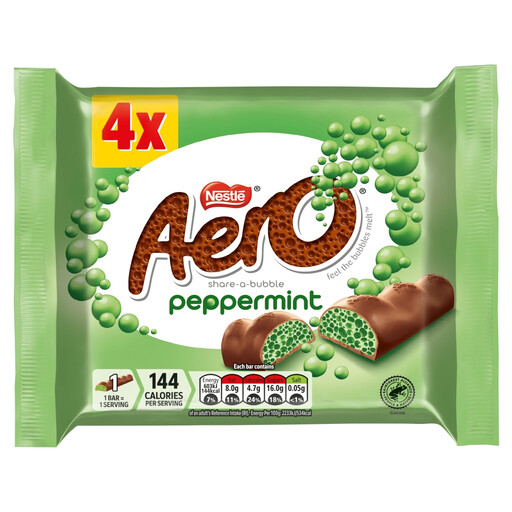 No image available
Consider this peppermint chocolate format as a familiar optional bar or an after-run treat. The listing is for four bars weighing 108g in total, rather than one bar; check the current wrapper for portion nutrition and ingredients.
No chocolate bar is necessary as a dedicated during-run fuel for a recreational 5k. The British Dietetic Association notes that carbohydrate needs depend on exercise duration and training demands; if you want food beforehand, choose a portion and timing that are comfortable for you.
Try the exact bar, portion and timing on an ordinary training run rather than for the first time at a timed event. University of Birmingham Sport & Fitness advises high-carbohydrate, low-fat and low-fibre food particularly in the 1–2 hours before running, so a chocolate bar close to the start may be a less suitable fit.
Tesco Groceries lists 36g carbohydrate and 8.1g fat per 51g Mars bar; KitKat UK lists 26.1g carbohydrate and 10.2g fat per 41.5g 4 Finger Milk bar. Those are different portions, and neither set of figures establishes that the bar will suit your digestion before a run.
Use the current physical wrapper before eating, especially if you have an allergy or intolerance. Check the exact product's ingredients and precautionary allergen statements rather than assuming another pack format has identical information.
If you want one as a treat, eating it after the run avoids the immediate pre-run digestion question. It does not by itself establish what food or drink you need after exercise; that depends on the run and your wider food intake.