What should you check?
Start with the certification your top-up selection needs to meet, then compare the exact bars for format, flavour and allergens.
| Priority | What to check | Your needs |
|---|
| Certification scope |
Read the current mark and its wording. The Fairtrade Foundation says the standard FAIRTRADE Mark covers ingredients that can be Fairtrade-certified; its Sourced Ingredient Mark identifies a named ingredient instead. |
I want to know whether Fairtrade applies to the eligible ingredients in the bar or specifically to an ingredient such as cocoa. |
| Exact-bar claim |
Match the wrapper and product description to the bar being bought. Fairtrade International says Divine products use Fairtrade-certified eligible ingredients; Tony's Chocolonely UK describes its 180g bars as Fairtrade certified. |
For a Fairtrade-led selection, I need a current claim that applies to the bar in front of me, not just a brand story. |
| Other cocoa schemes |
Keep Rainforest Alliance and Fairtrade claims distinct. Mars describes Galaxy Smooth Milk cocoa sourcing as mass balance, under which certified and non-certified cocoa may mix during processing; KitKat describes a different traceability approach for UK and Ireland bars. |
A different cocoa certification may meet my preference, but I would not use it to satisfy a Fairtrade-specific requirement. |
| Bar format |
Compare net weight and flavour for the intended occasion. Divine lists a 90g 45% Milk Chocolate bar; Tony's Chocolonely UK lists 180g bars, including 32% milk and 70% dark choices. |
For a quick top-up, I might choose a smaller bar; for sharing, a 180g format could be more useful. |
| Allergens |
Read the ingredients and precautionary statements on each current pack. Divine's 45% Milk Chocolate listing says it contains milk and may contain gluten and nuts; other recipes require their own checks. |
If I am stocking or sharing bars, I need allergen information for each flavour and pack, not an assumption based on a similar product. |
Brand and certification references
These brand statements describe particular ranges or sourcing approaches; the claim on an individual bar still matters.
Divine
A Fairtrade-led option with a stated claim across its product range.
- Fairtrade International says all Divine products are Fairtrade and that their cocoa, sugar and vanilla are Fairtrade-certified.
- Divine's 45% Milk Chocolate listing says the 90g bar contains milk and may contain gluten and nuts; check the particular bar you choose.
Tony's Chocolonely
A Fairtrade-certified 180g range with milk, dark and flavoured bars, according to Tony's Chocolonely UK.
- The UK range includes 32% milk and 70% dark chocolate choices.
- Check the individual flavoured bar's ingredients, allergens and precise certification wording.
Galaxy
An alternative for shoppers who accept a Rainforest Alliance cocoa claim instead of requiring Fairtrade.
- Mars describes cocoa for specified Galaxy Smooth Milk products as sourced from Rainforest Alliance-certified farms under mass balance.
- Mars says certified and non-certified cocoa may mix during processing; this is not a Fairtrade claim.
KitKat
A Rainforest Alliance route described by KitKat for its UK and Ireland bars.
- KitKat says these bars use cocoa mass sourced through its income accelerator programme, with Mixed Identity Preserved traceability.
- That statement does not identify the bars as carrying a FAIRTRADE Mark.
Cadbury
A familiar bar choice whose exact current pack should determine how its cocoa claim is described.
- Do not use an older wrapper or a general sustainability statement as the basis for calling a particular bar Fairtrade.
Mars, Snickers and Twix
For these familiar bars, make a certification-led choice using the current claim on each individual product.
- A parent-company cocoa programme does not, by itself, establish a Fairtrade claim for a specific bar.
Chocolate-bar options on Joybuy
These Divine and Tony's Chocolonely bars offer smaller and sharing-size formats for a Fairtrade-led top-up. Check each current wrapper for the precise certification claim and allergen wording, especially when selecting a flavoured bar.
 No image available
Divine 70% Dark Chocolate with Raspberries 90g
The 90g format is an option for a smaller-bar top-up. Fairtrade International describes Divine products as Fairtrade; check this raspberry bar's current certification and allergen wording before stocking or serving it.
View on Joybuy
 No image available
Tony's Chocolonely Milk Chocolate Caramel Sea Salt 180g
This 180g caramel-and-sea-salt milk bar is a sharing-size option. Tony's Chocolonely UK describes its 180g range as Fairtrade certified; check this flavour's current claim and allergen statement.
View on Joybuy
 No image available
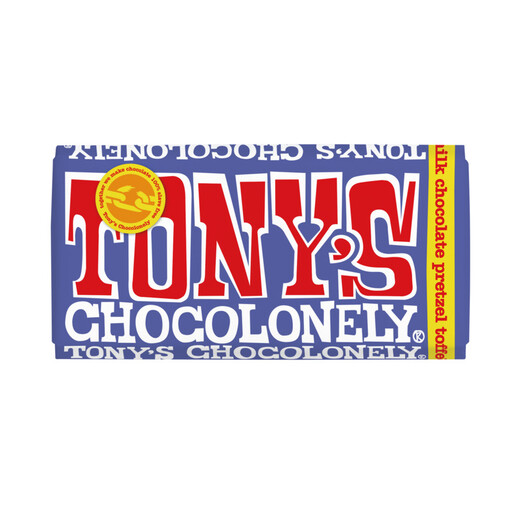
Tony's Chocolonely Milk Chocolate, Pretzel & Toffee 180g
The 180g pretzel-and-toffee bar offers another sharing-size flavour. Tony's Chocolonely UK describes its 180g range as Fairtrade certified; read this bar's wrapper for the exact claim and allergens.
View on Joybuy
 No image available
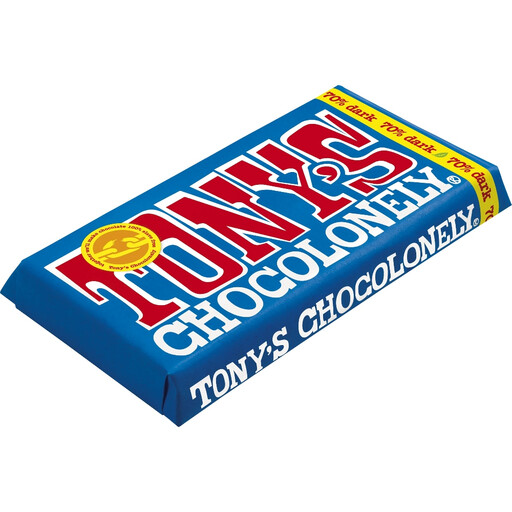
Tony's Chocolonely Dark Chocolate 180g
This 180g dark chocolate bar is an option when a larger plain bar suits the top-up. Tony's Chocolonely UK includes a 70% dark choice in its Fairtrade-certified 180g range; confirm this bar's current cocoa percentage, claim and allergens on the wrapper.
View on Joybuy
 No image available
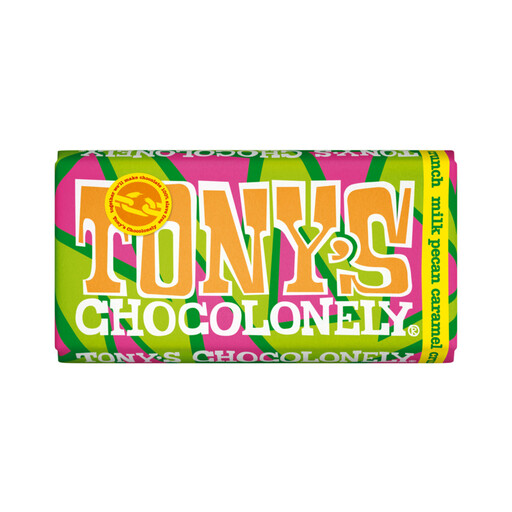
Tony's Chocolonely Milk Pecan Caramel Crunch 180g
The 180g pecan-and-caramel milk bar offers a flavoured sharing-size choice. Tony's Chocolonely UK describes its 180g range as Fairtrade certified; check this bar's precise claim and nut and other allergen information on the current wrapper.
View on Joybuy
Questions about chocolate-bar claims
Does a standard FAIRTRADE Mark cover every ingredient in a chocolate bar?
It covers every ingredient that can be Fairtrade-certified, according to the Fairtrade Foundation. That does not mean every ingredient in the bar is eligible for certification; check the mark and product wording if its scope matters to your choice.
What does a Fairtrade Sourced Ingredient Mark mean?
The Fairtrade Foundation says it identifies the named Fairtrade-sourced ingredient, such as cocoa. It does not establish that another eligible ingredient, such as sugar, is also Fairtrade-sourced.
Does mass balance mean the cocoa in my bar was kept separate?
No. The Fairtrade Foundation and Mars explain that certified and non-certified cocoa may mix during processing under mass balance. An equivalent certified volume is purchased, but that does not identify the physical cocoa in an individual bar.
Can Galaxy Smooth Milk or KitKat be described as Fairtrade?
Their cited brand statements describe Rainforest Alliance certification, not a Fairtrade claim: Mars makes its statement about specified Galaxy Smooth Milk products, while KitKat describes its UK and Ireland bars. Use the exact claim on the current pack rather than treating the two certifications as interchangeable.
What allergen information should a shop check for chocolate bars?
Check each bar's current ingredients and emphasised allergens, including any precautionary statement. GOV.UK and Food Standards Agency guidance for England, Northern Ireland and Wales says prepacked food must carry full labelling, including an ingredients list with allergens emphasised; food businesses must also provide allergen information for non-prepacked food.


