Who is this choice for?
Whether chocolate is useful depends on whether you are planning what to carry on a run or choosing something to give afterwards.
Runners planning long-run or race-day fuel
A chocolate assortment does not set out how much carbohydrate to consume or how to take it with fluids. Plan what you will use during a run and practise that approach in training rather than relying on the number of bars in a box.
Friends and family buying a gift
A familiar chocolate multipack can be a treat to give or share without presenting it as a performance product. Check the portion format and ask about flavour preferences and ingredient restrictions before choosing.
People buying for someone with ingredient restrictions
Check the ingredients and allergen statements on the exact pack. Milk, cereals containing gluten, peanuts, other nuts, soya and egg are relevant to different bars; a similar-looking flavour or pack size is not a substitute for reading its own label.
What should you check before buying?
Decide whether the purchase is for use during a run or for gifting and snacking. Then compare the individual bar, not just the outer pack.
| Priority |
What to check |
Your needs |
| Long-run fuel |
Check the runner’s planned carbohydrate intake, accompanying fluids and whether the products have been tried in training. A review indexed by PubMed discusses 30–60 g of carbohydrate per hour for high-intensity exercise lasting 1–2.5 hours; that range is not an individual prescription. |
I’m choosing something to use during a long run, so I need a plan the runner can follow and has practised, rather than an unspecified quantity of chocolate. |
| Individual portions |
Read carbohydrate and fat per bar and note the stated serving size. Mars lists 13 g carbohydrate per 18 g Fun Size bar; Galaxy lists 23 g carbohydrate and 14 g fat per 42 g Milk Chocolate bar; KitKat lists 26.1 g carbohydrate and 10.2 g fat per 41.5 g 4 Finger Milk bar. These figures describe those specific products. |
For a snack, I want to know what one wrapped portion contains. The total weight of a gift pack does not tell me the nutrition of an individual bar. |
| Gift format |
Check the number and size of bars, whether they are individually wrapped, and whether the packaging suits the occasion. A multipack should not be assumed to have gift-box presentation. |
I’m buying a treat for a runner, so sharing and portion format matter more to this purchase than claims about race performance. |
| Ingredients and allergens |
Read the exact pack’s ingredients list and precautionary statements. GOV.UK says that any of the 14 regulated allergens present as ingredients in UK prepacked food must be clearly labelled in the ingredients list. |
If the recipient avoids particular ingredients, I need to check this variant and pack size before buying, including any relevant may-contain warning. |
Brand and product-line references
These examples show why the exact bar and portion matter; a brand name alone cannot establish nutrition or ingredient suitability across its range.
Cadbury
Cadbury Dairy Milk is a familiar milk-chocolate option for a gift or sharing occasion.
- Cadbury describes its Dairy Milk 110 g bar as vegetarian friendly.
- Check the exact bar’s nutrition and ingredients if portion values or restrictions affect the choice; the 110 g product description alone does not establish its role in a running plan.
Galaxy
Galaxy Milk Chocolate comes in an individually portioned 42 g bar that can be compared with other chocolate snacks.
- Galaxy lists 23 g carbohydrate and 14 g fat per 42 g Milk Chocolate bar.
- That bar’s ingredients include milk and soya; its label values do not establish suitability as a long-run fuelling plan.
Mars
Mars offers different portion formats, including 18 g Fun Size bars and a 50 g Protein Chocolate Bar.
- Mars lists 13 g carbohydrate per 18 g Fun Size bar and 10.1 g protein per 50 g Protein Chocolate Bar.
- These are different products with different ingredients and warnings. Check the chosen pack rather than applying either set of figures to the whole range.
Snickers
Standard and Fruit & Nut Snickers bars are distinct choices for someone who wants a nut-containing chocolate snack.
- Snickers lists 23 g carbohydrate and 9.9 g fat per standard 40 g bar; its Fruit & Nut bar lists 19 g carbohydrate and 8.1 g fat per 40 g portion.
- The standard bar contains peanuts and carries an other-nuts warning; the Fruit & Nut bar contains nuts. Check the exact variant for the recipient’s restrictions.
KitKat
The KitKat 4 Finger Milk bar provides a labelled example of a wafer-based chocolate snack.
- KitKat lists 26.1 g carbohydrate and 10.2 g fat per 41.5 g 4 Finger Milk bar.
- Its ingredients include wheat and milk-derived ingredients. Those figures and ingredients should not be assumed to describe smaller KitKat formats.
Chocolate multipacks on Joybuy
These multipacks offer portioned chocolate treats to consider for gifting or a separately planned snack. Compare their pack formats and check each physical label before choosing for someone with ingredient restrictions; none of the packs constitutes a marathon fuelling plan on its own.
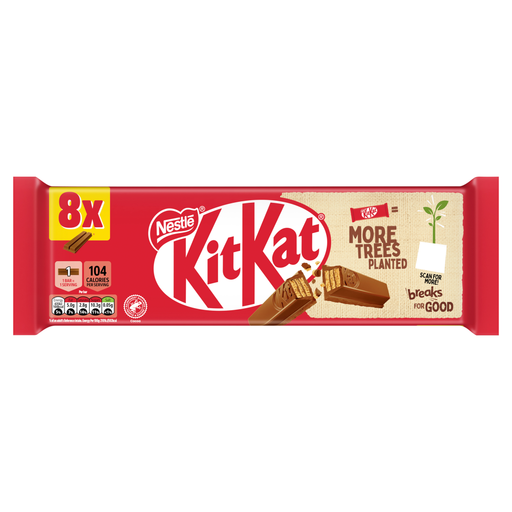 Image unavailable
KitKat 2 Finger Milk, 8 × 20.7 g
Eight smaller bars make this a portioned chocolate snack option, not a substitute for planned long-run fuel. Check the exact pack for per-bar carbohydrate, fat and allergens before choosing it for a runner.
View on Joybuy
 Image unavailable
Cadbury Timeout Wafer Bars, 12-pack, 216 g
This 12-pack is a chocolate wafer snack format to consider for sharing. Use the individual bar label, rather than the 216 g pack weight, to compare portions and check ingredients.
View on Joybuy
 Image unavailable
Kinder Bueno Classic, 6-pack, 129 g
For a chocolate-wafer treat, this pack contains six packs totalling 129 g. Check the wrapper for the portion you intend to offer, including its nutrition, ingredients and allergen statements.
View on Joybuy
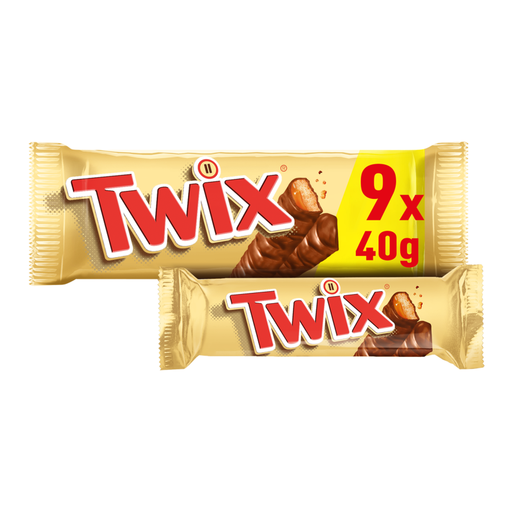 Image unavailable
Twix Chocolate Bars, 9 × 40 g Twin Packs
The nine twin packs provide separate chocolate snack portions. If the amount in one twin pack matters to your choice, read its own nutrition and ingredient information rather than treating the outer pack as one serving.
View on Joybuy
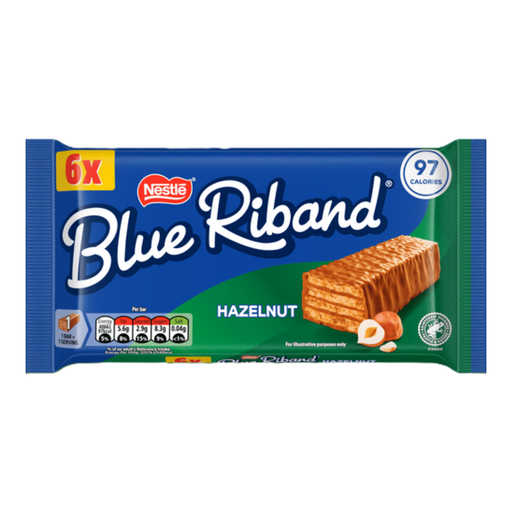 Image unavailable
Blue Riband Hazelnut, 6 × 17.5 g
Six smaller wafer bars offer another portioned treat format. The Hazelnut variant makes an exact-pack ingredient and allergen check particularly important when buying for someone with restrictions.
View on Joybuy
Questions about chocolate and marathon training
Can a box of chocolate bars be the main fuel for a marathon?
Do not treat a chocolate box as a complete race-day fuelling plan. The UK Sports Institute notes that carbohydrate needs rise with exercise duration and intensity, while a review indexed by PubMed discusses 30–60 g of carbohydrate per hour for high-intensity exercise lasting 1–2.5 hours. A runner also needs to plan fluids and practise what they intend to consume; the carbohydrate in an individual chocolate bar does not settle those decisions.
What matters most when comparing chocolate-bar multipacks?
Start with the size and nutrition of one bar, then check the pack count and ingredients. For example, Mars lists 13 g carbohydrate per 18 g Fun Size bar, whereas KitKat lists 26.1 g per 41.5 g 4 Finger Milk bar. Those are values for named products, not figures to apply to other formats from either brand.
How should I check allergens when giving chocolate to a runner?
Ask the recipient about restrictions and read the ingredients and precautionary statements on the exact pack. GOV.UK says that any of the 14 regulated allergens present as ingredients in UK prepacked food must be clearly labelled in its ingredients list. Variants differ: standard Snickers contains peanuts, while its Fruit & Nut bar contains nuts.
Should I use the retailer description or the wrapper to compare portions?
Use the current physical pack as the final check for serving size, nutrition, ingredients and allergen warnings. A retailer’s multipack description and the label for an individual bar can describe different quantities, so make sure the values you compare refer to the portion you intend to give or eat.


