Help-yourself breakfast hosts
An open pack can be set out on a shared plate. Check its weight, any stated biscuit count and whether guests would prefer milk or dark chocolate.


Choose an open pack of chocolate digestives if guests will help themselves from a shared plate; compare pack weight and any stated biscuit count rather than treating “sharing” as a serving number. Individually wrapped bars make more sense when guests need separate portions or may take one away. Whichever format you choose, check the exact pack’s ingredients and allergen information before serving anyone with a food restriction.
An open pack can be set out on a shared plate. Check its weight, any stated biscuit count and whether guests would prefer milk or dark chocolate.
Individually wrapped biscuit bars suit a table where guests may take a portion away. Check the particular multipack’s bar count and flavour.
Use the exact pack’s ingredients and precautionary-allergen wording when deciding what to offer an affected guest; the brand name alone cannot establish suitability.
Decide how guests will take a biscuit, then compare the particular packs on quantity, flavour and label information.
| Priority | What to check | Your needs |
|---|---|---|
| Format and quantity | Check whether the product is an open pack or individually wrapped multipack. Compare net weight and any stated biscuit or bar count; weight alone is not a serving count. | I’m putting biscuits on a shared plate, or I need separate portions guests can take away. The number of guests helps me decide which pack format to check. |
| Flavour and style | Compare milk- and dark-chocolate digestives with other biscuit styles. For wrapped bars, check the flavour on the particular pack rather than assuming every variant is alike. | I’d like a chocolate style that fits the breakfast spread, or a different biscuit texture alongside the digestives. |
| Ingredients and allergens | Read the exact pack’s ingredients and emphasised allergens. Check any precautionary “may contain” statement separately; the Food Standards Agency distinguishes this from ingredients deliberately used. | Before serving a guest with an allergy or intolerance, I need to check the label for the product I will actually put on the table. |
| Serving and storage | Compare nutrition figures on the same basis, such as per biscuit or per 100g. Follow the opened pack’s storage instructions; Sainsbury’s listing for McVitie’s 266g Milk Chocolate Digestives specifies an airtight container. | I want to put out an appropriate amount for breakfast and store any biscuits left in an open pack as directed. |
Pack weights differ, and an open sleeve is not the same format as a multipack of wrapped bars. The description alone may not tell you how many portions to set out.
Check the exact pack’s net weight and stated count, where available, before planning the breakfast plate.
Ingredients and precautionary cross-contact statements answer different questions. A brand or biscuit style cannot settle either one for an individual guest.
Read the full label on the particular pack, including any precautionary statement, before offering it to an affected guest.
These examples show formats and biscuit styles to compare; details for one listed pack should not be assumed to apply to a whole range.
Chocolate Digestives are an open-pack option for a shared plate. Tesco Groceries lists a 266g milk-chocolate pack.
A McVitie’s wrapped biscuit-bar line to consider when separate portions matter more than an open plate.
A McVitie’s chocolate-covered biscuit-bar line for a separately portioned option.
Tesco Groceries lists Fox’s Chocolate Viennese Biscuits in a 120g pack as a different biscuit style.
Tesco Groceries lists own-label milk- and dark-chocolate digestives in 300g packs for an open breakfast plate.
Sainsbury’s lists own-label Dark Chocolate Digestives in a 300g pack.
These Joybuy options are chocolate digestives and Hobnobs for a help-yourself breakfast plate, including single packs and twin packs. If you need individually wrapped portions instead, check that format separately.
 No image available
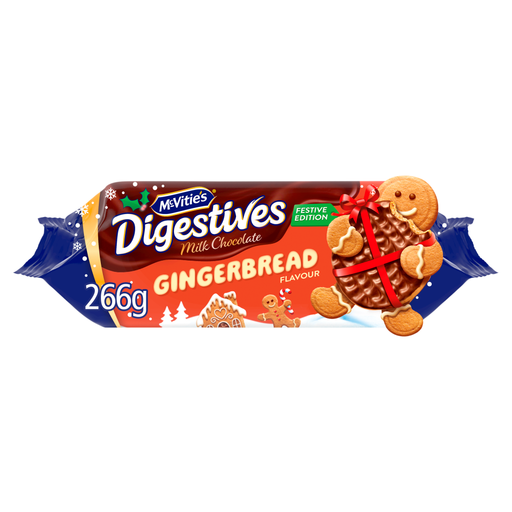
A gingerbread-flavoured chocolate digestive to consider for a shared breakfast plate. The pack is 266g; check its stated biscuit count if you need a precise number of portions, and read the physical pack’s allergen label for affected guests.
 No image available
This milk-chocolate Hobnobs twin pack offers an oat-biscuit style for a shared plate. It contains 2 x 262g packs; check the individual pack labels if you need a biscuit count or allergen information.
 No image available
Two dark-chocolate digestive packs allow you to set out one pack and keep the other separate. The stated quantity is 2 x 266g; check each pack for biscuit count and allergen information when those details matter to your guests.
 No image available
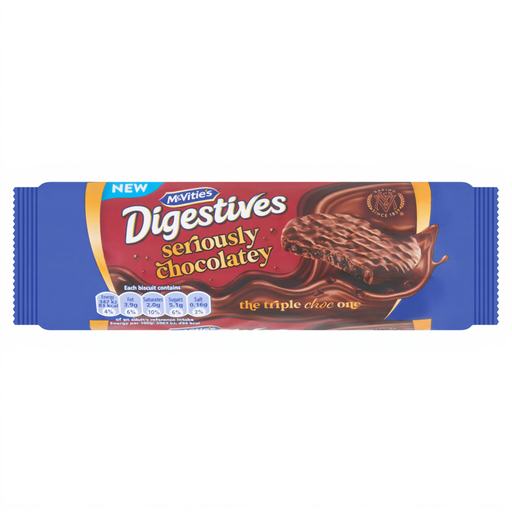
A 250g chocolate digestive pack for an open breakfast plate. Compare its label with other packs if biscuit count, ingredients or nutrition per 100g will affect your choice.
 No image available
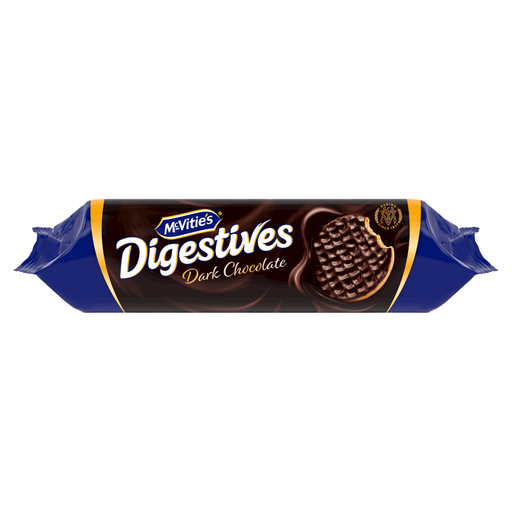
This 400g dark-chocolate digestive pack is an open-pack option when you want to put biscuits on a shared plate. Weight does not tell you the biscuit count; check the pack and its allergen label before serving affected guests.
The listed packaged biscuits do not call for preparation. Put out the amount you intend to serve and follow the pack’s instructions for any remainder; Sainsbury’s listing for McVitie’s 266g Milk Chocolate Digestives says to store opened biscuits in an airtight container.
No. The Food Standards Agency distinguishes best-before dates, which concern quality, from use-by dates, which concern safety. Read the date wording printed on the particular pack.
Use the same basis for both products: compare per 100g with per 100g, or per-biscuit figures with per-biscuit figures. Check whether the label says total sugars rather than treating that figure as a measure of free sugars.
Check the exact prepacked product’s ingredient list and emphasised allergens, then read any precautionary “may contain” wording relevant to the guest. The Food Standards Agency distinguishes possible unintended cross-contact from allergens used as ingredients.