Biscuit bakers choosing a flavour
Decide whether the dough needs creamy white-chocolate sweetness or a more pronounced dark-cocoa flavour. The choice matters for both chocolate mixed into the dough and pieces added on top.


Choose white chocolate for creamy sweetness without the cocoa-solids flavour of dark chocolate; choose dark chocolate when cocoa flavour should stand out in the biscuit. Lindt UK describes white chocolate as containing cocoa butter, sugar and milk solids but no cocoa solids, while M&S Food describes higher-cocoa dark chocolate as more intense and less sweet. For a dark-chocolate recipe, a product labelled for cooking or baking at around 70% cocoa is a starting point; check the intended use and current allergen label on the exact pack.
Decide whether the dough needs creamy white-chocolate sweetness or a more pronounced dark-cocoa flavour. The choice matters for both chocolate mixed into the dough and pieces added on top.
A drizzle or coating involves different handling from chocolate pieces baked into a biscuit. Check whether the product is intended for melting and whether the finish you want calls for tempering.
Check the exact pack before using chocolate for someone with an allergy. Ingredients and precautionary warnings can differ between white chocolate, dark bars and cooking products.
Choose the flavour you want in the finished biscuit, then check the chocolate’s intended use and the current pack label.
Choose it when: Creamy sweetness, rather than dark-cocoa flavour, is the point of the chocolate in the biscuit.
Bear in mind: Lindt UK describes white chocolate as containing milk solids and no cocoa solids; check the exact product if milk is an allergen.
Choose it when: You want cocoa flavour and a product explicitly described for cooking or baking; M&S Food and Waitrose & Partners list 70% examples for those uses.
Bear in mind: Darker chocolate changes the flavour of a sweet dough, so check that it suits the recipe and the people eating it.
Choose it when: A particularly intense cocoa flavour is deliberate; Lindt UK lists 85% minimum cocoa solids for its Excellence 85% bar.
Bear in mind: M&S Food describes higher-cocoa chocolate as more intense and less sweet, so it may alter the balance of a biscuit recipe.
| Priority | What to check | Your needs |
|---|---|---|
| Flavour | Check whether the chocolate is white or dark and, for dark chocolate, its stated cocoa-solids percentage. Lindt UK says white chocolate has no cocoa solids; M&S Food describes higher percentages as more intense and less sweet. | I want the chocolate to suit the biscuit dough, whether that means creamy sweetness or a distinct cocoa flavour. |
| Baking format | Look for the intended use on the exact product. M&S Food describes its 70% dark chocolate for cakes and cookies; Waitrose & Partners lists Green & Black's 70% bar as cooking chocolate. | If I am mixing pieces into dough, I want a format that is practical to portion and use in the recipe. |
| Melted finish | Check the product’s melting guidance. For a tempered finish, Good Food gives different reheating temperatures: 31–32°C for dark chocolate and 28–29°C for white chocolate. | A coating or decoration needs a different handling plan from chocolate baked into the biscuit. |
| Allergens | Read the current ingredients and precautionary statements for the exact pack. The Food Standards Agency explains that precautionary allergen labelling communicates possible unintended allergen presence. | When baking for someone with an allergy, I need to assess the chocolate itself, not rely on its colour or a recipe description. |
M&S Food describes higher-cocoa dark chocolate as more intense and less sweet. Moving from a 70% cooking chocolate to an 85% bar can noticeably change the flavour balance of a biscuit.
Use the percentage as a flavour check, and choose a particularly high-cocoa bar only when that stronger taste suits the recipe.
Lindt UK says white chocolate contains cocoa butter but no cocoa solids, so it will not give a biscuit the same cocoa flavour as dark chocolate.
Decide what the chocolate should contribute before substituting one for the other.
Warnings differ between products. Lindt UK says its Excellence 85% bar is made to a vegan recipe but is not suitable for people with a milk allergy.
Read the current physical pack before baking or serving, including its ingredients and precautionary allergen statements.
Good Food’s tempering guidance addresses the glossy appearance and firm snap sought in some chocolate decorations; that is a separate consideration from baking pieces into dough.
If that finish matters, choose chocolate suitable for tempering and follow guidance for the type you are using.
These product examples show what to check on a baking label; they are not a list of products available on Joybuy.
Lindt UK describes its Excellence 70% dark bar as suitable for baking and cooking, and lists an Excellence 85% bar for a more intense cocoa option.
M&S Food presents its 70% dark chocolate for cakes, cookies and desserts.
Waitrose & Partners lists Green & Black's Organic Cooking Dark Chocolate as a 70% cocoa product intended for cooking.
These options include white-chocolate pieces, dark-chocolate chips and a 70% dark cooking bar for different biscuit-baking plans. Choose by the recipe’s flavour and format requirements, then check the current pack.
 No image available
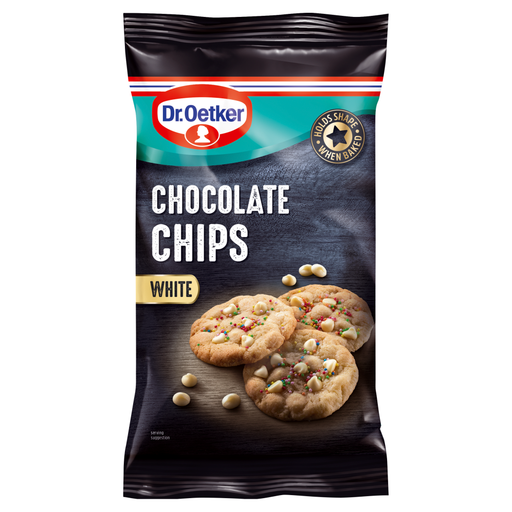
White-chocolate chips presented for baking into cookies; the product description also gives melting uses for drizzling or dipping. Its shape-retention description is a product claim, not a measured baking result.
Contains milk and soya. Check the current pack before baking for someone with an allergy.
 No image available
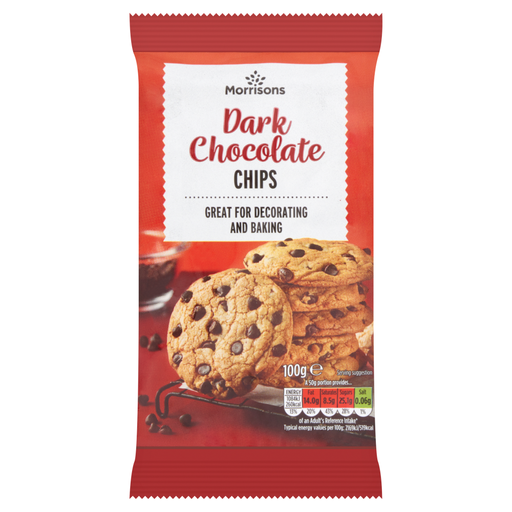
Dark-chocolate chips presented for cookies, baking and decorating, for a recipe calling for pieces rather than a chopped cooking bar.
Contains soya and may contain milk. Check the current pack before serving.
 No image available
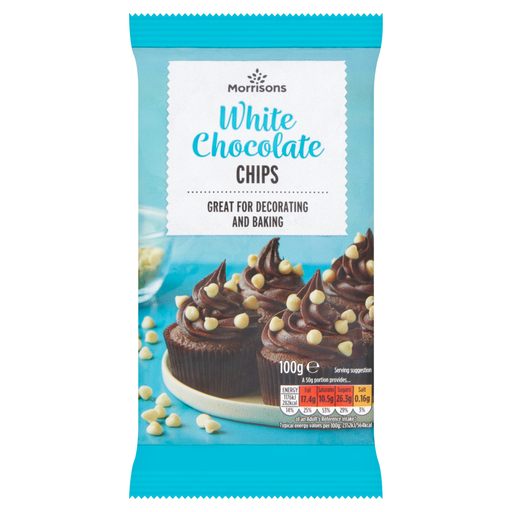
White-chocolate chips presented for baking and decorating when the recipe calls for small pieces and a creamy, sweet chocolate flavour.
Contains milk and soya. Check the current pack for allergen information.
 No image available
A 70% dark cooking chocolate presented for baking, including cookies, when cocoa flavour is intended to stand out in the biscuit.
Contains milk and may contain eggs, gluten and tree nuts. Check the current pack for its full allergen statement.
 No image available
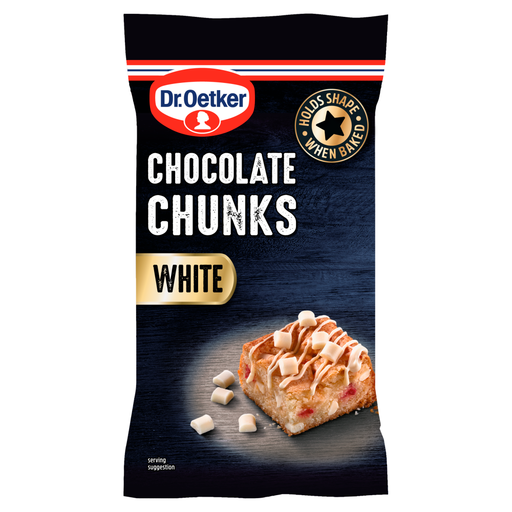
Chunks presented for use in baked goods. Check the current pack ingredients and product identity against the white-chocolate description before buying for a recipe that specifically calls for white chocolate.
Contains milk and soya; check the current pack before serving.
Use white chocolate for creamy sweetness without cocoa-solids flavour, or dark chocolate when cocoa flavour should be more prominent. Lindt UK describes the difference in their composition, and M&S Food notes that higher-cocoa dark chocolate tastes more intense and less sweet. Match the choice to the biscuit recipe rather than treating the two as direct flavour substitutes.
Check the exact bar’s intended use and ingredients before using it in a biscuit recipe. If you want an explicit cooking-use description, M&S Food presents its 70% dark chocolate for cookies, while Waitrose & Partners lists Green & Black's 70% bar as cooking chocolate.
Tempering is relevant when you want a melted coating or decoration to set with gloss and a firm snap; it is a different task from baking chocolate pieces into dough. Good Food gives reheating temperatures of 31–32°C for dark chocolate and 28–29°C for white chocolate in its tempering guidance.
Not necessarily: Lindt UK states that its cited Excellence 85% vegan-recipe bar is not suitable for people with a milk allergy because the manufacturing facility uses milk. Check the current ingredients and precautionary statement for the exact chocolate you intend to use.
Follow the instructions on the exact pack. The cited M&S Food dark chocolate calls for cool, dry storage away from sunlight, and Lindt UK also specifies cool, dry storage for its cited 70% bar.