Movie-night sharers comparing sugar
You want chocolate biscuits for a shared bowl and need to compare sugars per 100g alongside the amount you expect to serve.


If you want chocolate in the biscuit itself, compare sugars per 100g, then consider how many biscuits you plan to serve. No-added-sugar cocoa sandwiches and chocolate-coated oat biscuits offer different flavours and textures from conventional chocolate digestives; check energy, ingredients and allergens as well as sugar. McVitie’s The Light One is a reduced-sugar plain digestive, not a chocolate digestive.
You want chocolate biscuits for a shared bowl and need to compare sugars per 100g alongside the amount you expect to serve.
You prefer a coated digestive and want to distinguish a no-added-sugar version from conventional chocolate digestives and reduced-sugar plain digestives.
You need to check sweeteners and the allergen information on each pack before offering biscuits to guests.
Start with the chocolate-biscuit format you would enjoy, compare labels on the same weight basis, then work out the portion you intend to put out.
| Priority | What to check | Your needs |
|---|---|---|
| Sugar and claims | Compare “of which sugars” per 100g on similar biscuits. Check what a reduced-sugar claim is compared with; “no added sugar” describes a different property. Campden BRI describes a reduced-sugar claim as a reduction of at least 30% against a similar product. | I want a lower listed sugar figure without assuming that a claim on a plain digestive also applies to a chocolate-coated one. |
| Chocolate format | Choose between a chocolate coating, a cocoa biscuit with filling, or a conventional chocolate digestive. Check the stated flavour and ingredients on the particular pack. | A coated digestive is what I fancy, or I might prefer a cocoa sandwich biscuit that is easy to pass around. |
| Portion and energy | Check sugars, energy and saturates per 100g, then the figures per biscuit or serving where shown. The NHS explains that nutrition panels use a per-100g basis and may also give a portion figure. | I want to decide how many biscuits to serve rather than assume the pack’s suggested portion matches our movie-night bowl. |
| Ingredients and allergens | Read the ingredients for sweeteners such as maltitol. Check declared allergens and “may contain” statements on the pack being served. | Guests need to know what is in the biscuits; a lower-sugar description alone does not answer that question. |
McVitie’s says The Light One has 30% less sugar than the average digestive biscuit. That comparison does not describe its Milk Chocolate Digestive, which is a different product.
If chocolate coating matters, compare the labels of the coated biscuits themselves.
The Joybuy listing for Gullón Zero Dark Chocolate Ginger Oaties gives 1.0g sugars and 433kcal per 100g. The sugar figure alone does not tell you the energy content.
Compare sugars, energy and saturates per 100g, then consider the number of biscuits you will serve.
The listed Gullón ginger oaties contain maltitol, have declared allergens and report 1.0g sugars per 100g.
Use the nutrition, ingredients and allergen information on the particular pack when deciding what to offer guests.
Its UK-listed Zero range includes chocolate-coated ginger oaties and cocoa sandwich biscuits; its Slimms range includes a milk-chocolate-coated digestive.
Its referenced products include Milk Chocolate Digestives, individually portioned Penguin and Club bars, and The Light One plain digestive.
Its referenced milk and dark chocolate digestives offer two conventional coated-biscuit flavours to compare.
Its Half-Coated Milk Chocolate Cookies provide a conventional cookie format with a chocolate coating.
These options cover cocoa sandwich biscuits, a dark-chocolate-coated ginger oat biscuit and chocolate-flavoured biscuit sticks. Compare their particular labels before choosing a format for movie night.
 No image available
A sandwich-cookie format to consider if you want individual cocoa biscuits rather than a chocolate-coated digestive. The pack is 97g; check its label for the nutrition and ingredients relevant to your guests.
 No image available
For a coated oat biscuit with ginger flavour, the Joybuy listing describes this as no added sugar and gives 1.0g sugars and 433kcal per 100g. Gullón identifies maltitol in the recipe; check the pack’s allergen information before sharing.
 No image available
For a cocoa biscuit with a cream filling rather than a chocolate coating, the Joybuy listing gives 2.4g sugars and 408kcal per 100g. Gullón identifies maltitol in the filling; check the pack for allergens and precautionary statements.
 No image available
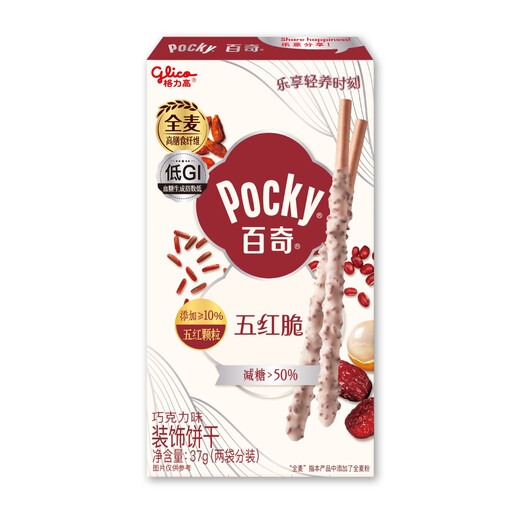
A biscuit-stick option if you want a different shape from sandwiches or coated digestives. The pack is 37g; check its nutrition label and consider how many packs you would need for your group.
No. Campden BRI describes a reduced-sugar claim as a sugar reduction of at least 30% compared with a similar product; that claim does not give you the product’s calorie figure. Compare sugars and energy on the actual biscuit’s label, preferably per 100g when comparing packs.
Read the ingredients and any “may contain” statements on the particular pack for each guest. The referenced biscuits differ in their declared allergens and precautionary information, so a product name or no-added-sugar claim is not enough.
No. Maltitol is listed in several of the referenced Gullón recipes, but a sweetener or no-added-sugar description does not replace checking the full nutrition panel, ingredients and portion you plan to serve.
Follow the storage instructions on the pack you buy. For its referenced chocolate digestives, Tesco advises cool, dry storage and an airtight container after opening.